Photo Credit: Facebook
 0
 0
Former NFL quarterback Philip Rivers could soon face one of the biggest decisions of his football career. The former NC State star has emerged as a potential candidate for the Wolfpack’s vacant head coaching position. However, another former NFL quarterback offers a warning about making that transition. Trent Dilfer followed a similar coaching path before experiencing a difficult tenure at UAB. Both quarterbacks enjoyed successful NFL careers before finding their way into high school coaching. Furthermore, both developed reputations for teaching football and building relationships with younger players. However, Dilfer discovered that success at the high school level does not guarantee success in college football. His experience could provide Rivers with valuable lessons before accepting a potential opportunity at NC State.
Rivers Emerges as a Candidate at NC State
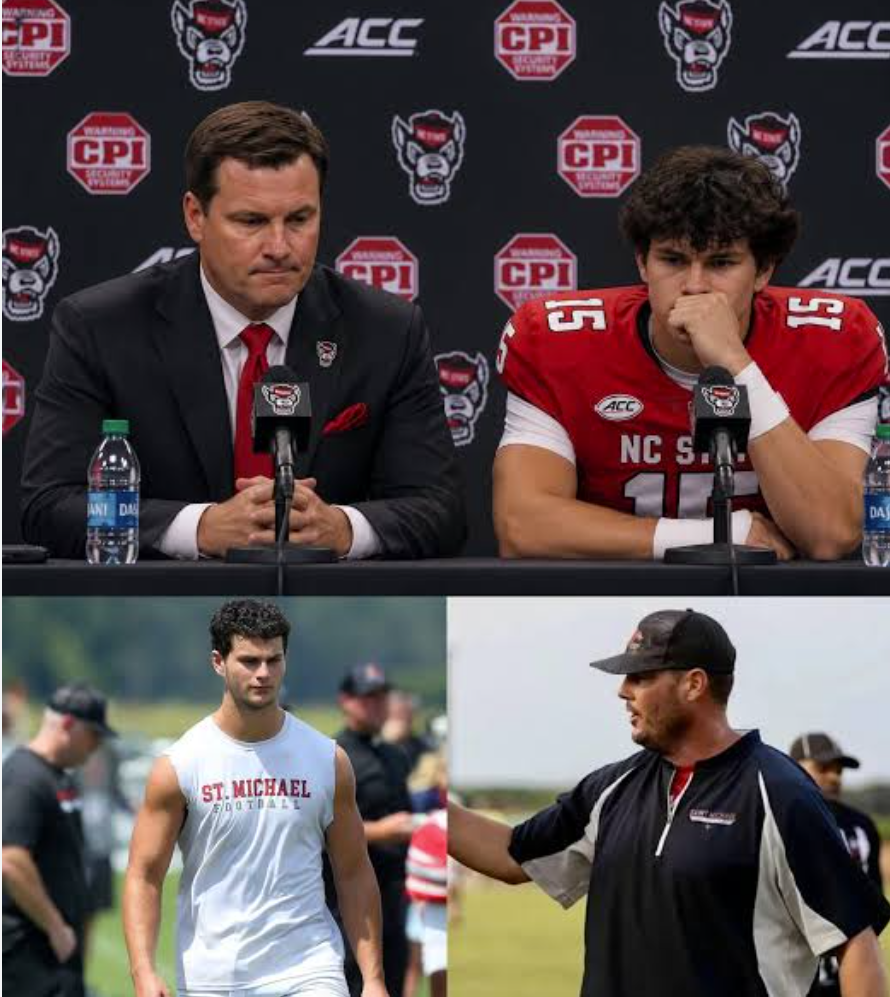
NC State recently entered the coaching market following the dismissal of Dave Doeren. The Wolfpack parted ways with Doeren after their loss to Stanford, ending his lengthy tenure in Raleigh. Consequently, speculation surrounding Rivers has intensified. According to Bruce Feldman of The Athletic, sources indicate genuine interest in Rivers as a coaching candidate. Rivers played quarterback at NC State from 2000 through 2003. During that stretch, he threw for 13,484 yards and 95 touchdowns. Furthermore, Rivers earned ACC Player of the Year honors in 2003. His connection to the university makes him an intriguing candidate. However, Rivers has never served as a college football coach. Instead, he has coached St. Michael Catholic High School in Fairhope, Alabama. That experience creates an interesting comparison with Dilfer’s coaching journey.
Trent Dilfer Followed a Similar Path
Dilfer enjoyed a lengthy NFL career before transitioning into coaching. The Tampa Bay Buccaneers selected him sixth overall in the 1994 NFL Draft. He later helped the Baltimore Ravens win Super Bowl XXXV following the 2000 season. After retiring, Dilfer worked in broadcasting and quarterback development. Eventually, he became the head coach at Lipscomb Academy in Nashville, Tennessee. Dilfer quickly established himself as a successful high school coach. His teams compiled a 44-10 record during four seasons. Furthermore, Lipscomb Academy captured consecutive state championships in 2021 and 2022. Those accomplishments attracted attention from college football programs. UAB eventually hired Dilfer in November 2022 despite his lack of college coaching experience. The decision created excitement surrounding the former NFL quarterback. However, the transition quickly became more difficult than many anticipated.
Dilfer’s College Coaching Career Unraveled
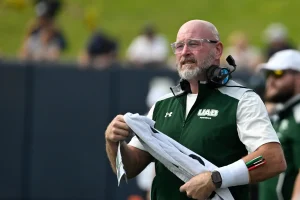
Dilfer entered UAB with considerable confidence and a strong offensive background. However, the Blazers struggled throughout his tenure. UAB finished 4-8 during the 2023 season. The following year brought additional disappointment as the Blazers finished 3-9. Nevertheless, Dilfer received another opportunity to improve the program in 2025. Unfortunately, the struggles continued. UAB started the season 2-4, including a 53-33 loss against Florida Atlantic. Consequently, the university dismissed Dilfer in October 2025. His final record stood at 9-21 across parts of three seasons. Athletic director Mark Ingram cited the program’s disappointing on-field performance when announcing the decision. Meanwhile, offensive coordinator Alex Mortensen assumed interim head coaching responsibilities. Dilfer’s dismissal demonstrated how quickly college football can humble even accomplished NFL veterans. More importantly, his experience revealed the challenges surrounding modern college football leadership.
Dilfer Learned a Brutal Lesson About College Football
Following his dismissal, Dilfer discussed the differences between high school and college coaching. During an interview with WVTM 13, he described modern college football as increasingly transactional. He believed relationships mattered less than financial resources and immediate opportunities. Furthermore, Dilfer acknowledged that his relationship-driven coaching philosophy struggled within that environment. The transfer portal and player compensation have dramatically changed college football. Coaches must recruit incoming players while convincing current players to remain with their programs. Additionally, programs must compete financially against schools offering greater resources. Dilfer admitted that UAB’s limitations made sustained success extremely difficult. He also acknowledged that his preferred coaching philosophy did not always match the college environment. Eventually, Dilfer returned to Lipscomb Academy in 2026. His return illustrated how much he valued developing high school players. However, his experience also provided a warning for former professional athletes considering college coaching careers.
Rivers Has Something Dilfer Never Had
Despite their similar backgrounds, Rivers possesses one significant advantage. He has a deep personal connection to NC State. Rivers became one of the most accomplished quarterbacks in school history. Furthermore, his relationship with the university could help him connect with alumni, donors, and potential recruits. His son, Gunner Rivers, has also committed to NC State. However, those connections alone cannot guarantee coaching success. Rivers must understand the administrative responsibilities surrounding a major college football program. Recruiting, fundraising, staff management, and roster construction require considerable attention. Additionally, college coaches must navigate transfer portal decisions and player compensation. Those responsibilities extend far beyond calling offensive plays. Nevertheless, Rivers brings substantial football knowledge from his 17 NFL seasons. He also demonstrated his continued interest in professional coaching through an interview with the Buffalo Bills. His experience could help him assemble a knowledgeable coaching staff.
Rivers Understands That Coaching Requires Adjustments
Rivers has already acknowledged the differences between professional and high school football. During a conversation on the Moving the Sticks podcast, he discussed his early coaching experiences. Initially, Rivers brought concepts from the Chargers and Colts playbooks into his high school program. However, he quickly realized those systems required adjustments. He also learned that high school defenses approached certain situations differently from NFL opponents. Consequently, Rivers simplified portions of his coaching philosophy. That willingness to adapt could become important if he accepts a college position. Furthermore, Rivers discussed the importance of surrounding himself with experienced assistants. He understands that his playing career cannot prepare him for every coaching responsibility. However, he believes his experience working alongside NFL coaches provides a valuable foundation. His comments suggest that he recognizes the challenges surrounding a potential transition. That awareness could help him avoid some of Dilfer’s mistakes.
The Transfer Portal Could Become Rivers’ Biggest Challenge
Modern college football demands considerably more than developing players and creating successful game plans. Coaches must constantly evaluate their rosters. Furthermore, the transfer portal allows players to pursue opportunities at other universities. Player compensation adds another complicated dimension to roster management. Consequently, coaches must balance relationships with financial realities. Dilfer struggled with that changing environment at UAB. However, Rivers could face similar challenges at NC State. The Wolfpack compete in the ACC against programs with substantial financial resources. Rivers would need strong support from university administrators and donors. Additionally, he would need experienced personnel managing recruiting and roster construction. His reputation could attract talented quarterbacks and offensive players. However, reputation alone cannot overcome financial disadvantages or poor organizational decisions. Successful college programs require coordination between coaches, administrators, donors, and recruiting departments. Therefore, Rivers must evaluate NC State’s resources before making any commitment.
Would Rivers Face More Pressure Than Dilfer?
Rivers would likely face enormous expectations if he returned to Raleigh. NC State supporters remember his outstanding playing career. However, success as a quarterback does not automatically translate into success as a head coach. Fans would expect Rivers to improve recruiting and compete for ACC championships. Furthermore, his name recognition could generate immediate excitement around the program. That excitement could also create unrealistic expectations. Dilfer encountered similar enthusiasm when he arrived at UAB. However, consecutive losing seasons quickly changed public opinion. Rivers must understand that college football fans ultimately judge coaches through victories and losses. His NFL accomplishments would not protect him from criticism. Additionally, his personal connection to NC State could make potential struggles especially difficult. A disappointing coaching tenure could complicate his relationship with the university. Nevertheless, Rivers could also strengthen his legacy by successfully rebuilding the Wolfpack.
Should Philip Rivers Take the NC State Job?
Rivers has several reasons to consider the opportunity. He understands NC State’s football culture and maintains a strong connection to the university. Furthermore, his NFL experience could help him develop quarterbacks and establish an offensive identity. However, he must carefully examine the program’s infrastructure. A strong coaching staff would become essential. Experienced college assistants could handle recruiting, roster management, and administrative responsibilities. Meanwhile, Rivers could concentrate on leadership, quarterback development, and offensive strategy. He would also need realistic expectations from university officials. Rebuilding a college football program requires patience and consistent investment. Dilfer’s experience demonstrated the consequences of entering an unfamiliar environment without sufficient resources. However, Rivers has an opportunity to study those mistakes before making his decision. His willingness to adapt could ultimately determine whether he succeeds.
Dilfer’s Failure Could Become Rivers’ Greatest Lesson
Philip Rivers and Trent Dilfer share several similarities. Both enjoyed lengthy NFL careers before becoming successful high school football coaches. Furthermore, both developed reputations for leadership and quarterback knowledge. However, Dilfer discovered that college football requires an entirely different approach. His disappointing tenure at UAB ended after just 30 games. Meanwhile, Rivers now faces the possibility of making a similar transition. The former NC State quarterback has not accepted the Wolfpack position. Nevertheless, growing speculation suggests his name deserves serious consideration.
Rivers could succeed where Dilfer struggled, but his NFL accomplishments cannot guarantee results. He must embrace recruiting, roster management, fundraising, and the changing economics of college athletics. More importantly, he must surround himself with experienced assistants and understand the university’s expectations. Dilfer learned those lessons through disappointment and dismissal. Rivers now has an opportunity to learn from another quarterback’s experience without repeating the same mistakes. Ultimately, the biggest question isn’t whether Philip Rivers understands football. The real question is whether he understands everything that modern college football demands from a head coach.



Author Profile

-
Bradley Walker (VP) and Head of our Florida operations for NGSC Sports, bringing extensive experience across collegiate, professional, and amateur athletics. His coverage spans USF Athletics, including football, baseball, lacrosse, and softball, as well as University of Tampa baseball.
Bradley also provides coverage of minor league baseball with the Clearwater Threshers and Major League Baseball with the Tampa Bay Rays. On the national stage, he covers college football bowl games and conference championship matchups, along with premier golf events across the PGA Tour, LIV Golf, and LPGA Tour.
In addition to his reporting work, Bradley is the play-by-play announcer for Pinellas Park High School Patriots football, lending his voice and insight to Friday night lights.
He is also an active podcast host and contributor, serving as a host on The Walker Report, where he delivers in-depth sports analysis, interviews, and coverage across multiple levels of competition.
Latest entries
 NFLOctober 28, 2026 at 1:15 amNFL Week 8 Power Rankings: All 32 Teams Ranked
 WWEOctober 28, 2026 at 1:14 amWWE News and Rumors: Crown Jewel Chaos, Wargames Plans and Major Storylines
 NCAAFOctober 28, 2026 at 1:13 amPhilip Rivers Could Learn a Brutal Lesson from Trent Dilfer
 WNBAOctober 28, 2026 at 1:12 amNational Anthem Controversy: The WNBA Needs to Wake Up
About the Author