Photo Credit: Sports Video Group
 0
 0
The NFL continues expanding its international presence, but its latest possibility could completely transform the regular season. Imagine an entire NFL week without a single game on American soil. Every team would travel overseas, bringing professional football to fans across the globe. That idea might sound unrealistic. However, Pittsburgh Steelers quarterback Aaron Rodgers recently revealed that league officials previously discussed such a possibility. The concept would feature all 32 NFL teams playing 16 games in different international locations for one week.
Rodgers discussed the idea Friday, October 23, ahead of Pittsburgh’s historic matchup against New Orleans in Paris. According to the Pittsburgh Post-Gazette, Rodgers said discussions about an international week surfaced during collective bargaining negotiations. He also suggested the league could eventually find 16 suitable locations worldwide. However, the NFL has not formally announced or approved an international week. The possibility raises an interesting question. Could the NFL successfully turn an entire regular-season week into a worldwide football celebration?
The NFL Already Has Its Eyes on the World
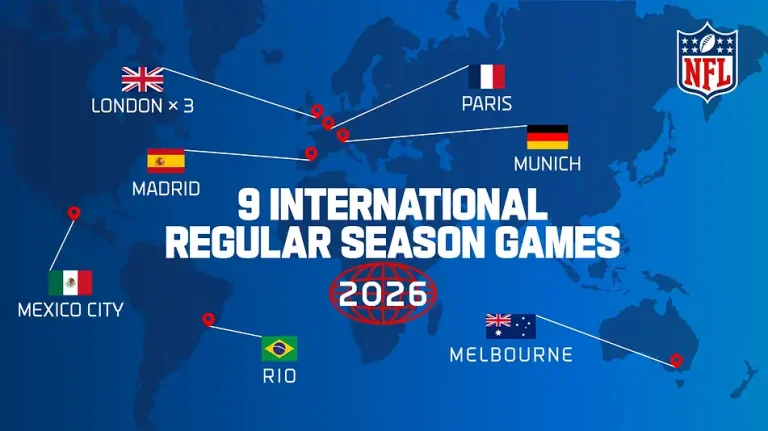
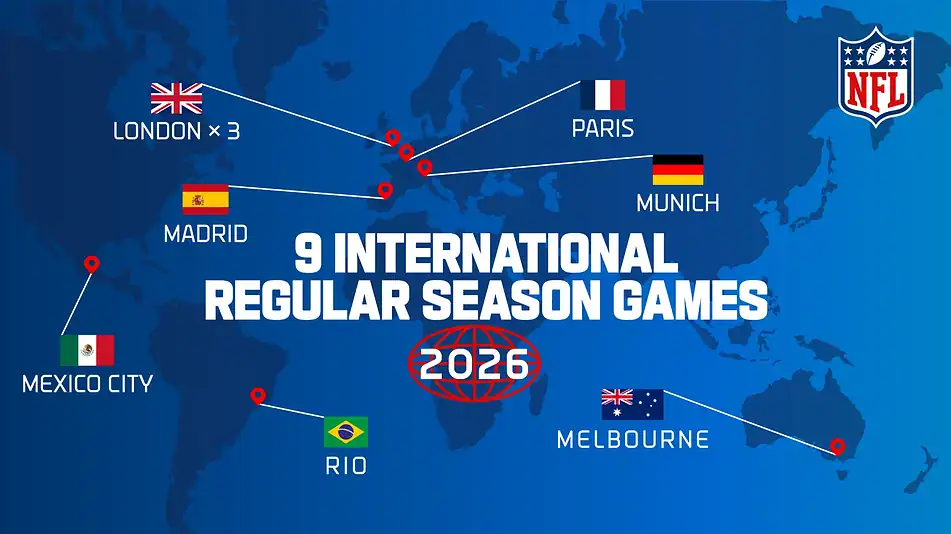
The NFL’s international expansion has accelerated significantly over the past several seasons. In 2026, the league scheduled a record nine international games across seven countries and four continents. Those destinations include Australia, Brazil, England, France, Spain, Germany, and Mexico. Additionally, Melbourne, Rio de Janeiro, and Paris welcomed regular-season NFL football for the first time. The international schedule began September 10, when San Francisco defeated Los Angeles in Melbourne. Meanwhile, London continues serving as one of the NFL’s most established international markets.
The league scheduled three London games this season, further strengthening its relationship with British football fans. Furthermore, NFL Commissioner Roger Goodell has repeatedly expressed interest in expanding the international schedule. His ultimate objective involves 16 international games annually, allowing every franchise to participate. However, Goodell’s annual target differs from Rodgers’ proposed single-week international showcase.
Aaron Rodgers Brings an Interesting Idea Forward
Rodgers has never hesitated to express his opinions about the NFL’s direction. His recent international comments introduced another fascinating possibility for the league’s future. The veteran quarterback believes the NFL could eventually organize games across 16 international destinations. However, his comments also highlighted the financial motivations behind the league’s global expansion. The NFL generates enormous revenue through broadcasting agreements, sponsorships, merchandise, and ticket sales.
Naturally, international markets offer additional opportunities to increase those earnings. Still, Rodgers has also emphasized the importance of protecting players during the league’s expansion. Following Pittsburgh’s victory in Paris, he criticized the league’s approach to travel and player welfare. He argued that teams should spend more time overseas rather than rushing through international appearances. Rodgers also supported additional rest opportunities, including a schedule featuring two bye weeks. His concerns deserve attention because international expansion affects much more than television revenue.
Could 16 International Games Actually Work?
Organizing 16 games across different countries for one week would present enormous logistical challenges. First, the NFL would need enough stadiums that meet its requirements for professional football. Some international soccer stadiums already accommodate NFL games. However, other venues would require significant modifications. Additionally, teams would need access to suitable practice facilities, training equipment, and medical services. Travel presents another major concern.
Consider a team traveling from the East Coast to Australia while another travels to England. Those journeys involve dramatically different distances, time zones, and recovery demands. Consequently, the league would need to carefully coordinate scheduling and competitive balance. An international week could also create problems for broadcasting partners. Different time zones might allow the NFL to schedule games throughout an entire day. However, overlapping games could limit television audiences for certain matchups. The NFL would need to balance worldwide exposure against the viewing habits of American fans.
What About Player Safety?
Player safety represents perhaps the biggest concern surrounding an international week. NFL players already endure considerable physical punishment throughout the regular season. Adding extensive international travel could complicate recovery between games. Furthermore, changing time zones can disrupt sleep schedules and preparation routines. Teams traveling to Australia or Asia would face particularly demanding adjustments. The NFL could address those concerns by giving teams additional time to acclimate. For example, participating teams could arrive several days before their scheduled games.
Additionally, the league could consider placing bye weeks after especially demanding international trips. However, arranging rest periods for all 32 teams would require careful scheduling. The NFL Players Association would also play an important role in any expanded international arrangement. In May, owners approved increasing the international schedule to 10 games beyond 2026. That figure represents the current collective bargaining agreement’s maximum. Therefore, reaching 16 international games would require further negotiations with the players’ union.

International Fans Would Love the Opportunity
Despite the logistical challenges, an international week could become one of football’s biggest celebrations. Imagine NFL games taking place in London, Paris, Munich, Madrid, Mexico City, and Tokyo for one weekend. Other cities could include Melbourne, Rio de Janeiro, Dublin, and Berlin. These locations represent possibilities, not confirmed destinations for an international week. Nevertheless, the league has already demonstrated its ability to attract international audiences. London has established a particularly strong relationship with American football. Germany has also emerged as an important market for the NFL.
Meanwhile, the league continues exploring opportunities throughout Asia. Goodell recently identified Tokyo as a potential regular-season destination in 2027 or 2028. The NFL previously played preseason games in Japan, but Tokyo has never hosted a regular-season matchup. Furthermore, Goodell highlighted the approximately 100,000 spectators attending September’s game in Melbourne. That attendance demonstrated the international appetite for NFL football.
Could International Week Hurt American Fans?
International expansion also raises legitimate concerns among American football fans. Every international game removes a potential regular-season matchup from a team’s domestic stadium. Season-ticket holders might understandably question losing another opportunity to watch their favorite franchise. Additionally, some fans already dislike the NFL’s growing number of international games. Early morning kickoffs can disrupt traditional Sunday routines. An entire international week could create even more unusual viewing schedules.
However, supporters might appreciate watching football throughout the day. Imagine waking up to a game in London and finishing the evening with another international matchup. The NFL could potentially create an entertainment experience unlike anything else in professional sports. Still, league officials must remember that American fans helped build the NFL into today’s powerhouse. International growth should complement that foundation rather than undermine it.
Could the NFL Make International Week a Reality?
The league’s current expansion plans suggest that more international games are inevitable. However, the timeline for an entire international week remains uncertain. NFL owners have already approved 10 international games annually beyond the current season. Meanwhile, league executive Peter O’Reilly recently discussed the possibility of reaching that number in 2027. Goodell continues pursuing his longer-term objective of 16 international games per season. However, his preferred approach does not necessarily require scheduling every international matchup for one week.
That distinction matters when evaluating Rodgers’ comments. The league could eventually send every franchise overseas annually without creating a dedicated international week. In fact, spreading games throughout the season might prove easier for travel, television, and stadium availability. Nevertheless, an international week would generate tremendous attention. The NFL could promote the event as a worldwide celebration of American football. Corporate sponsors would undoubtedly recognize the marketing opportunities. Meanwhile, participating cities could benefit from tourism, hotel bookings, and increased international exposure. The financial possibilities make the concept attractive, even with its considerable challenges.
Is International Week Good for the NFL?
The NFL has reached a point where international expansion seems like a natural next step. However, bigger does not always mean better. An entire international week would provide fans worldwide with an extraordinary football experience. It could also introduce millions of potential supporters to teams they rarely watch in person. Nevertheless, the league must prioritize competitive fairness, player recovery, and scheduling stability. The NFL cannot simply chase additional revenue while ignoring those responsibilities. Furthermore, the league should establish meaningful safeguards before considering such an ambitious event. Rodgers deserves credit for bringing attention to a concept that could reshape professional football.
His comments also remind everyone that international expansion involves real challenges for players. For now, the idea remains a possibility rather than an official NFL initiative. Still, few people imagined the league would eventually schedule nine international games across four continents. Now, that milestone has become reality. The NFL’s worldwide ambitions continue growing, and Goodell has made those intentions clear. Perhaps someday, fans will wake up to an entire NFL schedule taking place outside the United States. The question isn’t whether the NFL wants to conquer international markets. The question is how far it should go. And if international week ever becomes reality, the NFL could deliver one of the most unusual weekends in sports history.



Author Profile

-
Bradley Walker (VP) and Head of our Florida operations for NGSC Sports, bringing extensive experience across collegiate, professional, and amateur athletics. His coverage spans USF Athletics, including football, baseball, lacrosse, and softball, as well as University of Tampa baseball.
Bradley also provides coverage of minor league baseball with the Clearwater Threshers and Major League Baseball with the Tampa Bay Rays. On the national stage, he covers college football bowl games and conference championship matchups, along with premier golf events across the PGA Tour, LIV Golf, and LPGA Tour.
In addition to his reporting work, Bradley is the play-by-play announcer for Pinellas Park High School Patriots football, lending his voice and insight to Friday night lights.
He is also an active podcast host and contributor, serving as a host on The Walker Report, where he delivers in-depth sports analysis, interviews, and coverage across multiple levels of competition.
Latest entries
 FootballOctober 27, 2026 at 12:30 amNFL International Week: Could All 32 Teams Play Overseas?
 AAC FootballOctober 27, 2026 at 12:25 amAmerican Conference Week 8: Thrillers, Upsets and Statement Wins
 GolfOctober 27, 2026 at 12:20 amLIV Golf Bankruptcy: Millions for Executives, Unpaid Bills for Everyone Else
 FootballOctober 27, 2026 at 12:15 amPinellas County Football Week 9: Blowouts, Battles, and Playoff Pressure
About the Author