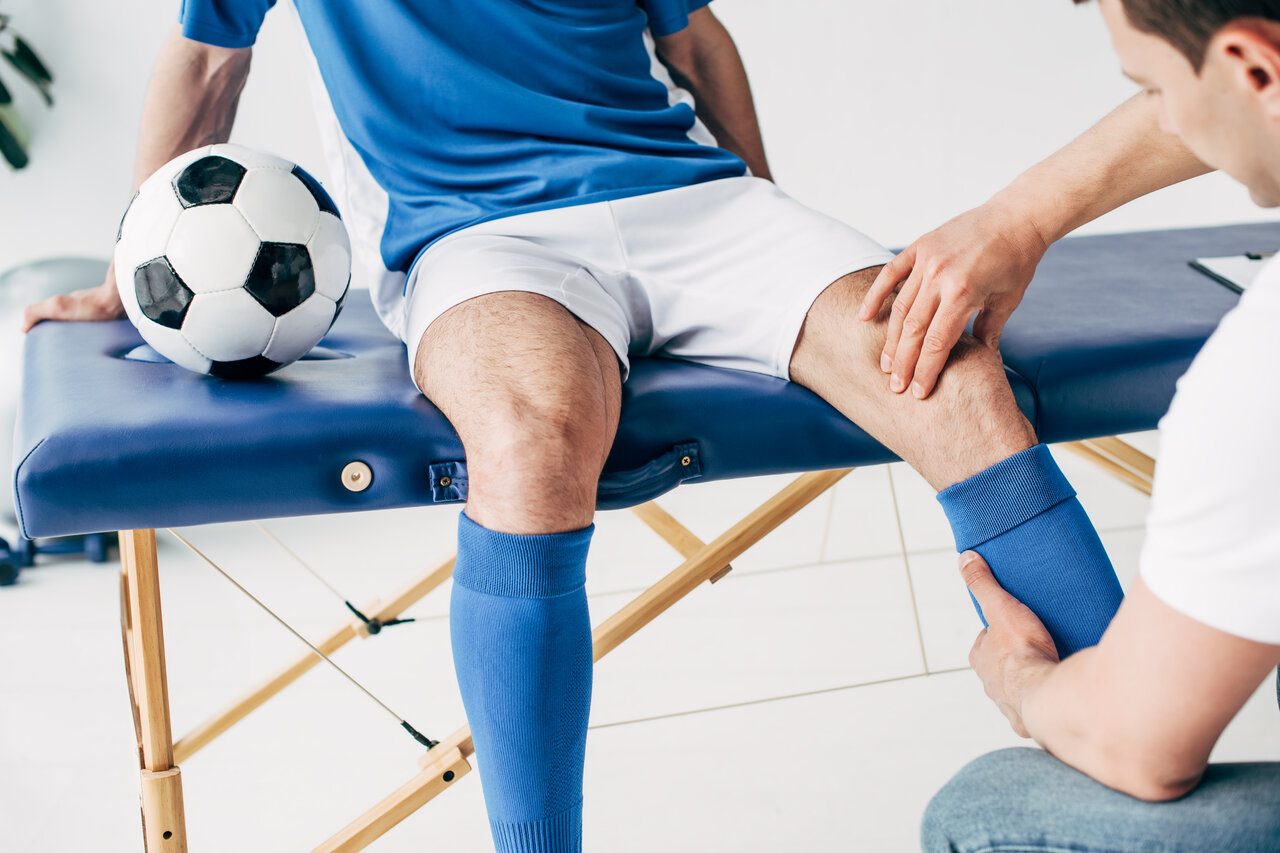
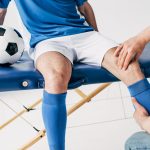
partial view of Physiotherapist massaging leg of football player in hospital
 0
 0
There’s nothing quite like watching your team warm up while you’re stuck on the sidelines, wearing a brace and pretending you’re perfectly happy to be there. Your injury feels better. You can walk normally. Surely it’s time to return?
Not so fast.
One of the biggest mistakes athletes make is confusing reduced pain with complete recovery. Getting back into competition requires strength, stability, coordination, and the ability to handle sudden movements under pressure. That’s where orthopedic physical therapy becomes valuable. It provides a structured way to rebuild those abilities rather than simply waiting for an injury to stop hurting.
The First Rule: Don’t Guess What Your Injury Needs
A sprained ankle, strained hamstring, shoulder injury, and torn ligament don’t follow the same recovery path. Treating them with identical exercises would be convenient, but bodies rarely cooperate with convenience.
Orthopedic physical therapy typically starts with an evaluation of the injured area. They may look at your muscle strength and flexibility, range of motion, balance, gait, history of the injury, and what you are still finding difficult.
Depending on the sport, a runner will need to be able to put up with repeated impact, whilst a basketball player will need to run, jump, land and change direction quickly. Rehabilitation should reflect those demands.
Rebuild Strength Before Turning Up the Intensity
Oftentimes, injuries will cause a reduction in activity; therefore, muscles around the injury can become weak. This can cause an issue when trying to do high-intensity activity even with less pain. A rehab program can help overcome these issues by gradually increasing the following exercises:
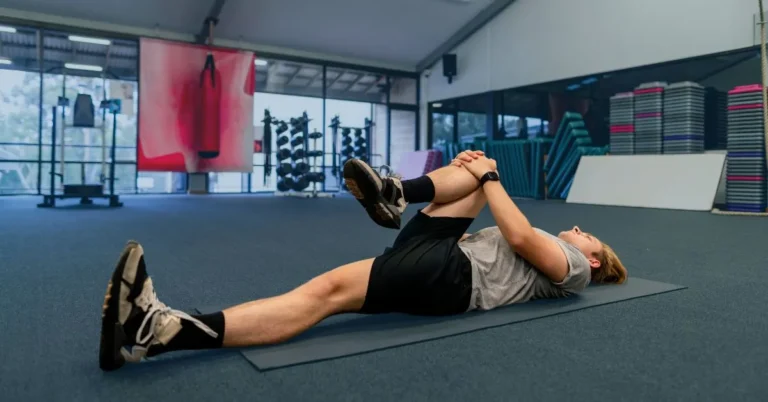
- Targeted strengthening: Improve the muscle support of the joints and surrounding areas.
- Mobility exercises: Increase range of motion and improve flexibility.
- Balance training: Improve stability and coordination. Especially useful after knee or ankle injuries.
- Functional movements: Practice controlled squatting, lunging, stepping, and jumping.
It is important not to do too many exercises. However, increasing the intensity too quickly may cause irritation to the healing tissue. Whereas not doing any movement for too long may hinder your ability to function.
Walking Normally Is Nice. Winning the Game Requires More.
An example of this could be an athlete who has no issues with ascending stairs, yet has issues landing with confidence. Playing sports puts additional stresses on your body. You need to be strong and have good control when sprinting, stopping suddenly, changing direction quickly, and jumping.
As you progress through your rehabilitation, your physio may start to include sport-specific exercises such as acceleration, deceleration, agility, controlled jumping, and changing directions to help prepare you for the movements required in your sport. These exercises aim to make you functional with increasing demands.
Searching for Orthopedic Physical Therapy Near Me? Look Past the Map.
You want to find an easy-to-access provider for your rehab sessions. A good place to start would be to search “orthopedic physical therapy near me.”
Find someone who has experience treating sports injuries and knows the physical requirements of your sport. Find out how they set goals for your rehab, how they track your progress, and how they work with physicians. It’s useful to have a short travel time. However, finding the right clinical guidance is most important.
Don’t Let the Competition Calendar Make Medical Decisions
Everyone wants to get back into sport as soon as they can. No one likes missing out on training, seeing others play and not feeling part of the sport they have worked hard for.
However, rushing back can increase the risk of re-injury. Healthcare professionals may perform tests to assess your strength, joint stability, balance, quality of movement, and sport-specific abilities. These tests will depend on your injury and how far you have come.
When looking for orthopaedic physical therapy near me, look for people who recognise that feeling better is not the same as being able to play.
A Better Comeback Starts With a Smarter Recovery
Sport injuries can cause disruption to your training, competing and goals, but can be rehabbed to allow you to regain the skills needed to compete.
Orthopaedic physiotherapy can help you regain strength, increase mobility, improve coordination and get your body back into shape for sport. This can be achieved with consistent effort, correct guidance and patience.
The temptation to rush is understandable. Resist it. A well-managed comeback is worth more than an early return followed by another trip to the sidelines.


Author Profile
Latest entries
 FitnessNovember 15, 2026 at 12:00 amOrthopedic Physical Therapy: How Athletes Can Recover Faster From Sports Injuries
 The HubNovember 15, 2026 at 12:00 amThe Work Behind the Playing Surface: How Testing Helps Keep Sports Facilities Safe and Game-Ready
 SoccerNovember 13, 2026 at 4:20 amSoccer Substitutions Explained: Why the Bench Can Change a Game
 AINovember 13, 2026 at 12:38 amHow Agent Assist AI Helps Improve Customer Support Efficiency
About the Author