
A sports venue takes shape long before the first game, beginning with the ground beneath it.
 0
 0
The vast majority of sports fans will attend a football match or basketball game and focus on the athletes and the action on the field or court. They are typically not interested in the surface they watch from. Occasionally, the surface does attract attention – bad.
Testing the construction materials for sports facilities is vital to ensure that they can stand up to the demands placed upon them and that they meet the required standards. From the ground that the sports facility is built upon through to the concrete used to form the seats and the pathways, all materials have to be suitable for the job in hand.
It Starts Beneath the Surface
Creating a playing field and seats for spectators is more than building a ground for games. First of all, the ground has to be suitable for the intended building.
The soil conditions of a building site can vary greatly from site to site. The ground must be prepared correctly before any construction can take place to prevent it from settling at a later date, which could cause damage to structures above, such as paved surfaces and buildings. Soil testing determines the soil’s suitable properties, and compaction testing can determine if the soil has been correctly compacted to the client’s specified requirements.
Construction of the sports facility’s foundation, parking spaces, access roads, and other areas of the sports complex is important and is to be tested in the same manner as the soil before construction starts.
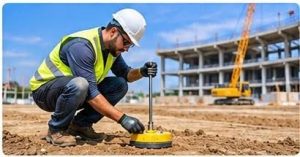
Soil testing helps assess ground conditions before sports facility construction.
The Materials That Support a Sports Venue
Concrete is widely used in sports facilities for foundations, seating, paths, and service areas. It is therefore important to test for quality during construction.
For freshly mixed concrete, tests can be performed using concrete testing equipment. Slump and air content tests can be performed. Hardened concrete specimens can also be tested for compressive strength to check if the concrete has reached the required strength for the construction at hand.
All materials other than concrete (such as asphalt) for use on pavement and surfaces are tested to confirm that they meet the specifications for use for that type of construction.
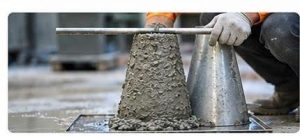
A slump test is one of the checks used to assess freshly mixed concrete.
Why Playing Surfaces Deserve Attention
The biggest part of the sports facility is the playing surface on which athletes compete. For example, a football field, a running track, and an outdoor basketball court all have different designs and different requirements in terms of the construction of the playing surface.
Correct preparation of sports surfaces requires the selection of suitable construction materials, an adequate drainage system, and compliance with the sport-specific requirements. The use of a sports surface also has to be taken into account during the construction phase.
Material testing is one aspect of a number of quality checks that need to be completed to verify that a facility has been built to the required standards. Although it cannot replace the appropriate design of surfaces and the subsequent maintenance of them, it does provide very useful information whilst a facility is being constructed.
The Equipment Behind Quality Checks
When looking at construction materials testing on sports facilities, field technicians and laboratory professionals are required for testing of soil, concrete and other aggregate materials using a range of instruments. These include moisture measurement tools and density testing equipment for soils, slump cones, air meters, specimen molds and compression testing machines for concrete, and sieves and balances for testing of aggregate materials.
The quality of the testing depends on using suitable test equipment for the required test and adhering to the methods and procedures described for the respective test. Additionally, test equipment must be properly cared for and calibrated.
Access to reliable construction materials testing equipment is crucial for contractors, engineers, and testing personnel alike as they conduct tests throughout the construction of a sports facility project.
A Better Sports Experience Starts Before Game Day
It takes a lot of work and great planning to build a great sports facility and to maintain it to keep it great long after it opens.
Whether a championship-winning shot or record-breaking performance is made in a new sports facility, lots of work is put into the planning, choosing of building materials, the construction, and the maintenance of a sports facility before opening day. By testing the materials used in the foundations of a sports facility, such as the soil, the concrete used for the construction of the seating, walkways, and other building parts, the asphalt used on the car parks, and other materials used throughout the facility, the people involved in a sports facility project can identify any problems with the building before completion.
When developing sports facilities for athletes and spectators from local and worldwide communities, careful attention to selecting and testing all materials and surfaces used in construction is required to ensure they can be used to their maximum potential for the longest possible time.



Author Profile

Latest entries
 FitnessNovember 15, 2026 at 12:00 amOrthopedic Physical Therapy: How Athletes Can Recover Faster From Sports Injuries
 The HubNovember 15, 2026 at 12:00 amThe Work Behind the Playing Surface: How Testing Helps Keep Sports Facilities Safe and Game-Ready
 SoccerNovember 13, 2026 at 4:20 amSoccer Substitutions Explained: Why the Bench Can Change a Game
 AINovember 13, 2026 at 12:38 amHow Agent Assist AI Helps Improve Customer Support Efficiency
About the Author