Photo by: Gary A. Vasquez
 0
 0
Every draft season produces the same tug of war. A team needs a quarterback, suspects its preferred prospect will be gone before its second-round pick, and considers moving into the final slots of round one. The NFL contract rules make the attraction clear: only a first-round selection carries a team-controlled fifth season. But the option is not free. Its value has to be weighed against the picks surrendered and the cost of the contract itself.
NFL Draft odds put a price on the same question a front office faces: will the quarterback still be available at its next pick? Fans who follow those prices often compare bookmakers as well, from mainstream sportsbooks to non gamstop betting sites, offshore operators outside Britain’s GamStop scheme. But a market price measures availability, not value. It cannot tell a club whether the fifth-year option justifies the picks a trade would cost.
The Extra Year of Control
The option comes with every first-round rookie contract, even at pick No. 32. Second-rounders get four-year rookie deals without it. That difference may give a team leverage if its quarterback develops well; it does not make him a better prospect or guarantee he would still be available without a trade.
Under league rules, the club decides after the player’s third regular season, generally by the start of May in his fourth contract year. If the quarterback becomes a reliable starter, the team can secure a fifth season without first negotiating a long-term extension. If he has not, the club can decline the option. The choice preserves flexibility until the decision deadline, not indefinitely.
The Guarantee Problem
The guarantee structure is the catch that trade-up math can overlook. Once a team exercises the option, the fifth-year salary becomes fully guaranteed. Any fourth-year salary not already fully guaranteed for skill, cap and injury is guaranteed at that point as well. The team is committing salary dollars, not merely reserving the right to keep the player.
The fifth-year salary has four tiers based on performance and playing time. Two or more original-ballot Pro Bowls in the first three seasons trigger the franchise-tag level; one brings the transition-tag level. Without a Pro Bowl, the higher playing-time tier applies if a player logs at least 75 percent of snaps in two seasons, averages 75 percent across all three, or reaches 50 percent in each of the three seasons. Otherwise the basic tier applies. Those two lower tiers are calculated from the third- through 20th-highest and third- through 25th-highest positional salaries over a five-year period, respectively. In a 2024 review of the fully guaranteed option era, Over the Cap found that only 25 percent of players selected from picks 26 to 32 had their options exercised. That is an all-position sample, not a projection for one quarterback.
What the Rookie Deals Cost
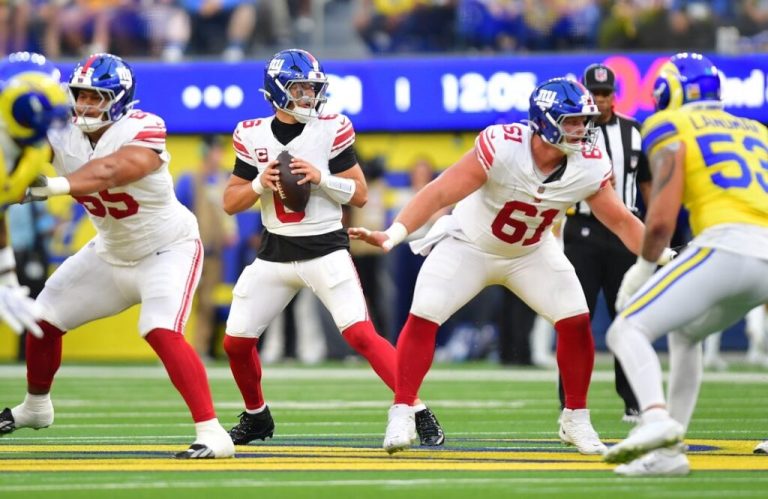
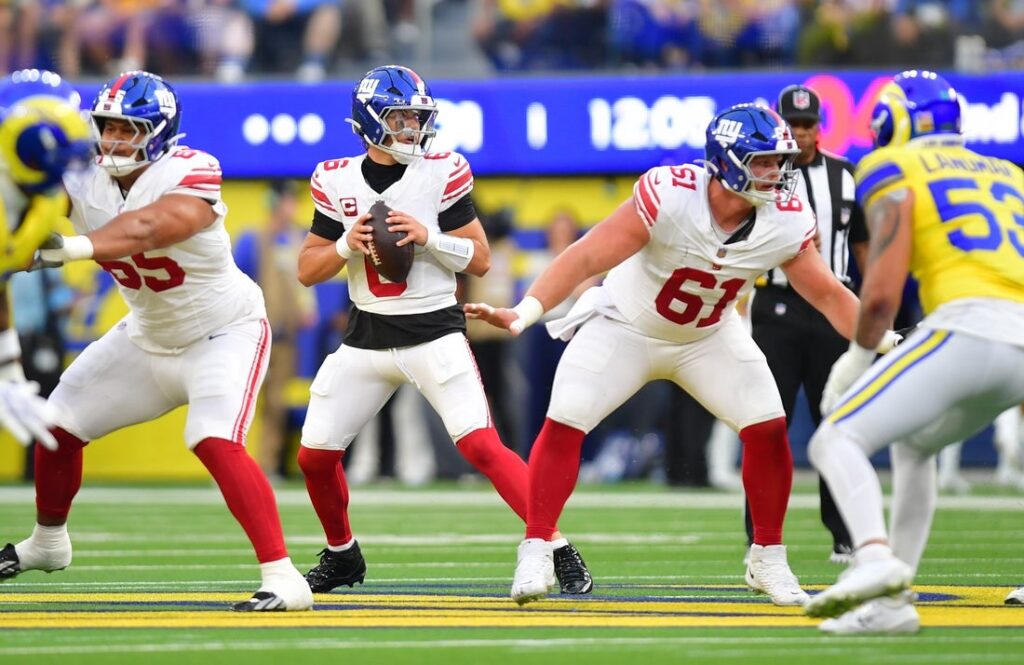
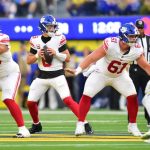
The Giants’ trade for Jaxson Dart is a useful test of the fifth-year option’s value. NGSC Sports’ 2025 draft recap notes that New York moved back into round one to take Dart at No. 25. To get there, the Giants sent Houston No. 34, No. 99 and a 2026 third-rounder. Dart’s four-year rookie deal is fully guaranteed at about $16.98 million. Tyler Shough, taken by the Saints at No. 40, also signed a fully guaranteed four-year deal worth about $10.8 million. Shough was the last player selected in the 2025 draft to receive full guarantees; No. 41 pick T.J. Sanders received about 94.6 percent. The comparison shows why moving up is about more than securing guarantees: a first-round pick also carries the possibility of a fifth season.
The difference in four-year contract value is roughly $6.2 million before accounting for the picks surrendered. It illustrates how draft position changes cost; it does not establish what the Giants would have paid for Dart at No. 34, where he might not have been available. Productive second-round picks can qualify for a fourth-year proven-performance escalator, but it does not add a fifth season.
The Price of Moving Up
Draft trade-value charts are guides, not binding prices. On the traditional Jimmy Johnson chart, pick No. 25 is worth 720 points, while No. 34 is worth 560 and No. 99 is worth 104. The two 2025 selections add up to 664 points, leaving the Giants’ 2026 third-rounder as the remaining cost of reaching No. 25. The value assigned to a future pick depends on the chart and the assumptions used to discount it.
The more important question is whether Dart would have been available at No. 34. If another team was likely to select him earlier, the relevant choice was not the same quarterback in round two at a lower salary. It was Dart in round one versus keeping the picks and taking someone else. The fifth-year option adds value to a trade made for the right prospect, but cannot rescue a poor evaluation or an excessive offer.
When the Trade Makes Sense
The strongest case for moving up begins with the quarterback evaluation, not the contract clause. A team needs to see a credible long-term starter, a real risk of losing him before its next selection, and a trade price it can absorb without sacrificing too much roster depth. The fifth-year option can strengthen that case: an extra controlled season is useful if the player develops. It should not turn a marginal prospect into a first-round investment.
If the club later declines the option, the reason for paying an option-specific premium disappears while the traded picks remain gone. Exercising it on the wrong player is costly too, because the salary becomes guaranteed before the fourth season. Waiting until round two saves the trade premium only if a suitable quarterback is still there. The fifth-year option is a genuine asset, but usually a tie-breaker rather than a stand-alone reason to buy a pick.



Author Profile

Latest entries
 NFL DRAFTNovember 11, 2026 at 10:17 amDoes the Fifth-Year Option Justify Trading Into the Late First Round for a Quarterback?
 LifeNovember 11, 2026 at 12:31 amConfidence Comes From Having a Next Step
 outdoorsNovember 11, 2026 at 12:00 amWhy Do Families Enjoy Having a Pond Hockey Rink?
 gamblingNovember 10, 2026 at 9:26 amHow Online Gambling Is Changing the Sports Betting Industry
About the Author