
 0
 0
Baseball is a sport built around teamwork, preparation, and tradition. From youth leagues to professional competitions, every detail contributes to the overall experience of players and fans. One of the most recognizable parts of the game is the team uniform. Although uniforms are often associated with appearance, they also serve practical purposes related to comfort, movement, organization, and team identity.
A well-designed baseball uniform creates a consistent appearance across the roster while allowing players to focus on their responsibilities on the field. Understanding the different elements of baseball apparel can help coaches, athletic directors, and team organizers make better decisions when preparing for a new season.
The Importance of Baseball Uniforms in Team Sports
Baseball uniforms have long represented the identity and history of baseball jersey numbers. Colors, logos, lettering, and numbers help distinguish one club from another. They also create a recognizable appearance that supporters can associate with their favorite players.
For players, wearing the same uniform can encourage a sense of belonging. Whether competing in a local youth league or a high school championship, a coordinated team appearance reinforces the idea that every player contributes to a shared goal.
Uniforms also serve an important organizational purpose. Player numbers make identification easier for coaches, officials, spectators, and scorekeepers. Consistent designs help maintain a professional appearance throughout games, tournaments, and team events.
Choosing the Right Fabric for Baseball Jerseys
Fabric selection is one of the most important considerations when choosing baseball apparel. Players spend considerable time running, throwing, batting, and fielding, often under changing outdoor conditions. Clothing should support these movements without creating unnecessary discomfort.
Polyester is commonly used in modern baseball jerseys because it is lightweight, durable, and suitable for athletic clothing. Performance fabrics with moisture-management properties can help move perspiration away from the skin, making them useful during warm-weather practices and games.
Breathability is another important factor. Materials that allow airflow can help players remain more comfortable during extended periods of activity.
When evaluating uniform materials, teams should consider:
- Moisture management: Helps manage perspiration during physical activity.
- Breathability: Supports airflow and everyday comfort.
- Durability: Helps garments withstand regular practices and games.
- Flexibility: Allows players to move naturally when throwing, swinging, and fielding.
- Easy maintenance: Makes regular washing and care more convenient.
The best material depends on the team’s playing environment, budget, and preferred uniform style.
How Uniform Design Influences Team Identity
Baseball has a strong visual tradition. Classic pinstripes, contrasting sleeves, button-front jerseys, and recognizable team colors have become important elements of the sport’s culture.
Modern teams can maintain these traditional features while introducing contemporary design choices.
For example, a team might use its school colors as the primary uniform palette, incorporate a custom logo across the chest, and assign contrasting colors to player names and numbers.
Several design elements deserve attention:
Team Colors: Consistent colors make uniforms recognizable and help establish a visual connection between players and supporters.
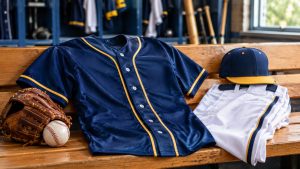
Logos and Lettering: A clear team logo can communicate the club’s identity without making the jersey look overcrowded.
Player Numbers: Numbers should be readable from a reasonable distance and positioned consistently.
Uniform Style: Full-button, two-button, V-neck, and round-neck designs offer different appearances while serving the same basic purpose.
A balanced design combines visual appeal with practical functionality.
Understanding Different Types of Baseball Uniforms
Not every baseball activity requires the same clothing. Teams often use different garments for games, practices, travel, and warm-ups.
Game Jerseys: These are the primary tops worn during official competitions. They commonly feature team colors, player numbers, and identifying logos.
Baseball Pants: Pants are designed to accommodate running, sliding, and defensive movements. Reinforced construction and an appropriate fit are useful considerations.
Batting Practice Jerseys: Practice tops are generally selected with comfort and ease of movement in mind. They may feature simpler designs than official game uniforms.
Warm-Up Apparel: Hoodies, jackets, and training shirts help teams maintain a coordinated appearance before games and during cooler conditions.
Selecting the right combination of garments helps teams prepare for different activities throughout the season.
What Teams Should Consider Before Ordering New Uniforms
Ordering uniforms requires more planning than simply choosing colors and sizes. Team organizers should evaluate several practical details before approving a design.
First, prepare an accurate roster. Knowing the number of players and their required sizes helps reduce unnecessary adjustments later.
Second, establish a realistic budget. Compare the cost of individual jerseys with complete uniform packages that may include matching pants and socks.
Third, consider the production schedule. Uniforms should arrive with enough time for players to check their fit before the first competition.
Finally, review the design carefully. Coaches and team representatives should confirm spelling, numbers, logos, color combinations, and garment styles before approving production.
Teams exploring different suppliers can compare custom baseball uniforms to understand available jersey styles, customization choices, and uniform package options.
Why Proper Fit Matters for Baseball Players
A uniform should allow players to move comfortably throughout a game. An overly restrictive jersey may interfere with natural movement, while poorly fitted pants can become uncomfortable during running and fielding.
Sizing is especially important for youth and travel baseball teams because players may have different body measurements even when they belong to the same age group.
Teams should use accurate measurements rather than relying entirely on age or general size assumptions.
Important measurements include:
- Chest circumference for jerseys.
- Waist measurements for pants.
- Hip measurements for appropriate garment proportions.
- Inseam measurements for selecting suitable pant lengths.
Coaches and organizers should also consider whether the supplier offers youth and adult sizing options to accommodate the entire roster.
Maintaining Baseball Uniforms Throughout the Season
Regular care can help baseball apparel maintain its appearance and usability. Since uniforms are exposed to dirt, grass, perspiration, and repeated washing, following basic garment-care practices is important.
Players should follow the manufacturer’s washing instructions. Separating heavily soiled clothing, using suitable detergents, and avoiding excessive heat when drying can help protect fabrics and printed designs.
Uniforms should also be checked periodically for loose stitching, damaged buttons, and worn areas. Addressing minor issues early can help prevent them from becoming larger problems.
Proper storage is equally useful. Clean, completely dry garments should be stored in a well-ventilated space between games.
The Role of Customization in Modern Baseball
Customization gives teams greater control over how their uniforms look and feel. Rather than selecting identical generic designs, organizations can incorporate their own colors, logos, names, and numbers.
This flexibility is particularly useful for school programs,community leagues, travel baseball organizations, and independent clubs.
For example, a youth league may prefer bright colors and simple lettering, while a high school team may choose a more traditional button-front jersey with contrasting sleeves and classic baseball typography.
Companies such as Hamco Sports provide team apparel options that allow organizations to explore different uniform styles and customization possibilities.
The important consideration is finding a design that represents the team while remaining practical for everyday athletic use.
Final Thoughts
Baseball uniforms are much more than matching clothing. They combine tradition, team identity, comfort, and practical functionality into one important part of the game.
From selecting breathable materials to choosing suitable jersey styles and accurate sizing, every decision contributes to the overall uniform experience. With proper planning and attention to detail, teams can create a consistent appearance that players feel comfortable wearing throughout the season.
Whether organizing a youth league, preparing a high school roster, or managing a competitive travel team, investing time in uniform selection can help create a stronger sense of team identity and readiness for the season.


Author Profile

Latest entries
 UFCNovember 5, 2026 at 12:03 amRashad Evans: From UFC Champion to Psychedelic Advocate
 FashionNovember 5, 2026 at 12:02 amHow to Pair On Cloud Shoes with Sportswear for a Modern Look
 BaseballNovember 5, 2026 at 12:02 amMore Than a Jersey: How Baseball Uniforms Shape Team Identity and Player Comfort
 FashionNovember 4, 2026 at 12:01 amEssentials Hoodie for Women: Casual Outfits with a Premium Feel
About the Author