 0
0
 0
0
Laundry rooms can look fairly clean because most of the work happens inside closed machines. There are no cooking splatters, usually few food crumbs, and often less foot traffic than in a kitchen or hallway.
Yet machine tops, shelves, floor edges, hampers, and narrow gaps can become dusty surprisingly fast.
The reason is that washing and drying constantly moves material through the room. Clothing brings in hair, soil, paper fibers, and lint. Dry fabrics release more fibers as they are handled. Detergent creates sticky residue that catches airborne particles. Machine vibration shifts small debris toward gaps that are rarely reached during routine floor cleaning.
Much of this buildup is pale and lightweight, so it may remain unnoticed until it forms a thicker layer.
Understanding where the debris comes from makes it easier to clean the room without turning every laundry day into a major project.
Every Load Brings Something Into the Room
Clothing does not arrive at the washer carrying only invisible dirt.
Pockets may contain tissue fragments, paper, sand, small debris, or forgotten items. Towels and bedding release lint. Pet blankets can carry hair. Outdoor or work clothing may bring in dry soil and grass.
Some of that material falls out while the laundry is being sorted.
Check the floor around the hampers and directly in front of the washer after several loads.
You may find:
- Hair
- Threads
- Lint
- Fine grit
- Tissue fragments
- Small pieces of paper
That mixture can gradually migrate toward the edges of the room.
Keeping the sorting area easy to vacuum prevents loose debris from being pushed beneath machines or storage furniture where it becomes more difficult to reach.
Dry Fabrics Release Fibers During Normal Handling
Dryers make fabric shedding more obvious.
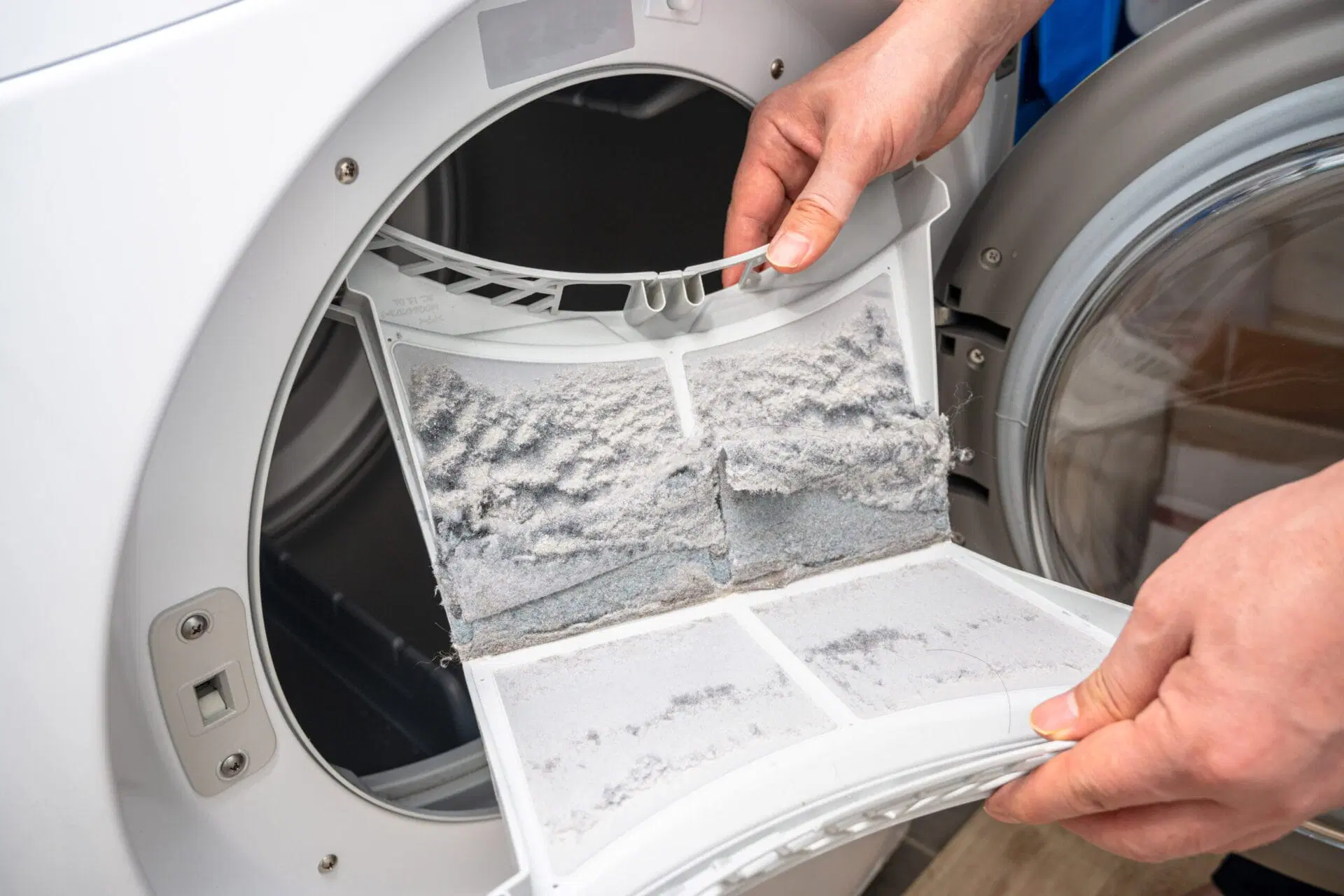
As clothing and linens tumble, loose fibers separate from the material. Much of that lint is captured by the appliance’s lint system, but fibers can still enter the room while laundry is loaded, unloaded, carried, shaken out, or folded.
Freshly dried towels are a good example.
Moving a warm stack from the dryer to a folding counter may release light fibers that remain suspended briefly before settling nearby.
Over time, those particles land on:
- Machine tops
- Shelving
- Baseboards
- Folding surfaces
- Storage containers
- Flooring
That is why a laundry room can develop a dusty appearance even when the door remains closed much of the day.
The dust is partly being generated inside the room.
Lint Settles Where Air Movement Slows
Fine lint behaves differently from heavier grit.
It can travel with small air currents created by doors opening, HVAC airflow, exhaust movement, or simply someone moving laundry through the room.
Once the particles reach a quiet corner, wall edge, or space beside an appliance, they tend to remain there.
Look along baseboards rather than judging the room only by the center of the floor.
The largest lint clumps often form in places with almost no direct traffic.
Vacuum these areas while the fibers are dry.
A suitable crevice attachment can help reach narrow edges without pushing loose lint deeper into gaps.
Machine Vibration Moves Small Debris Toward Hidden Spaces
Washers and dryers move slightly during normal operation.
Even correctly installed machines produce some vibration.
That movement can gradually shift loose lint, hair, coins, paper fragments, or other debris toward appliance bases and the gap between machines.
This explains why the narrow space beside a washer can become much dirtier than the open floor directly in front of it.
Use an appropriate long vacuum attachment to reach accessible gaps.
Do not casually pull connected appliances away from the wall just to reach more dust.
Depending on the equipment, water hoses, electrical connections, gas lines, drain lines, or dryer venting may be involved.
Safe access matters more than reaching every hidden particle.
Detergent Turns Dry Dust Into Sticky Buildup
Not everything in a laundry room is dry.
Liquid detergent, fabric products, and stain treatments can leave small drips on shelves, machine surfaces, container bottoms, and dispenser areas.
Powdered products may create fine residue around their containers.
Once a sticky film forms, airborne lint adheres to it.
The result is often a gray or fuzzy patch that develops much faster than dust on a dry surface.
Check beneath detergent bottles periodically.
A slow drip can create a ring that remains hidden until the container is moved.
Wipe fresh spills before they harden, and clean the exterior of leaking or sticky containers before returning them to a clean shelf.
Otherwise, the residue simply transfers back onto the surface.
Folding Areas Quietly Collect Fibers
Laundry rooms often have a counter, shelf, or appliance top used for folding.
Every stack of dry clothes introduces more fibers to that area.
Because lint is usually pale, it can blend into light-colored counters and remain unnoticed.
Move baskets and supplies before wiping rather than cleaning around them.
Check the rear edge where the folding surface meets the wall.
That narrow line can collect lint while the middle of the counter appears clean.
Keeping the folding surface reasonably clear also matters for clean laundry.
Freshly washed clothes placed on a dusty counter can immediately pick up fibers and debris again.
Hampers Carry Debris Between Rooms
A laundry hamper travels.
It may move between bedrooms, bathrooms, closets, hallways, and the laundry room several times each week.
Its bottom can pick up floor dust and hair.
The inside collects lint from clothing.
Inspect hampers periodically rather than thinking of them only as storage containers.
Plastic baskets can often be wiped according to their material.
Fabric hampers may have removable liners or specific care instructions.
Check the floor beneath the hampers too.
A basket that sits in one spot for weeks can create a dust outline much like a small piece of furniture.
Washer Dispenser Areas Need Their Own Check
Detergent and fabric-product dispensers can accumulate residue gradually.
Small spills happen when liquid is poured.
Drops may run around the opening or dry on nearby machine surfaces.
Follow the washer manufacturer’s instructions for cleaning accessible dispenser components.
Do not pour household cleaners or extra water into parts of the machine unless the instructions permit it.
Wipe exterior drips before they become sticky.
A small amount of detergent film can trap enough lint over time to make the area look much dirtier than the rest of the appliance.
Know Where House Cleaning Ends and Appliance Maintenance Begins
Laundry-room debris falls into two very different categories, and the easiest way to tell them apart is to ask what must be disturbed to reach it.
Lint sitting on a machine top, dust along a baseboard, detergent residue on an accessible shelf, or loose fibers beside an appliance are ordinary room-cleaning problems. If reaching the debris would require disconnecting hoses, moving a gas-connected dryer, removing appliance panels, or working inside dryer venting, the job has crossed into appliance or vent maintenance.
That boundary matters when considering professional cleaning services grand rapids. Residential cleaners can address the accessible surfaces around the laundry setup as part of normal house cleaning, while internal appliance components, connected vent systems, or repair concerns should remain with the appropriate technician.
A cleaner laundry room does not require treating every hidden part of the washer or dryer as a housekeeping task.
Give the Dryer Area Regular Visual Checks
The dryer deserves more than an occasional wipe across the top.
Clean the lint screen according to the manufacturer’s instructions and inspect the accessible area around it for loose fibers.
Pay attention to how the appliance is operating too.
If drying times become unusually long, the machine becomes unusually hot, or there are concerns about vent performance, do not respond by simply cleaning the room more aggressively.
That may indicate a maintenance or safety issue requiring separate attention.
Avoid inserting improvised tools into dryer components or venting.
Surface cleaning and appliance servicing solve different problems.
Keeping that distinction clear reduces the risk of damaging equipment while chasing inaccessible lint.
Shelves Above Machines Collect Mixed Debris
Shelving above washers and dryers often holds a mixture of laundry and household supplies.
Detergent, spare towels, paper products, cleaners, baskets, and miscellaneous storage may all share the same space.
Those shelves collect ordinary household dust plus fibers generated by laundry activity below.
Clean one section at a time.
Remove the stored items.
Vacuum or wipe the exposed surface as appropriate.
Check bottles for sticky residue before putting them back.
Paper packaging can also produce fibers, while tightly packed shelves make dust harder to notice.
Leaving a little open space makes future cleaning easier because fewer items need to be moved each time.
Floor Edges Often Reveal More Than the Center
If you want to know how much lint a laundry room is producing, inspect the perimeter.
The middle of the floor may look relatively clean because it receives more foot traffic and more frequent vacuuming.
Along the walls, lint can combine with hair and ordinary dust to create soft clumps.
Vacuum this material before damp cleaning.
Do not run a wet mop directly over loose lint.
Moisture can turn dry fibers into sticky strands that gather around baseboards, machine feet, and floor edges.
Once the dry debris has been removed, clean the hard flooring according to its material.
Clean Around the Machines Without Forcing Access
There is a difference between using a crevice attachment in an accessible gap and moving a connected appliance simply because some dust is visible behind it.
Take the safer option.
If a vacuum attachment can reach the debris without disturbing the washer or dryer, use it.
If the machine must be disconnected or shifted significantly, reconsider whether that area belongs in routine household cleaning.
It may be appropriate to address it during appliance servicing or another planned maintenance event.
This keeps ordinary laundry-room cleaning proportional to the actual problem.
Watch the Floor Around Detergent Storage
Sticky detergent residue does not always stay on the shelf.
A bottle can drip while being carried.
Powder may fall during measuring.
Liquid may run down the side of a container and eventually reach the floor.
Inspect the area beneath the main laundry-product storage occasionally.
If a sticky patch is present, remove loose lint and grit first.
Then clean the residue with a method suitable for the flooring.
Trying to mop across loose fibers and detergent at the same time can spread the mixture farther.
Keep Clean Laundry Away From Dirty Collection Zones
Laundry rooms often handle clean and dirty textiles only a few feet apart.
A hamper may contain worn clothing while a counter beside it holds freshly folded towels.
Try to keep those zones reasonably separate.
Do not place clean clothing on the floor while rearranging baskets.
Keep the main folding surface clear enough that clean items do not need to rest on detergent shelves or machine edges covered with lint.
This is not about creating a sterile laundry room.
It simply prevents cleaned clothing from immediately passing through the dustiest part of the space on its way back to a closet.
Give the Room a Short Maintenance Cycle
Laundry rooms usually respond better to frequent small checks than occasional major cleaning sessions.
After several loads, look at:
- The folding surface
- Washer and dryer tops
- Floor edges
- Detergent storage
- The area around hampers
Another week, check shelving and accessible appliance gaps.
Rotate the slower areas instead of attempting every detail at once.
The goal is to interrupt lint and residue before they combine into thicker buildup.
A five-minute vacuum along the perimeter can prevent a much larger collection of fibers from forming behind baskets and machines.
Make the Laundry Room Part of the Broader House Routine
Because laundry rooms are often small and enclosed, they are easy to exclude from ordinary house cleaning until the buildup becomes obvious.
It is more practical to treat the room as one of the home’s recurring utility spaces.
For a household using Rapids Cleaning Services, that can mean keeping accessible laundry-room floors, shelves, machine exteriors, and surrounding surfaces in the same cleaning rotation as other frequently used areas rather than waiting for visible lint clumps to signal that the room has been neglected.
The machines themselves still follow their own maintenance requirements.
The room around them follows a housekeeping routine.
Clean Storage Containers Before Returning Them
Cleaning the shelf is only half the job if the containers placed back on it are sticky or dusty.
Check detergent bottles, baskets, boxes, and organizers before returning them to a freshly cleaned surface.
Wipe appropriate containers if needed.
Otherwise, residue from the underside of a bottle may recreate a ring immediately.
This is especially useful with products that are handled frequently.
A clean shelf stays clean longer when the objects resting on it are not carrying old detergent film or lint.
Avoid Overloading the Room With Cleaning Products
Cleaning supplies can become another source of clutter in a laundry room.
Several similar bottles, spare brushes, cloths, and partially used products may fill shelves that already contain laundry items.
Keep products that match the actual surfaces and tasks in the home.
Store them safely according to label instructions.
A less crowded shelf is easier to inspect for leaks and easier to wipe.
It also reduces the number of objects collecting lint.
The same principle applies to empty detergent bottles and packaging.
Remove them rather than allowing the shelf to become long-term storage for containers that are no longer needed.
Let Visible Buildup Guide the Slower Tasks
Not every laundry-room surface needs weekly attention.
Upper shelves may remain clean for much longer than the folding counter.
An inaccessible gap may accumulate slowly.
The area beneath a hamper might need attention sooner because the basket is moved repeatedly.
Use visible conditions to guide the slower work.
Rapids Cleaning Services can be incorporated into that broader recurring schedule without requiring every hidden laundry-room surface to receive identical attention each time.
A practical routine focuses first on the places where fibers and residue actually collect.
Laundry Creates Its Own Cleaning Cycle
Laundry rooms get dirty because the activity inside them constantly creates and transports debris.
Clothing brings in hair and grit.
Fabrics release fibers.
Drying produces lint.
Detergent creates sticky residue.
Hampers move dust between rooms.
Machine vibration shifts small particles toward hidden gaps.
The best response is not to deep clean the entire room after every wash day.
Focus instead on the paths that laundry-related debris follows: sorting zones, machine exteriors, folding areas, shelves, hampers, floor edges, and safely accessible gaps.
Keep ordinary room cleaning separate from appliance maintenance, and handle small deposits before they combine.
Once those collection points receive regular attention, the laundry room becomes much easier to maintain even though the work done there never stops producing lint.



Author Profile

Latest entries
 outdoorsOctober 25, 2026 at 12:00 amHow to Build a Specialty Sports Equipment Store Without Holding Inventory
 The HubOctober 23, 2026 at 2:17 am6 Best Places to Buy a Golf Simulator Projector: The 2026 Shortlist of Retailers Worth Buying From
 TechOctober 23, 2026 at 12:00 amHard Disk Structure in Operating System
 SportsOctober 23, 2026 at 12:00 amHow Korean Sports Fans Follow Football, Basketball, Baseball, and Major Sporting Events Online
About the Author