Photo Credit: KTVZ
 0
0
 0
0
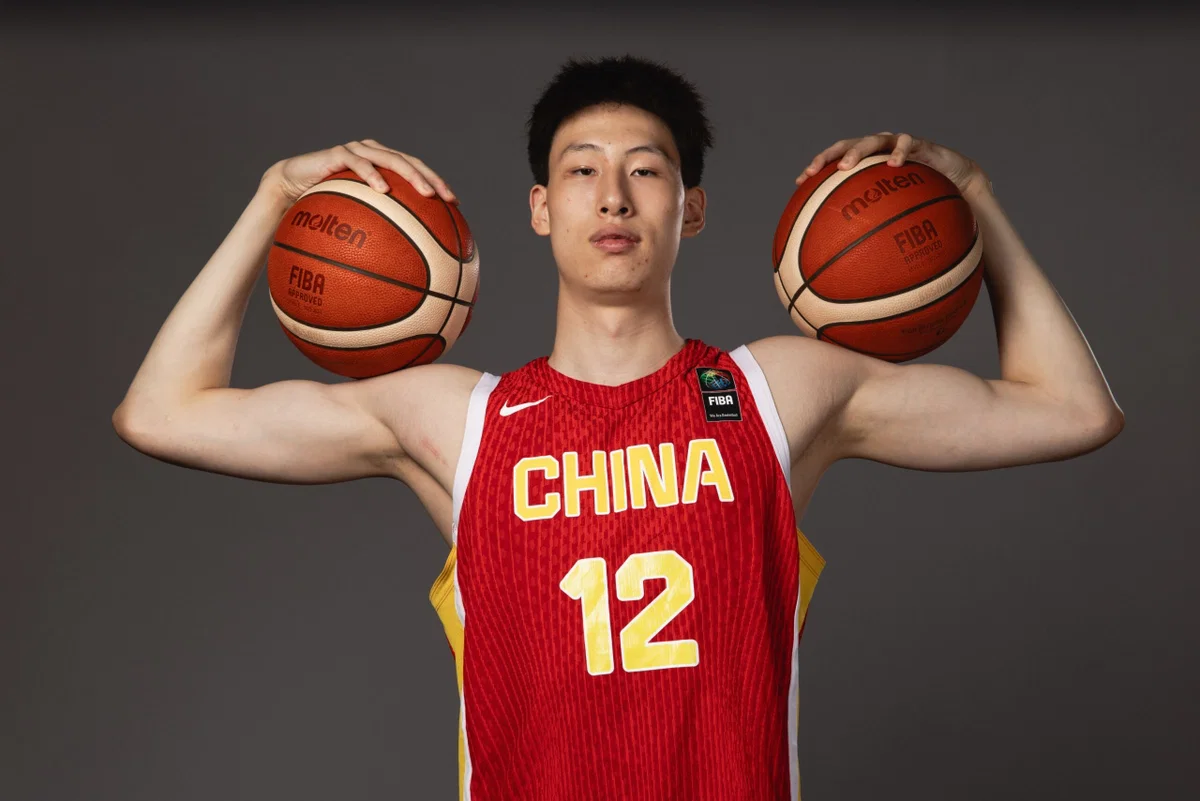
American college basketball has become a new destination for Chinese players chasing bigger dreams. For decades, many of China’s top prospects followed a familiar path. They developed in the Chinese Basketball Association before pursuing professional opportunities. Now, a growing group wants to change that model. More than 10 Chinese players will compete in NCAA Division I basketball this season. They represent both the men’s and women’s games. The group includes several intriguing prospects and established players. Their journeys could help open another pathway for future Chinese stars. One of the biggest names is Zhang Boyuan. The 6-foot-9 forward will begin his freshman season at Louisville. Zhang grew up in Changchun, China, and developed into one of the country’s top young prospects. He later moved to California for his final year of high school.
At Veritas Academy, Zhang averaged 20.2 points per game against strong competition. ESPN ranked him No. 56 nationally in the 2026 recruiting class. His path to Louisville started with an important experience. Zhang played for the World Team at the Nike Hoop Summit in Portland. The World Team faced a United States squad featuring AJ Dybantsa and Cam Boozer. Zhang scored six points during the opening quarter. However, he saw limited action afterward. The United States won that game 124-114. Still, the experience changed Zhang’s plans. He had planned to attend college in China. Instead, he convinced his parents to let him pursue basketball in America. Now, Zhang enters a Louisville program with plenty of competition for minutes.
The Cardinals added experienced transfers Jackson Shelstad, Karter Knox and De’Shayne Montgomery. Zhang will need to earn his opportunities. However, his size and versatility give him an intriguing foundation. Purdue also has a major Chinese prospect entering the college game. Huan Sinan stands 7-foot-1 and carries a four-star recruiting profile. ESPN ranked Huan No. 75 nationally in the 2026 class. His size immediately makes him an interesting player to watch. The women’s game also features several Chinese players. Ran Kejia will play for Xavier. She enters the season with significant attention surrounding her future. Jacob Zhu will compete for Western Carolina. Meanwhile, Yuting Deng joins Oklahoma State for the 2026-27 season. The 6-foot-2 guard transferred from Baylor and enters her junior season. Deng already has Big 12 experience. She played 33 games for Baylor during the 2025-26 season. Deng averaged 6.6 points and 1.9 rebounds per game.
She also shot 37 percent from three-point range. Another experienced player is Wang Junjie. The Chinese national team regular played at San Francisco last season. He averaged 20.3 minutes per game before transferring this summer. Wang’s goal involves earning a larger role at his next destination. His international experience could help him make that jump. Then there is Lin Wei at Oregon. Lin became the first former Chinese professional basketball player to play NCAA basketball. Before joining the Ducks, he starred for the Nanjing Monkey Kings.
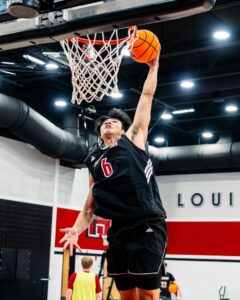
He averaged 21 points per game during the 2024-25 CBA season. Lin also produced 5.0 assists and 3.3 rebounds per game. However, college basketball presented a major adjustment. Lin averaged 6.6 points during his first season at Oregon. He played 30 games and made nine starts. That adjustment shows why this experiment matters. Chinese prospects cannot assume success simply because they dominated in China. The American college game brings different physical demands and a different style.
Still, the NCAA offers opportunities that can benefit young players. Jonathan Givony, an NBA and college basketball analyst, believes the American system can provide valuable development. Young players can compete against athletes closer to their age. They can also learn through mistakes without fighting established professionals for every possession. That can matter for Chinese players trying to reach their potential. The financial landscape has also changed. NIL rules now allow college athletes to earn money from their name, image and likeness. That development has made American college basketball more attractive globally. The NCAA has also become increasingly international. International players accounted for about 14 percent of the men’s Division I tournament field. They represented about 15 percent of the women’s field in 2025. However, the NBA remains a difficult destination.
No Chinese player has reached the NBA through the college basketball pathway so far. That makes this current group especially interesting. The goal also does not have to end in the NBA. Division I features roughly 5,500 players. Fewer than one percent eventually reaches the NBA. Many others pursue professional careers overseas. Those opportunities include the EuroLeague, CBA and NBL. That reality gives these Chinese players more reasons to embrace the college route. For Zhang Boyuan, the goal remains simple. He wants to become a better basketball player. That mindset could define this entire group. Chinese basketball has produced stars such as Yao Ming and Yi Jianlian through traditional routes. Wang Zhizhi also reached the NBA after developing in China.
Now, a new generation wants to try something different. Zhang, Huan, Ran, Zhu, Deng, Wang and Lin represent that movement. Their success could influence how future Chinese prospects view American college basketball. If several players thrive, more young talents could follow them across the Pacific. For now, these Chinese Mavericks have something to prove. They want to show that America can become more than another stop. It could become a new path toward the highest levels of basketball. This version focuses on the players and schools while explaining why the college route represents a major shift for Chinese basketball.



Author Profile

-
Bradley Walker (VP) and Head of our Florida operations for NGSC Sports, bringing extensive experience across collegiate, professional, and amateur athletics. His coverage spans USF Athletics, including football, baseball, lacrosse, and softball, as well as University of Tampa baseball.
Bradley also provides coverage of minor league baseball with the Clearwater Threshers and Major League Baseball with the Tampa Bay Rays. On the national stage, he covers college football bowl games and conference championship matchups, along with premier golf events across the PGA Tour, LIV Golf, and LPGA Tour.
In addition to his reporting work, Bradley is the play-by-play announcer for Pinellas Park High School Patriots football, lending his voice and insight to Friday night lights.
He is also an active podcast host and contributor, serving as a host on The Walker Report, where he delivers in-depth sports analysis, interviews, and coverage across multiple levels of competition.
Latest entries
 BasketballSeptember 15, 2026Chinese Mavericks Take Aim at College Basketball
 SportsSeptember 15, 2026Which Fall Sports Can Take Kids to College?
 SportsSeptember 15, 2026Youth Sports Costs Are Out of Control
 UFCSeptember 15, 2026Tom Aspinall Vacates UFC Heavyweight Title After Eye Injury
About the Author