
 0
0
 0
0
The college sports landscape was thrown into absolute chaos on Monday morning, when a Texas judge effectively dismantled one of the most sacred boundaries in sports integrity.
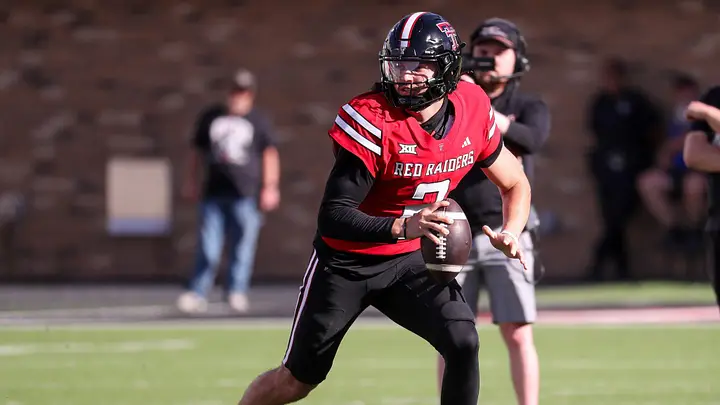
By granting Texas Tech quarterback Brendan Sorsby a temporary injunction against the NCAA, Judge Ken Curry cleared the way for a player who admitted to betting on his own team to suit up and play college football this fall.
To say the decision has sparked outrage is a massive understatement. Across the country, athletic directors, compliance officers, and fans are asking the exact same question: If betting on your own team doesn’t get you banned anymore, why do we even have a rulebook?
The Case: From 3,000 Bets to an Injunction
Sorsby, who transferred to Texas Tech this offseason after stints at Indiana and Cincinnati, was declared permanently ineligible by the NCAA after an investigation revealed a staggering history of gambling.
According to court records, Sorsby acknowledged making tens of thousands of dollars in impermissible wagers—totaling at least $90,000 and more than 3,000 individual bets—during his college career. Most damningly, that history included 40 bets placed on Indiana Hoosiers football in 2022 while he was a redshirt freshman on the roster.
The NCAA has traditionally held a zero-tolerance policy regarding athletes wagering on their own school or sport. While penalties for betting on professional sports have softened to include counseling and partial suspensions, betting on your own team has always been the ultimate “red line”—resulting in lifetime banishment to preserve the fundamental honesty of the game.
However, Sorsby’s legal team argued that his gambling stemmed from a “clinically diagnosed gambling disorder” and anxiety. They successfully argued that because he never engaged in point-shaving or match-fixing, and because he immediately sought a 35-day residential treatment program, permanent ineligibility would cause “irreparable injury” to his career and a reported $5 million in prospective NIL earnings.
Judge Curry agreed, ruling that Sorsby can play this season provided he serves a minor two-game suspension (against Abilene Christian and Oregon State) and continues attending counseling and Gamblers Anonymous meetings.
The Backlash: “We’ve Reached the Point of No Return”
The reaction from the collegiate sports community was immediate, visceral, and unprecedented. The decision is being viewed not as a triumph for mental health advocacy, but as a dangerous judicial overreach that treats competitive integrity as secondary to an individual’s earning potential.
The NCAA issued a blistering statement on Monday morning, pulling no punches about the ruling’s consequences:
“The NCAA strongly disagrees with the court’s ruling in Sorsby’s case and is deeply concerned about the damaging, far-reaching and broadly destabilizing ramifications of this outcome — which undermines and corrupts the integrity of sports… [We] must continue to aggressively defend against actions that defraud college athletics and threaten competitive integrity, such as betting on one’s own sport.”
The outrage within the Big 12 conference is turning into an outright mutiny. Following the ruling, reports surfaced that several athletic directors are having serious conversations about boycotting and refusing to play Texas Tech this season.
Kansas State athletic director Gene Taylor expressed the absolute disgust, sharing the consensus among his peers:
“It is absolutely devastating for him to be able to play when every other sport, no matter the level, deems an athlete ineligible or they are punished severely for betting on their team… I know the kid has a problem. Well, get well and focus on your problem.”
Georgia athletic director Josh Brooks, a member of the NCAA Football Oversight Committee, took it a step further: “If a state court wants to dictate eligibility rules, they can play themselves… We’ve officially reached the point of no return.”
Why Rules in the NCAA Matter
The Sorsby decision cuts directly to the existential crisis of modern college athletics. In an era already defined by the chaotic “Wild West” of the transfer portal and multi-million-dollar NIL collectives, rules were supposed to be the final tether keeping college sports from devolving into a completely un-policed entertainment exhibition.
When a local district court can overrule a governing body on a core issue like gambling integrity, it sets a terrifying precedent:
The Eradication of Accountability: If a mental health diagnosis or a prompt stay in rehab can legally erase a lifetime ban for wagering on your own team, any future athlete caught gambling now has a ready-made legal blueprint to bypass NCAA enforcement.
The Death of Competitive Equity: If the NCAA loses the legal authority to govern who is allowed on the field based on behavioral and ethical boundaries, the entire concept of fair competition collapses.
The Loss of Fan Trust: Sports rely entirely on the absolute certainty that the participants on the field are trying their hardest to win, uninfluenced by outside financial interests. Once fans begin to suspect that players have money riding on the outcomes of their own games, the entire billion-dollar enterprise loses its soul.
Brendan Sorsby’s battle with addiction is an illness that absolutely deserves clinical support, empathy, and rigorous treatment. But treating an addiction does not mean a player is entitled to a starting quarterback spot in a Power Four conference. By prioritizing an individual’s immediate career prospects over the foundational integrity of the sport, the court has dealt a devastating blow to the rule of law in college athletics. If the NCAA cannot enforce its most basic anti-gambling restrictions, it truly doesn’t have rules at all.



Author Profile

Latest entries
 The HubOctober 10, 2026How Digital Marketing and Smart Budgeting Are Transforming the Sports Industry
 Online BettingOctober 9, 2026Lambabet and the Main Bonuses for New Players
 Online BettingOctober 9, 2026Dodgers vs Brewers Props Guide: Home Run Threats, Power Bats and Key Factors
 MMAOctober 7, 2026Petr Yan vs. Merab Dvalishvili III: A Trilogy Built on Chaos, Cardio, and Championship Stakes
About the Author
[…] Now, a growing group wants to change that model. More than 10 Chinese players will compete in NCAA Division I basketball this season. They represent both the men’s and women’s games. The group […]