
 0
0
 0
0
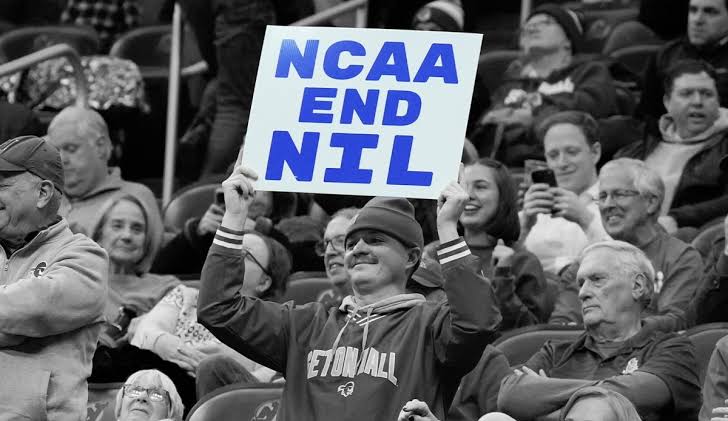
When the floodgates of Name, Image, and Likeness (NIL) burst open, it was heralded as a long-overdue triumph for player rights. The idealized vision was beautiful: a star quarterback getting paid to pitch local trucks, or a gymnast monetizing her massive social media following.
Instead, college athletics has mutated into an unregulated, multi-million-dollar free-for-all.
Even with the landmark House v. NCAA antitrust settlement legally taking effect for the 2025–2026 academic year—establishing a $20.5 million direct revenue-sharing cap per school—the underlying third-party NIL market remains fundamentally broken. Rather than rewarding actual marketing value, NIL has morphed into a disguised pay-for-play salary cap evasion scheme. If college sports wants to survive the decade without completely alienating its fan base and bankrupting its institutions, the “Wild West” needs a serious structural overhaul.
How the Current NIL Landscape is Hurting the Game
The issues plaguing college sports in 2026 are no longer existential fears; they are operational realities. The unchecked evolution of NIL has created a toxic ecosystem defined by three distinct crises.
1. The Hijacking of the Transfer Portal
The marriage of unrestricted NIL money and the transfer portal has turned college roster management into a perpetual, exhausting free agency. Tampering is rampant. Boosters and aggressive “NIL Collectives” routinely entice players under contract at other schools with lucrative backend deals before they even enter the portal. The concept of a four-year developmental arc is effectively dead; rosters are completely rebuilt every single winter and spring based on who has the largest war chest.
2. The Weaponization of “Collectives”
True NIL—where an athlete provides a legitimate commercial service for fair market value—represents only a fraction of the money changing hands. The vast majority of funds flow through school-specific collectives. These are shell organizations funded by wealthy boosters designed solely to pool cash and hand out massive talent-retention checks. This creates a vast competitive imbalance where a handful of mega-rich athletic programs can essentially buy championships, leaving mid-major programs entirely in the dust.
3. The Threat to Non-Revenue and Women’s Sports
The legal fallout from the House settlement requires athletic departments to divert up to $20.5 million of their internal revenues directly to athletes—with the lion’s share naturally tracking toward football and men’s basketball.
With athletic budgets stretched to their absolute limits, schools are quietly eyeing the chopping block for non-revenue and Olympic sports. The hyper-focus on funding elite football rosters is threatening to undo decades of progress under Title IX for female athletes, who are already legally appealing the House terms over inequitable retroactive back-pay distributions.
The Fragmented Reality: A Broken Legal Patchwork
The NCAA’s attempt to police this via the newly formed College Sports Commission (CSC) and its “NIL Go” clearinghouse has devolved into a bureaucratic nightmare. While the CSC has tried to reject hundreds of contracts deemed to be above “fair market value,” individual states are fighting back.
States like Oregon and New Jersey have passed aggressive legislation prohibiting schools or the NCAA from punishing athletes who refuse to disclose their NIL contract terms. This state-by-state legal warfare makes uniform enforcement completely impossible. Recognizing the rot, the executive branch stepped in with an April 2026 Executive Order titled “Urgent National Action to Save College Sports,” explicitly calling out “fraudulent NIL schemes” and demanding immediate legislative intervention.
The Blueprint: How to Fix the System
We cannot put the capitalist genie back in the bottle—nor should we. Athletes deserve their fair share of a multi-billion-dollar industry. However, the system requires a definitive regulatory lasso. Just days ago, on June 3, the Senate held a high-stakes hearing featuring testimonies from coaching legends like Nick Saban to debate a potential savior: the bipartisan Protect College Sports Act of 2026.
To save the collegiate model, any federal framework must codify three non-negotiable fixes:
Total Federal Preemption: Congress must pass a uniform national standard that completely overrides the messy patchwork of 35+ conflicting state NIL laws. Without a singular rulebook, competitive equity cannot exist.
Targeted Antitrust Exemptions: The NCAA and the CSC must be granted limited antitrust protection. This is the only way governing bodies can legally enforce strict caps on booster collectives and penalize schools for pay-for-play violations without being sued into oblivion every Tuesday.
Enforceable Transfer Restrictions: While a player should always have the right to transfer once penalty-free, a second transfer must carry a mandatory one-year sit-out penalty, unless strictly defined exceptions occur (e.g., a head coach leaving or a program folding). Tying NIL contract payouts to multi-year academic benchmarks would instantly restore roster stability.
The Current State vs. The Proposed Federal Fix
| Core Operational Area | The Status Quo (2026 Chaos) | The Proposed 2026 Federal Solution |
| NIL Oversight | Fragmented state laws; unenforceable “NIL Go” platform. | A centralized federal database requiring all deals >$600 to be public. |
| Roster Stability | Constant tampering; multi-time unrestricted transfers. | One penalty-free transfer; strict penalties for subsequent moves. |
| Collective Funding | Disguised booster pay-for-play masquerading as marketing. | Codified caps on third-party funds with explicit “Fair Market Value” tracking. |
| Legal Durability | Constant threat of antitrust lawsuits destroying rules. | A limited Congressional antitrust exemption for college sports. |
The Verdict
College sports is currently trapped in an uncomfortable purgatory: it is operating as a professional entertainment business while desperately trying to cling to the romanticized ideals of amateurism. The current NIL setup doesn’t hurt college sports because athletes are getting paid—it hurts because it rewards deception, penalizes loyalty, and lacks even a shred of baseline accountability.
By nationalizing the rules, reigning in the booster collectives, and injecting transparency into the transfer market, Washington has a fleeting window to preserve the unique magic of college sports. If they fail to act, the collegiate model will slowly cave in under the weight of its own greed.


Author Profile

- CEO NGSC Sports
Latest entries
 SECOctober 11, 2026Path to No. 1: Georgia Edges Alabama to Take Control of SEC and CFP Picture
 NCAAFOctober 11, 2026Red River Shockwave: Oklahoma Stuns No. 1 Texas 27-24 as Time Expires
 BIG TENOctober 11, 2026No. 7 Indiana Rallies Past Nebraska 20-17 with Fourth-Quarter Heroics in Lincoln
 WNBAOctober 11, 2026Indiana Fever & Caitlin Clark: Navigating Fan Culture and a High-Stakes Future
About the Author



[…] athletes just watched Congress take a major step into the NIL era. The Senate passed the Protect College Sports Act 77-22 on Monday. Now, the legislation heads […]