Photo Credit: IBall Radio
 0
0
 0
0
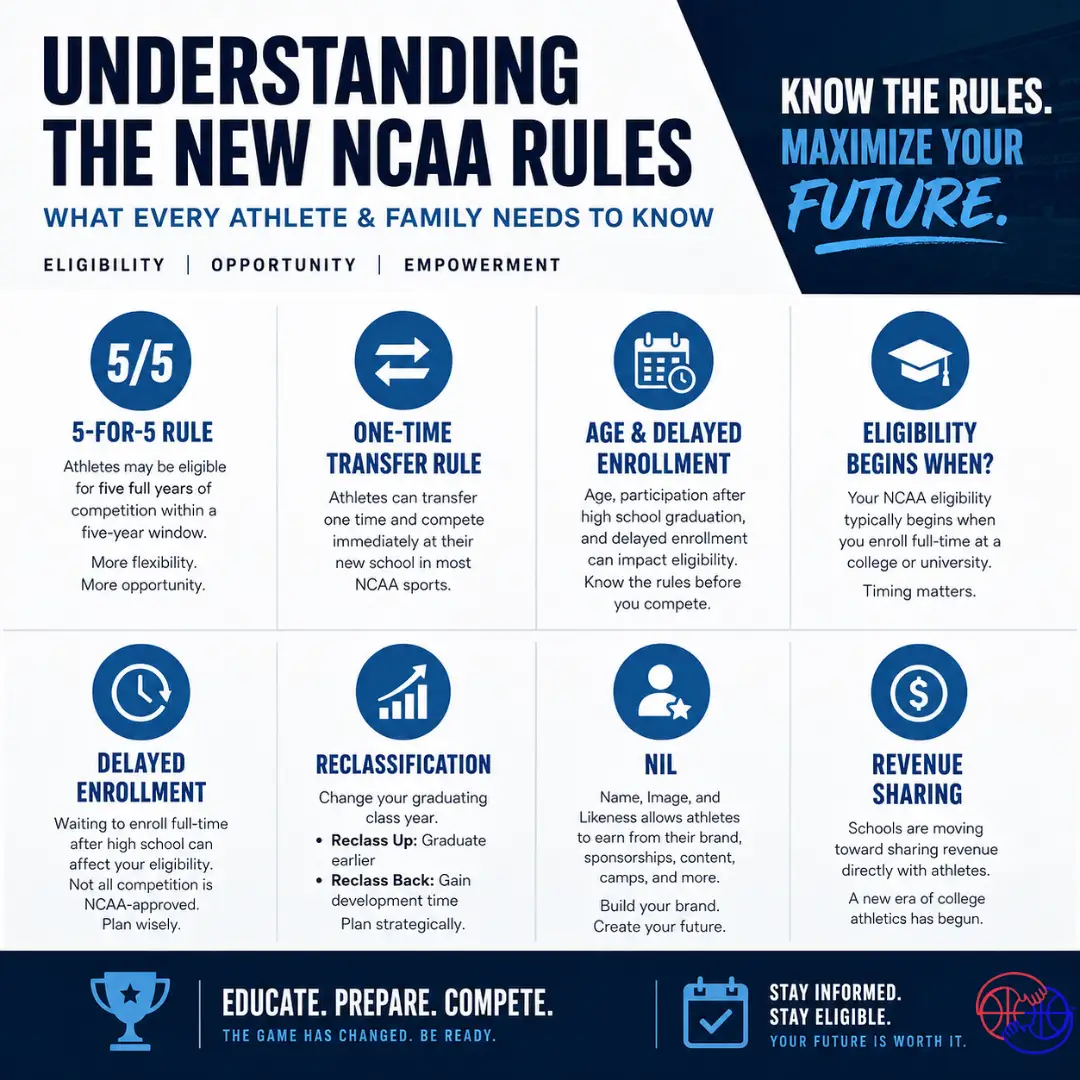
The NCAA approved a major eligibility change on Tuesday. The new rule will reshape college football, basketball, and other sports. Athletes now receive five years of eligibility within a five-year window. That clock begins after high school graduation or an athlete’s 19th birthday. The earlier date starts the countdown. The rule removes the traditional redshirt system. Previously, athletes could compete during four seasons across five calendar years. Under the new model, athletes can play throughout the entire five-year period. However, they will not receive extra years through redshirting. The NCAA will allow limited exceptions for military service, maternity leave, and religious missions.
Although President Donald Trump included a similar proposal in an executive order on April 7, NCAA officials had already discussed the change. Sources told CBS Sports that the organization developed the proposal before the executive order appeared. The decision represents the latest step in a long evolution of eligibility rules. For many years, football players lost a season of eligibility if they appeared in any game. Then, in 2018, the NCAA changed that rule. Players could participate in four games and still preserve a season of eligibility.
Later, the COVID-19 pandemic created another major shift. The NCAA granted all athletes an extra year because the pandemic disrupted competition. At the time, officials wanted to protect athletes from losing opportunities through circumstances beyond their control. However, the extra year produced unexpected consequences. Name, image, and likeness opportunities increased significantly. Schools also prepared for revenue-sharing models. As a result, some athletes sought additional years in college instead of pursuing professional careers.
Consequently, lawsuits became more common. Athletes increasingly challenged NCAA decisions regarding eligibility. This offseason, Ole Miss quarterback Trinidad Chambliss secured another season of eligibility through legal action involving a medical waiver. The NCAA also faced growing complications from numerous exceptions. Some athletes stretched their careers across six or seven years. Therefore, administrators wanted a simpler framework. Officials believe fewer exceptions reduce confusion and legal exposure.
Nevertheless, the new rule creates challenges. Many athletes currently depend on redshirt seasons. Coaches often use those seasons to develop players physically and mentally. Therefore, schools must adjust their long-term planning. Football programs may feel the impact immediately. Offensive linemen often need extra time before competing at the college level. Quarterbacks also frequently spend a season learning behind veteran starters. Under the previous model, coaches could redshirt those players without sacrificing future eligibility.
Now, players and coaches face different decisions. If an athlete sits out a season, that year still counts against the five-year clock. Therefore, developmental seasons carry a greater cost. Coaches may feel pressure to play talented newcomers sooner. On the other hand, athletes who arrive ready to compete can benefit immediately. They can gain experience without worrying about preserving a redshirt season. As a result, roster management could become more straightforward in some situations.
The rule could also change overall experience levels across college football. Athletes may appear in as many as 60 regular-season games during their careers. Therefore, teams could feature more experienced players on average. Meanwhile, extremely long careers lasting six or seven years should become much rarer. Another potential effect involves youth sports and education decisions. Some parents hold children back a grade to gain physical advantages in athletics. Under the new structure, that strategy could reduce future college eligibility. Therefore, families may rethink those decisions.
Basketball could experience significant changes as well. Recently, reports indicated that LSU men’s basketball planned to pursue Yam Madar. Madar is 25 years old and built a successful professional career in Europe. He also won a Turkish League championship with Fenerbahce in 2024. Under previous interpretations, international professionals sometimes retained substantial college eligibility. Therefore, experienced overseas players could potentially enter college basketball later in life. That possibility created what many viewed as a loophole.
The five-for-five model addresses that issue directly. International professionals can still enroll in college. However, their eligibility period will generally shrink because the five-year clock limits participation opportunities. Madar’s situation highlights the change. He completed two years of military service in Israel. That service could qualify for an exception. Even with that exception, he would likely have no more than one season of college eligibility available.
The NCAA also released transition guidelines. Student-athletes who completed their fourth season by spring 2026 will not receive additional eligibility. Meanwhile, athletes who still possess eligibility after the 2025-26 academic year may use whichever system benefits them most. Schools can apply either the new age-based model or the previous eligibility framework. Prospects graduating from high school in spring 2026 or spring 2027 must follow the new age-based system. Additionally, prospects who graduated before spring 2026 but never enrolled will receive individual reviews. The NCAA Eligibility Center will determine whether the new model or older delayed-enrollment rules provide the best outcome.
Finally, schools must act quickly on remaining waiver requests. The NCAA established July 31 as the deadline. After that date, current athletes and prospects can no longer pursue those waiver opportunities. Overall, the NCAA believes the new rule creates a clearer eligibility structure. The change eliminates redshirts, limits lengthy careers, and reduces reliance on waivers. At the same time, coaches, athletes, and schools must adapt to a dramatically different college sports landscape



Author Profile

-
Bradley Walker (VP) and Head of our Florida operations for NGSC Sports, bringing extensive experience across collegiate, professional, and amateur athletics. His coverage spans USF Athletics, including football, baseball, lacrosse, and softball, as well as University of Tampa baseball.
Bradley also provides coverage of minor league baseball with the Clearwater Threshers and Major League Baseball with the Tampa Bay Rays. On the national stage, he covers college football bowl games and conference championship matchups, along with premier golf events across the PGA Tour, LIV Golf, and LPGA Tour.
In addition to his reporting work, Bradley is the play-by-play announcer for Pinellas Park High School Patriots football, lending his voice and insight to Friday night lights.
He is also an active podcast host and contributor, serving as a host on The Walker Report, where he delivers in-depth sports analysis, interviews, and coverage across multiple levels of competition.
Latest entries
 BaseballOctober 3, 2026Robot Umps Flip 54% as Reds Master ABS
 BasketballOctober 3, 2026Fever Face Championship Pressure After Another Playoff Exit
 GolfOctober 3, 2026Phil Mickelson Completes Treatment Stay
 AAC FootballOctober 3, 2026AAC New Coach Grades After Four Weeks
About the Author