Photo Credit: Yahoo Sports
 0
 0
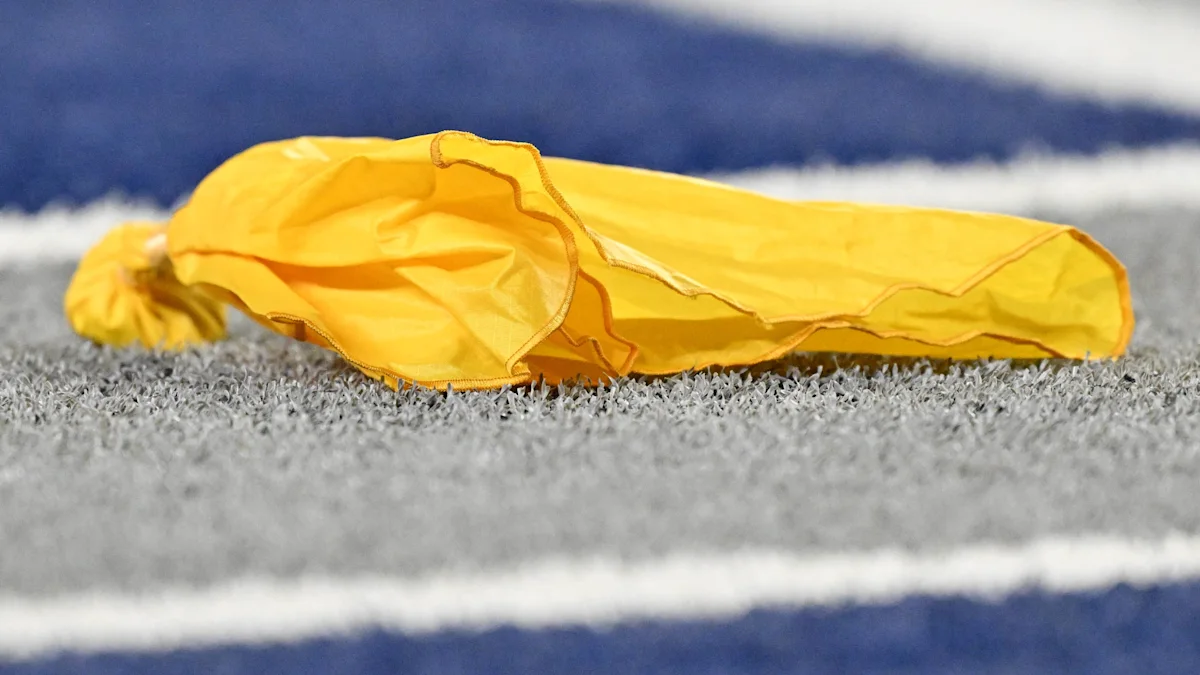
The NFL has a problem, and fans have started noticing something troubling about the 2026 season. Yellow penalty flags seem to appear everywhere. Touchdowns disappear, impressive defensive stops turn into automatic first downs, and controversial calls change games. Even worse, fans increasingly expect a penalty whenever their favorite team produces an exciting play. Football has always featured penalties. However, the number of accepted penalties has climbed during the 2026 season. The statistics support what frustrated fans have watched throughout the opening six weeks. Meanwhile, coaches and players have expressed growing concerns about officiating decisions. The NFL wants exciting games, explosive offenses, and unforgettable finishes. Unfortunately, excessive penalties threaten to overshadow the very players who make the league successful.
The Numbers Show a Real Problem
Through the first four weeks, NFL officials enforced 963 penalties across the league. According to ESPN’s research, that represented the highest four-week total since available play-by-play records began in 1978. Week 4 alone produced 271 accepted penalties. That total ranked second among individual weeks during the same historical period. Furthermore, officials erased 17 touchdowns through Week 4 because of penalties. During the same stretch in 2025, penalties eliminated only five touchdowns. That difference should concern everyone involved with professional football. Accepted penalties per game, Weeks 1–6 Additionally, the NFL Officiating Observatory reported approximately 15 accepted penalties per game through Week 6. The comparable figure through six weeks in 2025 reached 14.2 penalties. The increase might appear modest, but its impact becomes substantial across an entire weekend. Moreover, penalties have interrupted some of the season’s most important moments.
Week 6 Showed Just How Bad Things Have Become
Week 6 provided another example of the NFL’s growing penalty problem. The Carolina Panthers and Philadelphia Eagles combined for 24 penalties and 233 penalty yards. Meanwhile, the New Orleans Saints and New York Giants combined for 17 penalties. Their penalties accounted for another 125 yards. The Chicago Bears and Atlanta Falcons combined for 16 penalties and 164 yards. Additionally, Buffalo and Las Vegas combined for 15 penalties. The Los Angeles Chargers and Kansas City Chiefs also combined for 15. Those numbers demonstrate how frequently officials interrupted games throughout the weekend. Instead of discussing spectacular catches or defensive performances, fans found themselves debating officiating decisions. That represents a serious problem for the NFL’s entertainment value.
Packers and Cowboys: Sunday Night Flag Football
The October 18 matchup between Green Bay and Dallas provided another frustrating example. Green Bay defeated Dallas 23-13 on Sunday Night Football. However, penalties became one of the game’s biggest talking points. The teams combined for more than 20 penalties during the contest. Furthermore, officials assessed three controversial roughing-the-passer penalties. One roughing call erased a potentially important Green Bay interception. The decision generated considerable frustration among Packers supporters. Meanwhile, the game’s fourth quarter lasted approximately 58 minutes. Repeated penalties contributed to the unusually lengthy final period. The game demonstrated why fans have grown increasingly frustrated. They want officials to enforce legitimate rules without becoming the main attraction. Unfortunately, controversial flags can make even a convincing victory feel unsatisfying.
Controversial Calls Are Changing Games
The problem extends beyond lengthy games and frustrated television viewers. Some penalties have directly influenced important outcomes. During Arizona’s October 18 victory over the Los Angeles Rams, a controversial unnecessary roughness penalty created a major turning point. The penalty helped position Arizona for its winning field goal. Former NFL coach Jon Gruden subsequently criticized the league’s replay procedures. The controversy highlighted an important question about officiating. Should the NFL expand replay assistance when a questionable penalty significantly affects a game’s outcome? Currently, coaches cannot challenge most judgment-based penalties. Consequently, controversial decisions can survive even when television replays raise legitimate questions. The NFL must balance accurate officiating against unnecessary delays. However, preserving an obviously questionable decision does little to protect the game’s credibility.
Offensive Holding and False Starts Are Increasing
Not every penalty involves a questionable judgment call. Players also deserve criticism for mistakes that disrupt their teams. According to the NFL Officiating Observatory, offensive holding increased through Week 6. Officials assessed approximately 3.30 offensive holding penalties per game. During the comparable period in 2025, that figure reached 2.89. Meanwhile, false starts increased from 2.43 to 2.67 per game. Delay-of-game penalties also climbed from 0.76 to 1.05 per game. Those numbers suggest that poor execution contributes to the league’s problems. Offensive linemen must improve their blocking techniques. Quarterbacks must manage the play clock effectively. Additionally, coaching staffs must emphasize discipline during practice. However, officials must also apply rules consistently. A holding penalty should not depend on which officiating crew handles the game. Consistency remains essential for maintaining confidence in the league.
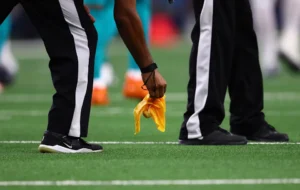
Even Coaches Are Losing Their Patience
Players and coaches have also demonstrated growing frustration with officiating decisions. During New England’s Week 4 victory over Buffalo, Patriots coach Mike Vrabel received an unsportsmanlike conduct penalty. Vrabel argued a defensive pass interference decision that gave Buffalo a first-and-goal opportunity. His reaction illustrated the frustration surrounding consequential calls. However, coaches cannot allow disagreements to create additional penalties. Officials must maintain control, and coaches must protect their teams from unnecessary mistakes. Nevertheless, the NFL should recognize why these confrontations continue occurring. When questionable decisions influence scoring opportunities, emotions naturally increase. The league needs clear communication and consistent enforcement. Otherwise, confrontations between coaches and officials could become another recurring storyline.
ESPN’s Scott Van Pelt Speaks for Frustrated Fans
ESPN personality Scott Van Pelt has also criticized the growing influence of officials. During his podcast, Van Pelt expressed frustration with penalties during important situations. He specifically highlighted third downs and red-zone opportunities. Those moments often determine whether teams sustain drives or score touchdowns. Unfortunately, a questionable penalty can completely change the situation. A defensive stop can suddenly become an automatic first down. Meanwhile, a spectacular touchdown can disappear because of a marginal holding decision. Fans understand that football requires rules. However, they also expect officials to distinguish meaningful violations from insignificant contact. Van Pelt’s criticism reflects a broader concern surrounding the league’s entertainment value. When viewers discuss referees more than players, something has gone wrong.
Fans Are Not Imagining the Frustration
Social media has become another outlet for frustrated NFL supporters. Following Week 6, fans complained about the growing number of penalties. Some questioned whether officials could allow an exciting play to stand. Others criticized questionable calls that erased significant gains. However, complaints do not automatically prove that officials have performed poorly. A legitimate penalty remains legitimate regardless of the game’s circumstances. Furthermore, more accepted penalties do not necessarily mean officials have thrown more total flags. Front Office Sports reported that total flags, including declined and offsetting penalties, had slightly decreased. The reported average fell from 17.44 per game in 2025 to 16.86 in 2026. That distinction matters. Officials might enforce more penalties because players commit more violations. Nevertheless, the increase in accepted penalties remains a legitimate concern. Fans ultimately care about the quality of the football they watch.
Could Limited Preseason Action Explain the Problem?
One explanation involves how NFL teams approach preseason football. Many coaches limit their starters’ participation to protect them from injuries. That strategy makes sense from a health perspective. However, limited playing time can also affect timing and execution. Offensive linemen need repetitions against opposing defenders. Receivers must understand formation requirements. Quarterbacks need experience managing communication and the play clock. Consequently, teams sometimes enter September without sufficient game-speed preparation. Some league observers believe this lack of preparation contributes to sloppy early-season football. Additionally, coaches expect certain mistakes to decrease as players gain experience. That explanation deserves consideration. However, teams cannot use preseason preparation as an excuse for every violation. Professional players and coaches must still execute basic assignments correctly.
What Should the NFL Do About Penalties?
The NFL cannot simply instruct officials to stop throwing flags. Doing so could encourage dangerous hits and unfair advantages. However, the league can improve how officials enforce its rules. First, the NFL should emphasize consistent interpretations across officiating crews. Second, league officials should review controversial roughing-the-passer decisions more carefully. Third, coaches and players must improve their discipline. Additionally, the NFL should evaluate whether replay assistance can correct more obvious mistakes. The league must also consider how excessive interruptions affect television broadcasts. Fans already endure commercial breaks, replay reviews, and lengthy injury stoppages. Repeated penalties create another obstacle to maintaining an entertaining product. However, any solution must preserve player safety. The NFL should never sacrifice legitimate protections simply to shorten games. Instead, the league needs better consistency, improved communication, and greater accountability.
The Bottom Line: Let the Players Decide the Games
The NFL remains America’s most popular professional sports league. Its success depends on exciting games, compelling rivalries, and extraordinary athletic performances. However, the 2026 season has produced legitimate concerns about penalties. The numbers demonstrate that accepted penalties have increased compared with the same period last season. Meanwhile, controversial decisions have influenced important moments and frustrated supporters. Players deserve criticism when they commit obvious violations. Coaches also deserve responsibility when their teams repeatedly make preventable mistakes.
However, the NFL must address inconsistent officiating and questionable judgment calls. Fans should celebrate spectacular touchdowns without immediately searching for yellow flags. They should enjoy defensive stops without expecting automatic first downs. Most importantly, they should leave games discussing players rather than referees. The NFL has a penalty problem, and the statistics support the frustration. The league still has time to address the issue before the playoffs. However, continued controversy could make officiating one of the season’s defining storylines. And that would represent a disappointing outcome for a league featuring so much exceptional talent.



Author Profile

-
Bradley Walker (VP) and Head of our Florida operations for NGSC Sports, bringing extensive experience across collegiate, professional, and amateur athletics. His coverage spans USF Athletics, including football, baseball, lacrosse, and softball, as well as University of Tampa baseball.
Bradley also provides coverage of minor league baseball with the Clearwater Threshers and Major League Baseball with the Tampa Bay Rays. On the national stage, he covers college football bowl games and conference championship matchups, along with premier golf events across the PGA Tour, LIV Golf, and LPGA Tour.
In addition to his reporting work, Bradley is the play-by-play announcer for Pinellas Park High School Patriots football, lending his voice and insight to Friday night lights.
He is also an active podcast host and contributor, serving as a host on The Walker Report, where he delivers in-depth sports analysis, interviews, and coverage across multiple levels of competition.
Latest entries
 FootballOctober 24, 2026Flagged Out! NFL’s 2026 Penalty Problem Has Fans Furious
 BasketballOctober 24, 2026College Basketball Hot Seat: 15 Coaches Facing Major Pressure in 2026-27
 FootballOctober 24, 2026College Football NIL Rankings 2026: Who Spends the Most and Least?
 FootballOctober 23, 2026NFL Week 7: Curveballs and Bold Predictions
About the Author