 0
0
 0
0
September leaves a pile that has to go somewhere
Fall pruning, storm-dropped limbs and the last of the hedge work land in the same few weeks across Canada, and the burn permit that used to solve it is harder to get every year. A wood chipper turns that pile into something the property can absorb rather than something a truck hauls away. The number most buyers compare is engine horsepower, and it is close to the least useful figure on the page.
The cut is paid for before the engine notices
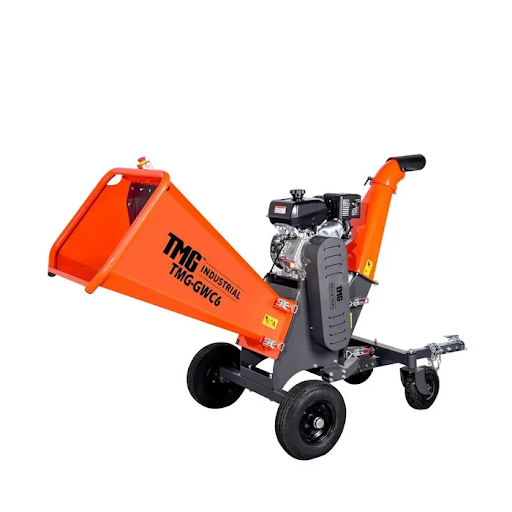
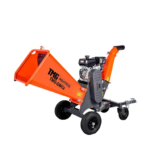
A disc chipper carries a heavy steel disc with the knives mounted on its face. That disc is already at working speed before any wood touches it, and the energy stored in the spin is what shears the fiber. The engine does not make the cut; it restores the disc speed between cuts.
The comparison is an axe. The swing stores energy and the impact spends it, while the arm only resets the swing. That is why a modest engine can take material that seems far too large for its rated power, and why the same machine stalls if fed continuously with no recovery time.
Feed geometry sets the real throughput
Material has to arrive at the knives at a consistent angle, and the hopper is shaped to force branches into that angle rather than to hold volume. A limb entering sideways rides the disc face instead of being cut, which is felt as a bounce rather than a bite.
Green wood cuts cleaner than seasoned wood for the same reason. Wet fiber shears; dry fiber shatters and produces dust that packs the discharge. A pile that has sat since spring gives lower output than the same volume cut fresh.
Where the cutting energy lives, and what a pto wood chipper changes
Specifications sort these by capacity in inches, which makes two very different machines look like the same purchase. Sorting them by how the cutting energy is stored and then delivered explains why two machines with the same rating behave nothing alike.
- Disc: heavy flywheel disc, knives on the face
- Drum: rotating knife drum, continuous cutting
- Hammer shredder: flails, tearing rather than slicing
Borrowing a tractor engine instead of carrying one suits properties that already run a tractor. An electric wood chipper trades away the flywheel mass entirely and belongs on soft prunings rather than on limb wood.
Where the safety envelope actually is
Feeding is the whole hazard, and it is not the knives that create it. The infeed pulls steadily, and a branch with a fork or a trailing vine will take a glove and the arm inside it, which is the reason for the no-gloves rule that surprises most new operators.
Discharge is the second exposure. The chute throws with real force, so it should point at ground the operator can see, and a small wood chipper is not exempt from either rule because it is easy to move.
What is changing in the equipment
Municipal burn restrictions keep widening, which is moving chipping from a convenience toward a default and making a wood chipper rental a normal line in a fall budget. Knife steels are improving in parallel, mostly to extend sharpening intervals rather than to raise output.
Work out the largest limb the property actually produces and how much recovery time between feeds is realistic before comparing engines. Those two answers settle capacity better than horsepower does, and the equipment guidance from TMG Industrial makes the same point about matching a machine to the material rather than to the acreage.



Author Profile

Latest entries
 NFLSeptember 14, 2026Young NFL Stars: How Early Production Turns Into Lasting Stardom
 The HubSeptember 14, 2026Why the Flywheel and not the Engine Decides What a Wood Chipper Can Swallow
 HomeSeptember 13, 2026How to Prepare Furniture, Electronics, and Fragile Household Items for a Safer Move
 HomeSeptember 13, 2026House Cleaning Services for Preparing Your Home Before Guests, Celebrations, and Special Events
About the Author