

Photo Credit: Facebook
 0
0
 0
0
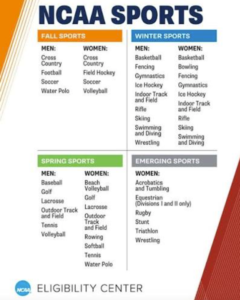
Fall sports are back, and families are once again chasing the college dream. Football stadiums are filling up across the country. Soccer fields are packed with young players. Volleyball gyms are buzzing every weekend. Cross country runners are racing toward personal records. Field hockey players are fighting for roster spots. For many families, the season means more than competition. They hope sports can create a path to college. However, the numbers tell a much different story. The NCAA estimates that only about 7% of high school athletes reach an NCAA roster. Only about 2% receive an athletic scholarship. That means parents should understand the odds before spending thousands on sports.
Football Offers One of the Better Paths
Football gives high school athletes one of the strongest opportunities. The NCAA lists more than 1 million high school football players. About 83,794 compete on NCAA rosters. That creates an 8.1% chance of reaching an NCAA roster. In other words, roughly one in 12 football players reaches college. Football also offers substantial roster space. Many college teams carry more than 100 players. Recent analysis found roughly 11-to-1 odds for making any college football roster. The odds drop to about 33-to-1 for Division I. Still, reaching college does not guarantee a scholarship. Only some players receive athletic aid. Therefore, families should separate roster chances from scholarship chances.
Girls Soccer Provides a Strong Opportunity
Girls’ soccer also provides a solid college pathway. The NCAA reports 393,048 high school girls playing soccer. About 31,200 reach NCAA programs. That equals a 7.9% overall chance. The Division I number falls to 2.8%. That works out to roughly one in 36 players. Boys’ soccer has tougher odds. The NCAA lists 484,908 high school boys playing soccer. About 28,746 reach NCAA rosters. That creates a 5.9% overall chance. Only 1.4% reach Division I programs. Therefore, girls’ soccer currently offers better odds for reaching college soccer.
Cross Country Can Open Doors
Cross country may not receive the attention of football or soccer. However, the numbers make it an interesting college pathway. The NCAA lists an 8.0% college participation rate for girls’ cross country. Boys sit at 6.4%. Division I opportunities also exist for strong runners. Girls have a 3.3% chance of reaching Division I. Boys have a 2.2% chance. Those numbers make cross country one of the better fall options. Moreover, runners can compete in both cross country and track. That combination can create additional recruiting opportunities.
Field Hockey Has Surprisingly Strong Odds
Field hockey gives girls another strong opportunity. The NCAA lists 50,764 high school players. About 6,610 compete at the NCAA level. That creates a 13.0% overall chance. The Division I number reaches 3.9%. That means roughly one in eight high school field hockey players reaches an NCAA roster. The sport’s smaller participation base helps create more opportunities. So, parents should not overlook fewer mainstream sports. A smaller sport can sometimes provide a better college pathway.
Volleyball Faces Tougher Competition
Volleyball remains one of America’s largest girls high school sports. The NCAA lists 492,799 high school girls playing volleyball. About 19,810 compete at NCAA schools. That creates a 4.0% chance of reaching college. Division I offers a 1.3% opportunity. That equals roughly one in 77 high school players. Boys’ volleyball has fewer high school participants and different opportunities. Therefore, families should examine the specific recruiting landscape for their athlete. Playing club volleyball can also add exposure. However, club participation does not guarantee a college roster spot.
Golf Can Lead to College Too
Golf offers another potential college pathway. The NCAA reports a 6.9% college participation rate for girls. Boys have a 5.4% rate. Division I opportunities reach 2.7% for girls. Boys sit at 1.8%. Those numbers show that college golf remains extremely competitive. Still, golfers can improve their chances through measurable performance. Tournament scores and rankings give coaches objective information. That makes golf different from some team sports.
Swimming and Water Polo Offer Opportunities
Swimming also provides a respectable college pathway. Girls have a 9.4% chance of reaching an NCAA roster. Boys have an 8.5% chance. Water polo offers smaller participation numbers. Girls have a 7.4% chance of reaching college. Boys have a 5.7% chance. Again, smaller sports can create interesting opportunities. Families should research schools instead of focusing only on major conferences.
The Scholarship Dream Needs Some Perspective
Making a college roster does not automatically mean receiving a scholarship. The NCAA says schools award more than $4 billion in athletic scholarships annually. More than 196,000 athletes receive athletic aid each year. However, most student-athletes receive partial aid rather than full scholarships. Coaches also decide who receives athletic scholarships. The NCAA sets scholarship rules for each sport and division. Coaches determine individual awards within those rules. Therefore, families should never assume a college roster guarantees financial assistance.
Parents Should Know the Numbers
Youth sports can become expensive very quickly. Families pay for uniforms, equipment, tournaments, travel, training and club fees. Those costs can reach thousands of dollars. That makes the college question especially important. If a family spends heavily on sports, they should understand the realistic outcome. A young athlete might reach college. However, that athlete might also never play beyond high school. The latest numbers make that reality clear. Only a small percentage of high school athletes reach NCAA programs. An even smaller percentage receives athletic scholarships. Still, that does not make youth sports a bad investment.
Sports teach discipline, teamwork, confidence and resilience. They also create friendships and memories that last beyond graduation. The mistake comes when families treat every tournament as an investment toward a scholarship. For most kids, the college dream remains just that. A dream. The best approach involves letting kids enjoy the sport first. If college coaches notice along the way, that becomes an added bonus. After all, the goal should not simply involve finding a scholarship. The goal should involve helping kids become better athletes and better people. This version focuses on college-roster odds rather than scholarship odds, because those are two very different measurements. The NCAA’s latest data also gives you a stronger factual foundation for comparing the sports.



Author Profile

-
Bradley Walker (VP) and Head of our Florida operations for NGSC Sports, bringing extensive experience across collegiate, professional, and amateur athletics. His coverage spans USF Athletics, including football, baseball, lacrosse, and softball, as well as University of Tampa baseball.
Bradley also provides coverage of minor league baseball with the Clearwater Threshers and Major League Baseball with the Tampa Bay Rays. On the national stage, he covers college football bowl games and conference championship matchups, along with premier golf events across the PGA Tour, LIV Golf, and LPGA Tour.
In addition to his reporting work, Bradley is the play-by-play announcer for Pinellas Park High School Patriots football, lending his voice and insight to Friday night lights.
He is also an active podcast host and contributor, serving as a host on The Walker Report, where he delivers in-depth sports analysis, interviews, and coverage across multiple levels of competition.
Latest entries
 SportsSeptember 15, 2026Which Fall Sports Can Take Kids to College?
 SportsSeptember 15, 2026Youth Sports Costs Are Out of Control
 UFCSeptember 15, 2026Tom Aspinall Vacates UFC Heavyweight Title After Eye Injury
 GolfSeptember 14, 2026Europe Wins Back the Solheim Cup
About the Author