
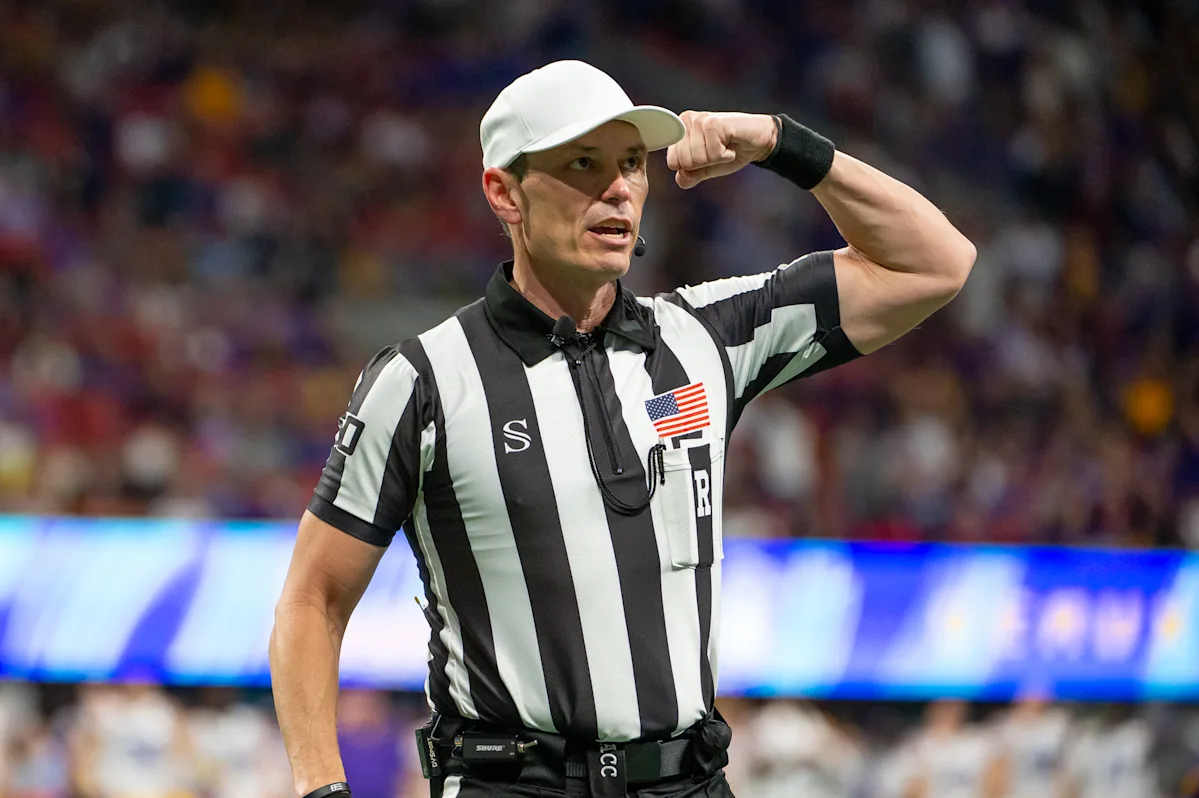
Photo Credit: Yahoo Sports
 0
0
 0
0
The NCAA will introduce a significant change to its targeting rule during the 2026 college football season. The NCAA Division I Football Oversight Committee approved a one-year trial that removes the automatic carryover suspension for a player’s first targeting penalty. The change aims to create a fairer system while maintaining player safety, which remains a top priority across college football. Under the previous rule, officials ejected a player for targeting and forced that player to miss the first half of the next game if the foul occurred during the second half. Coaches, players, and fans often criticized that penalty because it affected two games, even for a first-time offense. The new rule keeps the in-game ejection but removes the automatic suspension for a player’s first targeting violation.
Beginning with the 2026 season, a player who commits a first targeting foul will leave the game immediately and miss the remainder of that contest. However, the player will become eligible for the next scheduled game without serving any additional suspension. The NCAA believes this approach still punishes dangerous plays while avoiding a penalty that extends into another game. The committee also introduced a progressive discipline system for repeat offenders. Players who receive multiple targeting penalties during the season will face increasingly severe consequences. That structure allows the NCAA to address repeat violations more aggressively while giving first-time offenders another opportunity.
Under the updated policy, a second targeting offense brings harsher punishment. The player will leave the current game immediately and must also sit out the first half of the following game. The NCAA hopes that stronger penalty will discourage repeated dangerous hits throughout the season. A third targeting offense carries the toughest punishment. The player will receive an immediate ejection and miss the entire next scheduled game. That suspension represents a substantial increase from previous penalties and reflects the NCAA’s commitment to reducing repeated targeting violations.
In addition to the revised penalty system, the NCAA approved a new appeals process for second targeting offenses. Conferences may now request a review after a player receives a second targeting call. That appeal allows officials to examine both the player’s first and second targeting penalties before enforcing the suspension. The NCAA national coordinator of football officials will oversee the video review process. Officials will study the available replay angles and determine whether both targeting calls were correct. If the review overturns the ruling, the player will avoid the first-half suspension in the following game. That process gives conferences another opportunity to correct mistakes before additional discipline takes effect.
The NCAA believes the new system balances accountability with fairness. Officials will still remove players immediately after dangerous hits. However, first-time offenders will no longer lose playing time during the following week because of one targeting call. Targeting has remained one of college football’s most debated rules since its introduction. The rule seeks to reduce dangerous contact involving the head and neck area while protecting players from serious injuries. Even so, many coaches have argued that some targeting fouls result from unavoidable football plays rather than intentional actions.
This one-year trial gives the NCAA an opportunity to evaluate whether the revised rule improves the game. Conference officials, coaches, and administrators will closely monitor the results throughout the 2026 season. They will likely review player safety data, officiating consistency, and the overall impact before deciding whether to make the change permanent. For now, players receive a second chance after their first targeting penalty, while repeat offenders face increasingly stronger consequences. The NCAA hopes this updated approach creates a more balanced system without sacrificing its commitment to player safety. As the 2026 season approaches, this rule change stands among the most important adjustments fans, coaches, and players will watch across college football.



Author Profile

-
Bradley Walker (VP) and Head of our Florida operations for NGSC Sports, bringing extensive experience across collegiate, professional, and amateur athletics. His coverage spans USF Athletics, including football, baseball, lacrosse, and softball, as well as University of Tampa baseball.
Bradley also provides coverage of minor league baseball with the Clearwater Threshers and Major League Baseball with the Tampa Bay Rays. On the national stage, he covers college football bowl games and conference championship matchups, along with premier golf events across the PGA Tour, LIV Golf, and LPGA Tour.
In addition to his reporting work, Bradley is the play-by-play announcer for Pinellas Park High School Patriots football, lending his voice and insight to Friday night lights.
He is also an active podcast host and contributor, serving as a host on The Walker Report, where he delivers in-depth sports analysis, interviews, and coverage across multiple levels of competition.
Latest entries
 GolfSeptember 14, 2026Europe Wins Back the Solheim Cup
 GolfSeptember 14, 20266 Golfers Who Exceeded Expectations in 2026
 BaseballSeptember 14, 20262026 MLB Playoff Bracket Prediction: Who Wins It All?
 BaseballSeptember 14, 2026Threshers’ 2026 Season Ends at Home Versus Tampa
About the Author

[…] faces the most immediate pressure in college football. Florida State already opened the season with a 34-17 victory. However, the performance did little […]