Photo Credit: WTSP
 0
0
 0
0
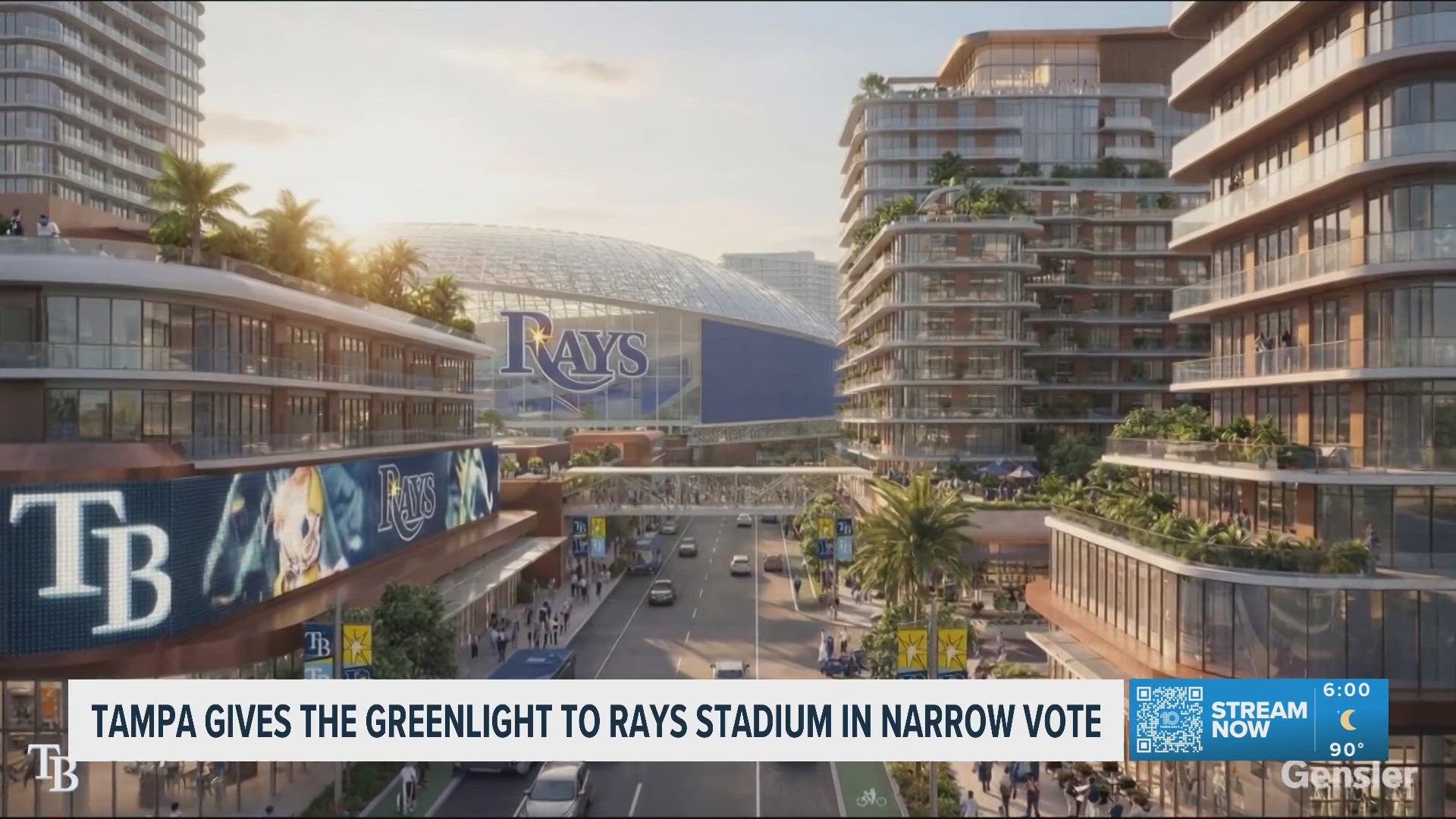
The proposed new home for the Tampa Bay Rays moved one step closer toward reality this month. Local leaders approved early financing agreements for the massive $2.3 billion project. The stadium would place the Rays in Tampa on the Hillsborough College Dale Mabry campus. Team officials hope the ballpark opens for the 2029 season.
The recent votes do not finalize the project. However, they allow negotiations to continue between the Rays, Hillsborough County, and the City of Tampa. The Hillsborough County Commission approved the memorandum by a 5-2 margin. The Tampa City Council followed with a tighter 4-3 vote. That close result showed strong disagreement remains over the stadium proposal.
The planned ballpark would feature a domed design with seating for around 31,000 fans. The Rays would contribute the largest share of the project cost. Team ownership plans to provide roughly $1.27 billion toward construction. That amount also includes responsibility for construction overruns. Public officials stressed this point repeatedly during negotiations.
Hillsborough County would contribute nearly $796 million toward the project. Much of that funding would come from Tourist Development Taxes. County reserve funds would also support the deal. Under the current proposal, the county would officially own the stadium once construction finishes.
The City of Tampa would contribute another $180 million. About $80 million would come from Community Investment Tax funds. Another proposed $100 million would come through Drew Park Community Redevelopment Area funding. That portion became the center of major political debate during city meetings.
Several Tampa council members openly questioned using taxpayer dollars for a professional sports venue. Critics argued the city faces more urgent priorities right now. Roads, public safety, storm recovery, and affordable housing dominated much of the discussion. Some leaders felt those needs should outweigh sports development projects.
The debate became heated because the vote passed by only one member. Council members supporting the deal argued the project could create long-term economic benefits. They believe the stadium could attract tourism, businesses, restaurants, and entertainment opportunities across Tampa. Supporters also pointed toward job creation during construction and future operations.
Still, many council members expressed frustration over their limited involvement in negotiations. Several said county officials and Rays leadership handled discussions without city participation. That lack of communication created distrust before the final vote even occurred. Some members felt pressured into supporting a project they barely helped shape.
The council delayed another major decision involving the Drew Park CRA funds. Leaders pushed that vote back until June 11, 2026. The delay gives city officials additional leverage before final agreements are completed. Some council members hope the Rays will agree to financial adjustments before then.
However, Rays CEO Ken Babby made the organization’s position very clear after the vote. Babby stated the team will not renegotiate the core financing structure. The Rays remain open to smaller adjustments before final contracts are signed. Still, ownership appears firm regarding the overall funding breakdown.
Several important issues also remain unresolved before construction can begin. One major question involves future maintenance and repair costs. Officials must determine who covers expensive upgrades over the proposed 35-year lease. Stadium maintenance often becomes a major burden for local governments over time.
Another unresolved issue surrounds the proposed mixed-use development near the stadium. Current plans include restaurants, retail stores, housing, and entertainment spaces surrounding the ballpark. Local leaders want protections if that development never materializes. Negotiators continue discussing possible financial penalties tied to those promises.
Revenue sharing also remains under discussion. Officials still must decide how parking income and non-baseball event profits will be split between parties. Concerts and other events could become major revenue sources for the new venue. Those details may significantly impact the city and county in the long term.
Despite the uncertainty, the Rays continue preparing for life beyond Tropicana Field. The team plans to remain at the repaired Tropicana Field through the 2028 season. During that period, lawyers and officials will work toward final agreements.
If negotiations eventually collapse, other cities could emerge as alternatives. Orlando remains one possible option frequently mentioned during discussions. For now, though, Tampa leaders and the Rays continue moving cautiously toward a historic stadium agreement.



Author Profile

-
Bradley Walker (VP) and Head of our Florida operations for NGSC Sports, bringing extensive experience across collegiate, professional, and amateur athletics. His coverage spans USF Athletics, including football, baseball, lacrosse, and softball, as well as University of Tampa baseball.
Bradley also provides coverage of minor league baseball with the Clearwater Threshers and Major League Baseball with the Tampa Bay Rays. On the national stage, he covers college football bowl games and conference championship matchups, along with premier golf events across the PGA Tour, LIV Golf, and LPGA Tour.
In addition to his reporting work, Bradley is the play-by-play announcer for Pinellas Park High School Patriots football, lending his voice and insight to Friday night lights.
He is also an active podcast host and contributor, serving as a host on The Walker Report, where he delivers in-depth sports analysis, interviews, and coverage across multiple levels of competition.
Latest entries
 HockeySeptember 21, 2026Hellebuyck Trade Standoff Rocks Jets
 FootballSeptember 21, 2026Browns Rally Past Bucs in Rain-Delayed Thriller
 FootballSeptember 21, 2026Patriots’ Defense Dominates Steelers in 20-3 Win
 AAC FootballSeptember 20, 2026USF Rolls Past Delaware State 59-17
About the Author