Photo Credit: MLB.com
 0
0
 0
0
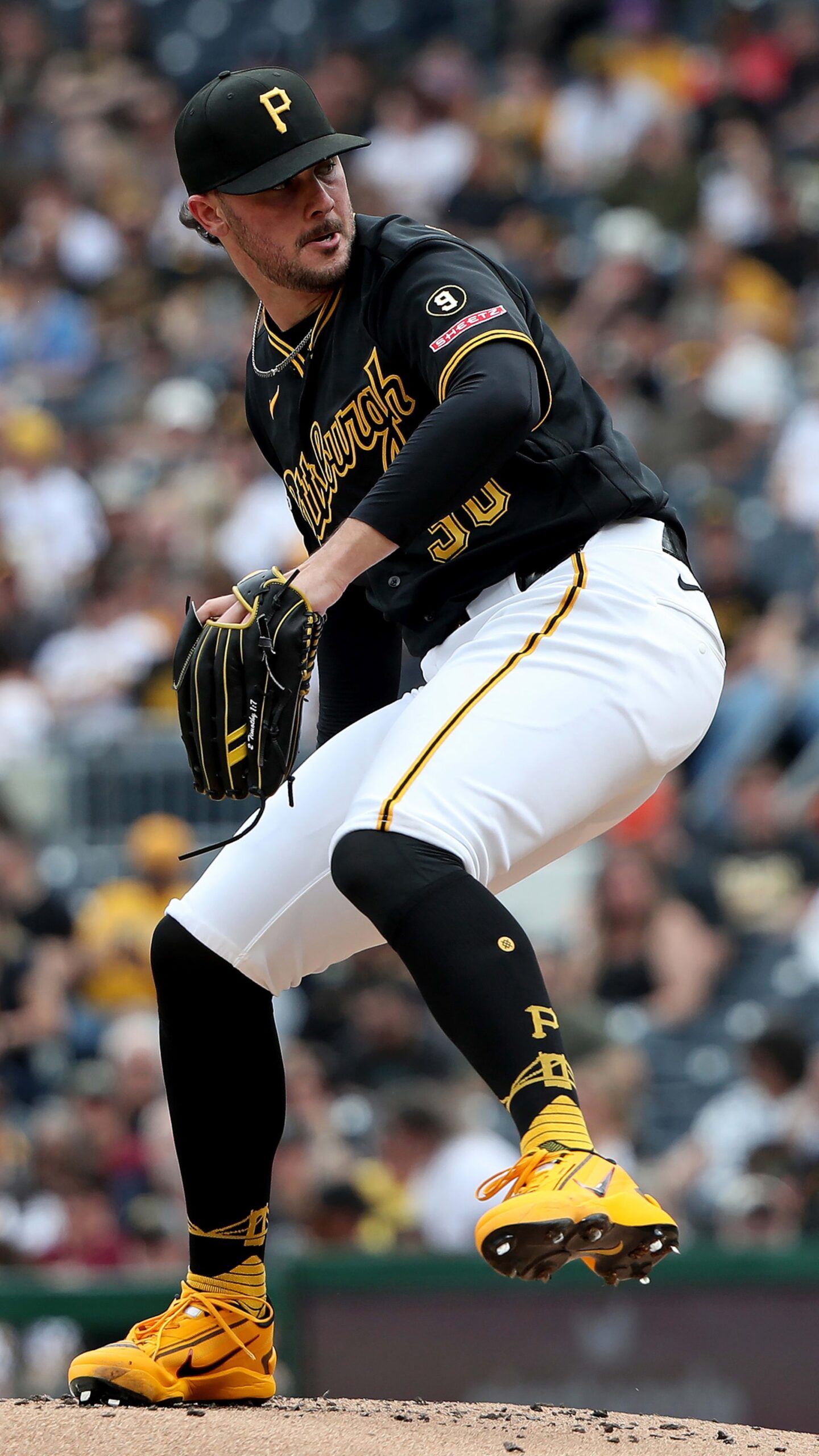
Paul Skenes entered the 2026 season with enormous expectations after dominating the National League during his first two years. He became the first qualified pitcher age 23 or younger since Dwight Gooden in 1984 and 1985 to post a sub-2.00 ERA in consecutive seasons. However, his numbers have slipped this year. Entering Wednesday’s start against the Milwaukee Brewers, Skenes carried a 3.90 ERA instead of the dominant marks fans had grown accustomed to. Even so, the evidence suggests he remains one of baseball’s elite pitchers despite several small declines.
The biggest difference starts with his fastball velocity. As a rookie in 2024, Skenes averaged 98.8 mph with his fastball. He followed that with a 98.2 mph average in 2025. This season, his average has fallen to 96.9 mph. While that drop appears modest, it creates a major difference against Major League hitters. Batters have hit .219 against 99 mph fastballs over the past two seasons. They have hit .242 against 97 mph fastballs during that same period. Likewise, opponents have increased their batting average against Skenes’ fastball from .209 last season to .231 this year.
Despite the declining velocity, Skenes has dismissed concerns about his health. During the All-Star break, he said he feels healthy and believes velocity alone does not determine success. Still, the numbers reveal that reduced velocity affects more than just his fastball. His fastball spin rate has dropped by roughly 70 revolutions per minute. That decrease limits movement and makes the pitch easier to square up. Scouts also questioned the shape of his fastball when he left LSU. Therefore, losing velocity makes that weakness more noticeable against elite hitters.
Additionally, advanced metrics support the decline in raw stuff. Skenes posted a Stuff+ rating of 110 last season, placing his arsenal well above league average. This season, that number has dropped to 98, which rates near the league average. Furthermore, both his sinker and changeup have produced negative run values for the first time in his professional career. Those numbers show that hitters have adjusted more effectively against his full repertoire. Mechanical adjustments may offer hope for improvement. Analysts from Driveline Baseball studied Skenes’ delivery and noticed he stepped across his body too frequently earlier this season. They also identified several mechanical flaws that have improved as the year progressed. As a result, they believe his delivery continues to move in the right direction. If those corrections restore even a small amount of velocity, Skenes could regain much of his previous dominance during the stretch run.
Hitters also have produced better contact this season. His average exit velocity allowed has increased, while his ground-ball rate has dropped sharply. As a rookie, he generated ground balls on 51.1 percent of balls in play. This season, that figure has fallen to 39.7 percent. Consequently, more balls have reached the outfield and more have cleared the fences. Skenes has already surrendered 13 home runs, exceeding the total from each of his previous two full seasons. The declining ground-ball rate has also reduced double-play opportunities.
He induced 14 double plays in 2024 and 13 more in 2025. This season, he has produced only seven double plays. Meanwhile, hitters have missed his breaking pitches by an average of 3.6 inches compared with 4.9 inches last year. His arm angle has also increased from 23 degrees during his first two seasons to 26 degrees this year. Although that change appears minor, it likely contributes to reduced deception and weaker pitch movement.
Command has slipped slightly as well. Skenes owns a career-worst 6.3 percent walk rate, though that figure still ranks among the better marks in baseball. His Command+ rating has declined from 112 last season and 110 in 2024 to 108 this year. He has also thrown fewer pitches inside the strike zone. His zone percentage dropped from 51 percent during each of his first two seasons to 46 percent this year. Those numbers suggest Skenes has become more cautious instead of attacking hitters as aggressively as before. That approach has reduced his efficiency. He averaged 5.78 innings per start across 23 outings in 2024. He improved slightly to 5.86 innings over 32 starts in 2025. This season, he averages only 5.42 innings through 23 starts. Before last season, Skenes said he hoped to eventually pitch 240 innings in a year. Instead, shorter outings have pushed him further from that goal.
The Pittsburg Pirates’ defense has also contributed to his inflated ERA. During the offseason, the organization sacrificed some defense while improving its lineup. The move strengthened the offense and helped Pittsburgh remain in the National League Wild Card race. However, it also created more opportunities for balls to become hits. Last season, the Pirates ranked seventh in Outs Above Average at plus-18. This season, they rank 22nd at minus-13. Their batting average on balls in play has increased from .281 to .298, allowing more ground balls to sneak through the infield. Advanced statistics suggest Skenes has experienced some poor fortune as well. His expected ERA sits at 2.94, nearly one full run lower than his actual 3.90 ERA. During his first two seasons, the opposite occurred because his actual ERA finished below his expected ERA. Therefore, weaker defense and some unfavorable luck have magnified his statistical decline this season.
Even with those setbacks, Skenes remains among baseball’s best pitchers. His 24 percent strikeout-minus-walk percentage ranks among the elite, while his 3.6 fWAR places him sixth among all Major League pitchers. Rather than becoming an average starter, he has simply lost a small edge in several important areas. Ultimately, the encouraging news centers on how fixable these issues appear. Small mechanical improvements, a slight increase in velocity, better command, and stronger defensive support could quickly restore his dominant form. For a Pirates team chasing a postseason berth, rediscovering the version of Skenes who posted consecutive sub-2.00 ERAs would provide the biggest boost of all. He has not looked quite as overpowering this season, but the numbers show he remains much closer to greatness than many might believe.



Author Profile

-
Bradley Walker (VP) and Head of our Florida operations for NGSC Sports, bringing extensive experience across collegiate, professional, and amateur athletics. His coverage spans USF Athletics, including football, baseball, lacrosse, and softball, as well as University of Tampa baseball.
Bradley also provides coverage of minor league baseball with the Clearwater Threshers and Major League Baseball with the Tampa Bay Rays. On the national stage, he covers college football bowl games and conference championship matchups, along with premier golf events across the PGA Tour, LIV Golf, and LPGA Tour.
In addition to his reporting work, Bradley is the play-by-play announcer for Pinellas Park High School Patriots football, lending his voice and insight to Friday night lights.
He is also an active podcast host and contributor, serving as a host on The Walker Report, where he delivers in-depth sports analysis, interviews, and coverage across multiple levels of competition.
Latest entries
 HockeyOctober 7, 2026Lightning Strike Down Flyers 4-1
 AAC FootballOctober 7, 2026American Week 6 Brings Conference Showdowns
 FootballOctober 7, 2026Bucs Face Desperate Thursday Test in Dallas
 AAC FootballOctober 7, 2026USF Faces Huge Test at UTSA
About the Author