 0
0
 0
0
With the NBA just a week into the 2026 offseason, the 2026 NBA Draft is less than a week away. There have been plenty of rumors of top picks being dangled in draft talks, and the rising question is who the Utah Jazz will take with the #2 pick. While the top tier of the draft has already been determined, there are numerous freshman prospects in the 2026 draft that could make a difference for their future teams.
Nate Ament
A freshman forward from Tennessee, Nate Ament would play a significant role in Tennessee’s run to the Elite Eight. Over the course of the 35 regular-season games, Ament would average 16.7 PPG, 6.3 RPG, 2.3 APG, and 1.0 SPG. He would be named to the second team All-SEC before declaring for the 2026 draft. Ament has shown the potential to be a point forward, an archetype that has only gotten more popular in the NBA over the last decade. While his biggest concerns heading into the draft are his consistency and efficiency (shooting only 39% from the field and 33% from the three at Tennessee), shooting nearly 80% at the free throw line shows Ament should be able to develop his game in the league. Ament has drawn comparisons to multi-positional forwards like Minnesota Timberwolves forward Jaden McDaniels.
Kingston Flemings
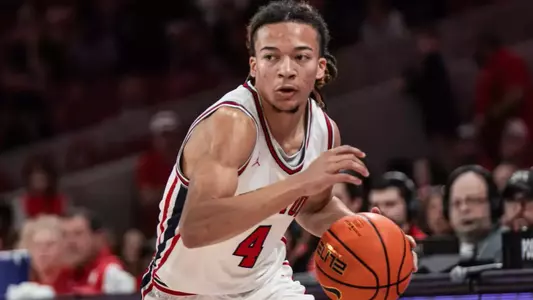
A freshman guard out of Houston, Kingston Flemings would be the driving force behind the Cougars. In 37 games, he would average 16.1 PPG, 4.1 RPG, 5.2 APG, and 1.5 SPG on shooting splits of 47% from the field and 38.7% from three. He would lead Houston in points per game, assists per game, and steals per game. Flemings would be named to the First-Team All-Big 12 and the Big 12 All-Freshman team. Flemings has shown the potential to develop into an elite guard in the league, possessing a strong 5.2 to 1.8 assist-to-turnover ratio while also having a strong defensive presence at his position. There are concerns about his shot and reliability on his athleticism in certain situations, something that has hampered other guards in the past. He has drawn comparisons to Spurs guard De’Aaron Fox.
Hannes Steinbach
A freshman from Wurzburg, Germany, Hannes Steinbach has already made a name for himself at both the college and international levels. At Washington, Steinbach would average 18.5 RPG, 11.8 RPG, 1.2 BP, G and 1.1 SPG on 57% shooting from the field. Steinbach would lead the NCAA in rebounding in 2026. He would represent Germany in the FIBA U18 Eurobasket, where Germany would win gold in 2024, and would represent Germany again in 2025 as part of the FIBA U19 World Cup, winning a gold medal. Steinbach has shown his ability to dominate in the interior while also being able to move well for a forward. There is a concern about this three-point shooting volume, attempting just over one per game, when threes are an important part of a forward’s game in the modern NBA. He has drawn comparisons to Houston Rockets forward Alperen Sengun.
Labaron Philon Jr.
A Sophomore from Alabama, Labaron Philon Jr. made a splash in his second season at the college level. Philon would jump from 10.6 PPG, 3.3 RPG, and 3.8 APG as a freshman to 22.0 PPG, 3.5 RPG, and 5.0 APG on splits of 50% from the field and 39% from three. He would be a member of the First-team All-SEC in 2026. A quick and crafty guard, Philon has been praised for his playmaking abilities while still being an efficient scorer himself. There are questions about his defense and if he can remain efficient in the league against bigger and stronger defenders, but he shows plenty of promise and upside in the long-term. He has NBA comparisons to Pelicans guard Dejounte Murray.
Allen Graves
A freshman forward from Santa Clara, Allen Graves made a name for himself in the West Coast Conference in his single year with the Broncos. Graves would average 11.8 PPG, 6.5 RPG, and 1.8 APG on splits of 51% from the field and 45% from three in 35 games, landing Graves WCC Freshman of the Year, WCC Sixth Man of the Year, WCC All-Freshman Team, and WCC Sixth Man of the Year. A high-efficiency, high-IQ player, the belief is that he will be able to transfer his skill set to the NBA. There are concerns with some defensive limitations and his limited role in college, but he is seen as a long-term prospect with potential. He’s been compared to former NBA forward Boris Diaw.
Christian Anderson
A sophomore from Texas Tech, Christian Anderson would take a significant leap in his second season in college. Anderson would jump from 10.6 PPG, 3.0 RPG, and 2.2 APG to 18.5 PPG, 3.6 RPG, and 7.4 APG on shooting splits of 47% from the field and 41% from three. He would be the Big 12’s Most Improved Player of 2026 and would also be named to the first team All-Big 12. Anderson showed his ability to play-make as one of the best passers at the college level this season. His efficiency at all three levels shows promise that could transfer to the professional level. At 6’3, there is concern about how his defense will be against bigger guards in the league, as well as how he’ll be able to perform against those guards. His current NBA comparison is Clippers guard Darius Garland.
Bennett Stirtz
A senior from Iowa, Bennett Stirtz has shown to be a consistent player his last two years with the Hawkeyes. This season, Stirtz would average 19.8 PPG, 2.6 RPG, 4.4 APG, and 1.4 SPG on shooting splits of 49% from the field and 39% from three. He would finish with 20 and 24 points in the Sweet 16 and Elite 8, respectively. While efficient from all three levels, the biggest concern is his physical limitations and age. Stirtz will be 23 years old by the start of the 2026-27 season, and his size brings into question how he’ll be able to compete against bigger guards in the league. His game has been compared to NBA champion Landry Shamet.
Cameron Carr
A sophomore from Baylor, Cameron Carr would take a massive leap from his freshman year. He would go from averaging 4.8 PPG,1.5 RPG, 0.5 APG, and 0.5 BPG to 18.9 PPG, 5.8 RPG, 2.6 APG, and 1.3 BPG. He would be Third-team All-Big 12 in 2026. Carr’s Athleticism has given him a high long-term ceiling on the offensive end. Carr was able to make a high volume of threes on a respectable 37% shooting. Despite averaging over a block per game, there are questions about his overall defensive effort, along with his low assists as a guard. His NBA comparison is Kings guard Zach LaVine.
Chris Cenac Jr.
A freshman from Houston, Chris Cenac Jr. has shown he is a raw prospect with the potential to grow and develop in the right system. In 37 games with the Cougars, Cenac would average 9.5 PPG and 7.9 RPG. At 6’11 and having a long wingspan, Cenac has shown he can put pressure on the rim and can be an impact player on the offensive end. There are some concerns with his efficiency, shooting 48% from the field, 33% from three, and 62% from the free throw line. In addition, his playmaking is nearly nonexistent, but overall, Cenac could be a big-time impact player with the right organization. His NBA comparison is Heat forward Kel’el Ware.
Dailyn Swain
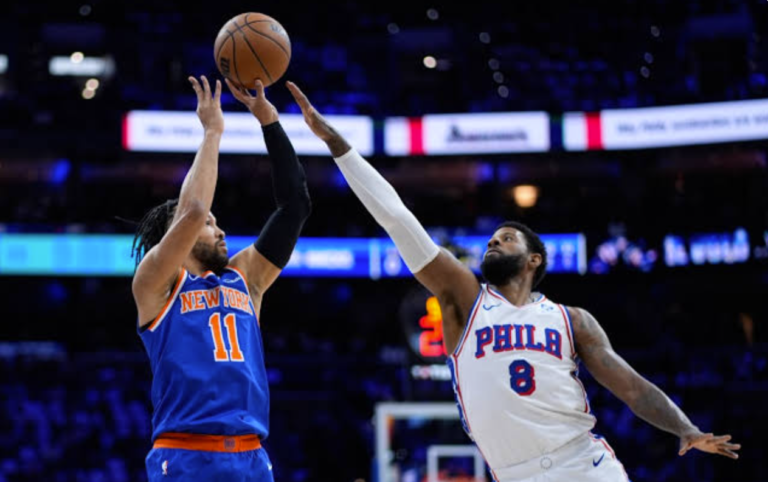
A junior forward out of Texas, Dailyn Swain has progressed every year to look like a promise first round prospect. In 36 games for the Longhorns this season, Swain would average 1.3 PPG, 7.5 RPG, and 3.6 APG, finishing his season as SEC Newcomer of the Year and a member of the Second-team All-SEC. Despite shooting only 33% from the field, he’s shooting a strong 54% from the field and 82% from the free throw line, raising hope for his long-term shooting potential. At the same time, Swain’s ball-handling is a concern, averaging over 2.5 turnovers per game. Another concern is his age, as he will be 21 by the time the 2026-27 season starts, having scouts wonder if he can further develop his game at the professional level. He’s drawn comparisons to Sixers forward Kelly Oubre Jr.


Author Profile

Latest entries
 NBASeptember 26, 2026NBA Swing: Surprises from ESPN’s Top 100 Players List
 NBASeptember 19, 2026NBA Swing: Takeaways from the September 2026 Board of Governors Meeting
 NBASeptember 12, 2026NBA Swing: The Biggest Failures of the 2026 Offseason
 NBASeptember 5, 2026NBA Swing: Is the East the Strongest it’s Been in Years?
About the Author