 0
0
 0
0
NEW YORK — The old basketball adage says that youth is a luxury in October, but a liability in June. On Wednesday night at Madison Square Garden, the San Antonio Spurs lived out that cliché in the most agonizing way imaginable. By blowing a 29-point third-quarter cushion and falling 107-106 to the New York Knicks, the Spurs didn’t just cede a 3-1 stranglehold on the 2026 NBA Finals—they authored the largest collapse in the history of the sport’s grandest stage.
While Victor Wembanyama’s generational talent and a blazing-hot 62-win regular season masked San Antonio’s flaws for months, the bright, unforgiving lights of the Finals have exposed the truth. The Spurs are facing elimination because they are being thoroughly out-executed by a veteran Knicks core and thoroughly out-coached by Mike Brown.
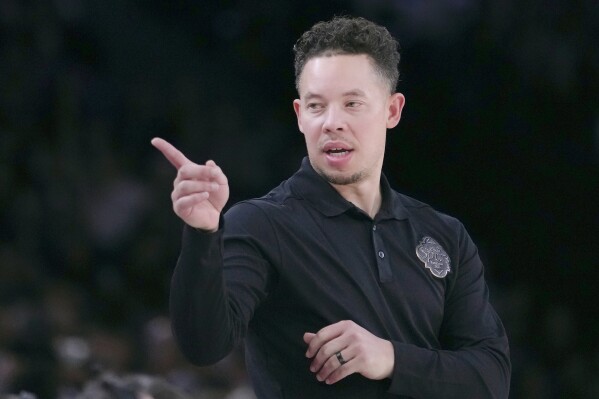
From the bench to the hardwood, the inexperience of 39-year-old head coach Mitch Johnson and his youthful roster is actively killing their shot at a title.
1. The Mitch Johnson Problem: Out-Coached on the Big Stage
Mitch Johnson deserves immense credit for navigating the post-Gregg Popovich era and finishing third in Coach of the Year voting. But the Finals are about hyper-granular adjustments, and Johnson is currently getting a masterclass from Mike Brown.
The Star-Overburdening Trap
The most glaring indicator of Johnson’s lack of postseason experience is his complete refusal to trust his bench. Throughout this series, the Spurs have relied on a brutal, unsustainable rotation, playing six players for virtually the entire game while leaving depth pieces like Keldon Johnson completely marginalized.
In Game 4, this predictability turned fatal. While Mike Brown expertly cycled in Jose Alvarado and Landry Shamet to provide sparks, disrupt defensive matchups, and give Jalen Brunson breathers, Johnson ran his starters into the ground.
The Wembanyama Mismanagement
Leaving a 7-foot-4 modern marvel on the floor for 44 minutes in a high-tempo Finals game borders on malpractice. By the middle of the fourth quarter, Wembanyama was running on fumes. The structural leg fatigue was painfully obvious—he finished a dismal 9-of-25 from the floor and, most catastrophically, missed two straight free throws with 1:47 remaining that would have preserved a late lead.
Johnson panicked as the Knicks’ lead evaporated, coaching out of fear of losing the cushion rather than executing a sustainable strategy to win the game.
SPURS ROTATION CRUNCH (GAME 4)
=====================================
Starters + Dylan Harper:  31+ Mins Each
Rest of Bench:           Under 10 Mins Combined
Result:                  A 30-Point 2nd-Half Collapse
2. Tactical Stubbornness: The 3-Point Addiction
When the Knicks mounted their ferocious third-quarter rally, an experienced championship team would have slowed the tempo, walked the ball into the half-court, and fed Wembanyama on the block to draw fouls or stop the bleeding.
Instead, the young Spurs reacted like a panicked AAU team.
Having built their 29-point lead on a blazing 11-of-16 start from downtown, San Antonio refused to stop shooting threes, even as the Knicks adjusted by running them off the line and switching with hyper-physical intensity. The Spurs continuously settled for heavily contested, early-shot-clock deep balls. They shot a staggering, ice-cold 3-for-17 from three-point range in the second half.
That lack of situational awareness—failing to realize that a cold shooting night requires a shift in offensive identity—is the definitive hallmark of a young team that hasn’t yet learned how to win ugly.
3. Crunch-Time Fractures: Backcourt Misery
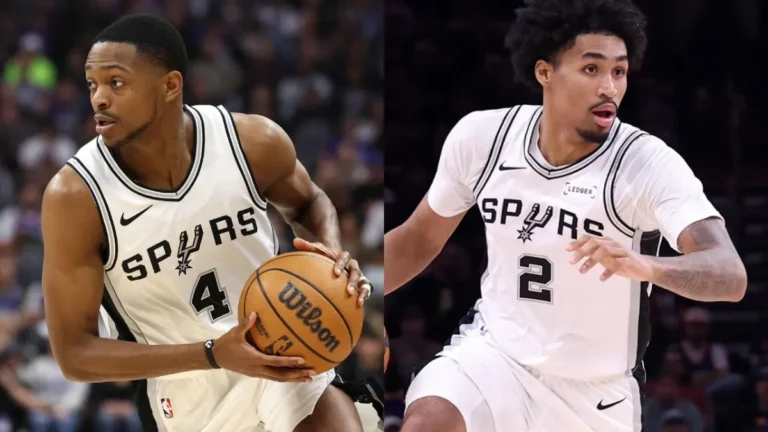
When games dissolve into one-possession dogfights in the final two minutes, you lean on your point guard to steady the ship. De’Aaron Fox, despite his veteran status on this otherwise green roster, has played with a frantic, rushed energy that has completely disrupted the Spurs’ offense.
THE CRUNCH-TIME DIFFERENCE
=============================================
NEW YORK:  Chipped away, hit tough paint looks, found the open man.
SAN ANTONIO: Over-dribbling, live-ball turnovers, blocked shots.
In the closing minutes of Game 4, Fox consistently fell into isolation traps:
He repeatedly pounded the rock into the hardwood, ignoring crisp cuts from Stephon Castle and Devin Vassell.
He forced contested, low-percentage mid-range pull-ups that completely played into the Knicks’ defensive game plan.
His night culminated in a disastrous, live-ball turnover and a subsequent possession where his shot was blocked by OG Anunoby, gifting New York the ball for the game-winning sequence.
Combined with rookie Stephon Castle’s natural developmental spacing mistakes, San Antonio’s backcourt looked entirely unglued under pressure.
The Verdict: A Year Too Early?
“It was painful, of course,” a visibly dejected Victor Wembanyama said postgame. “We worked too hard and gave up our lead. It’s as simple as that. It just hurts.”
The Spurs possess the talent to be a dynasty, but dynasties require scar tissue. Right now, the Knicks are using their veteran composure—anchored by Brunson’s steady floor leadership and Anunoby’s championship pedigree—to completely manipulate the emotional volatility of a young San Antonio squad.
Mitch Johnson and the Spurs have a massive opportunity to extend this series on Saturday night back in Texas for Game 5. But if the young coach keeps shortening his bench, and if his players keep hunting quick-fix three-pointers instead of executing down low, the 2026 Finals will be remembered as the ultimate learning experience that cost them a ring.


Author Profile

- CEO NGSC Sports
Latest entries
 SECOctober 11, 2026Path to No. 1: Georgia Edges Alabama to Take Control of SEC and CFP Picture
 NCAAFOctober 11, 2026Red River Shockwave: Oklahoma Stuns No. 1 Texas 27-24 as Time Expires
 BIG TENOctober 11, 2026No. 7 Indiana Rallies Past Nebraska 20-17 with Fourth-Quarter Heroics in Lincoln
 WNBAOctober 11, 2026Indiana Fever & Caitlin Clark: Navigating Fan Culture and a High-Stakes Future
About the Author