Photo Credit: Facebook
 0
0
 0
0
College football once revolved around superstar running backs. Players like Herschel Walker, Barry Sanders and Adrian Peterson became household names. They carried huge workloads and dominated games every Saturday. Today, that formula has almost disappeared. College football still develops excellent running backs. However, the sport rarely builds its offense around one featured back. Several major changes explain why.
The Passing Game Changed Everything
The biggest reason involves the growth of the passing game. Modern offenses prioritize quarterbacks, receivers and tight ends. Coaches want their best athletes creating mismatches in space. That philosophy has changed how teams recruit running backs. NFL.com previously highlighted this trend across football. Spread offenses often move elite athletes toward receivers and quarterbacks. That trend reduces the talent pool at running back. Meanwhile, quarterbacks have become the faces of college football. Receivers also receive more national attention than ever. The result leaves running backs fighting for a smaller spotlight.
Teams Share Carries More Often
Backfield committees also hurt individual running back production. Coaches understand the physical demands that running backs face. Therefore, many programs split carries between multiple players. Notre Dame provides a strong example of this approach. Jeremiyah Love shared carries during his college career. Yet he still became the heartbeat of Notre Dame’s offense. He eventually became the third overall pick in the 2026 NFL Draft. Love represents an important exception to the modern trend. Most running backs do not receive his combination of talent and opportunity. ESPN recently examined how college teams increasingly embrace running back tandems. Those tandems can keep players fresher throughout the season. They also reduce the wear and tear from massive workloads. That approach makes sense for coaches. However, it makes individual stars harder for fans to identify.
Quarterbacks Steal More Rushing Production
Quarterbacks also take away opportunities from running backs. Dual-threat quarterbacks can create major advantages on the ground. They force defenses to account for another rushing threat. Consequently, running backs sometimes receive fewer designed carries. Quarterbacks can also steal short-yardage touchdowns. That trend has grown throughout college football. The 2025 season provided another example. Indiana won the national championship with a strong rushing identity. However, quarterback Fernando Mendoza became the team’s biggest star. He also delivered a crucial rushing touchdown during the championship run. That example captures the modern college football landscape. A team can dominate on the ground without creating a superstar running back.
The Transfer Portal Changes Backfields
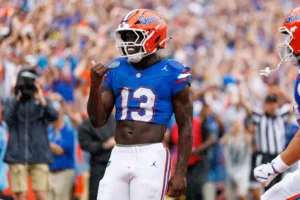
The transfer portal creates another challenge for running back stars. Players can leave programs when they dislike their role. That option can quickly change a team’s backfield. A talented backup might transfer rather than wait for more carries. Likewise, a starter might leave for a better opportunity. That movement makes long-term development harder for some programs. The portal also encourages coaches to build deeper running back rooms. Instead of relying on one player, teams can collect several talented options. That strategy can protect teams from injuries and departures. However, it can also prevent one back from becoming a superstar. The modern college economy adds another layer. NIL opportunities can influence where running backs choose to play. Florida running back Jadan Baugh reportedly received at least $1 million. That deal showed how much the college running back market has changed.
Running Backs Must Become Complete Players
The best modern running backs also need more than rushing ability. They must contribute to the passing game. Running backs must understand protections and run multiple routes. They also need to create explosive plays without constant carries. Jeremiyah Love perfectly fits that modern profile. NFL evaluators praised his rushing ability and receiving skills. He finished his Notre Dame career with 2,882 rushing yards. He also scored 36 rushing touchdowns across three seasons. His versatility helped separate him from other running backs. That trend also appears throughout current NFL evaluations. The 2026 running back class featured plenty of complementary players. However, analysts viewed Love as the clear elite prospect.
The Workload Problem Matters
There is also a practical reason behind the change. Running backs know their bodies have limited mileage. College players increasingly understand the importance of NFL longevity. Coaches also recognize those concerns. Texas coach Steve Sarkisian discussed this changing mindset. He noted that agents and players consider future professional opportunities. That mindset can encourage players to avoid unnecessary punishment. A player chasing the NFL may not want 300 carries. Instead, he might prefer efficient production with fewer touches. That decision can make sense financially. Still, it makes legendary college statistics much harder to produce.
The Superstar Running Back Still Exists
College football has not forgotten how to produce great running backs. The sport simply develops them differently. Jeremiyah Love provides the clearest recent example. Other players can also become household names with the right opportunity. However, the old 30-carry workload rarely defines modern offenses. Coaches want flexibility and depth. They want fresh legs late in games. They also want multiple weapons for opposing defenses to handle. Therefore, one running back rarely controls an entire offense. The modern game rewards versatility instead. The best backs can run, catch and protect their quarterback. They can also create explosive plays whenever defenses lose discipline. That profile looks increasingly important at every level.
College Football Has Changed, Not Abandoned Running Backs
The superstar running back has not disappeared completely. Instead, college football has changed the path toward superstardom. Passing offenses now dominate the national conversation. Quarterbacks and receivers receive most of the attention. Meanwhile, running backs often share touches with teammates. Transfer rules and NIL opportunities add even more movement. At the same time, players understand the value of preserving their bodies. That combination makes legendary workloads much less common. Still, special players can break through the trend. Love did exactly that at Notre Dame. The next great running back could do the same. However, today’s college game makes that journey much harder. The position still matters. It just no longer controls college football like it once did.
The running backs have not only been not a main point in college football also at the pro level.



Author Profile

-
Bradley Walker (VP) and Head of our Florida operations for NGSC Sports, bringing extensive experience across collegiate, professional, and amateur athletics. His coverage spans USF Athletics, including football, baseball, lacrosse, and softball, as well as University of Tampa baseball.
Bradley also provides coverage of minor league baseball with the Clearwater Threshers and Major League Baseball with the Tampa Bay Rays. On the national stage, he covers college football bowl games and conference championship matchups, along with premier golf events across the PGA Tour, LIV Golf, and LPGA Tour.
In addition to his reporting work, Bradley is the play-by-play announcer for Pinellas Park High School Patriots football, lending his voice and insight to Friday night lights.
He is also an active podcast host and contributor, serving as a host on The Walker Report, where he delivers in-depth sports analysis, interviews, and coverage across multiple levels of competition.
Latest entries
 HockeySeptember 28, 2026NHL Playoff Bracket Stays, New Rules Change the Stanley Cup Chase
 FootballSeptember 28, 2026Pinellas Football Week 6: Clearwater Keeps Rolling
 AAC FootballSeptember 28, 2026American Conference Week 4 Recap: USF Stays Perfect
 AAC FootballSeptember 28, 2026Three Teams Eye American Conference Move
About the Author