 0
0
 0
0
Pet hair has a frustrating habit of returning to the same corners not long after the floor has been vacuumed. The center of the room may look clean, the canister may be full of fur, and yet a soft clump appears beside the baseboard later that day.
The hair did not appear from nowhere.
Loose fur continues moving after cleaning ends. Air currents carry lightweight strands across hard flooring. People and pets disturb hair trapped in rugs and upholstery. Furniture redirects airflow. Standard vacuum heads sometimes leave a narrow strip beside the wall untouched.
Corners happen to be where many of those movements stop.
Cleaning them successfully requires more than repeatedly aiming the vacuum at the visible clump. It helps to understand where the fur started, how it travelled, and why one particular edge keeps collecting it.
Air Movement Carries Fine Fur Toward Walls
Pet hair can be surprisingly light, especially soft undercoat fibers.
Small air currents are enough to move individual strands across a room.
Those currents may come from:
- Ceiling fans
- Heating or cooling systems
- Opening and closing doors
- People walking past
- Pets moving quickly through the room
- Air returning through vents
On smooth flooring, fur may travel several feet before meeting an obstacle.
A wall interrupts that movement. A corner stops it from two directions.
That is why a clean-looking open floor can develop a soft line of hair around its perimeter even when nobody has deliberately pushed debris toward the wall.
The Main Vacuum Head May Leave the Last Inch Behind
Vacuuming the center of a room is different from vacuuming its edges.
Many floor heads cannot sit completely flush against a baseboard. Their strongest suction may also be concentrated farther toward the center of the tool.
The result can be a thin strip of untouched debris along the wall.
It may not look significant immediately after cleaning, but surviving strands give newly drifting hair something to catch against.
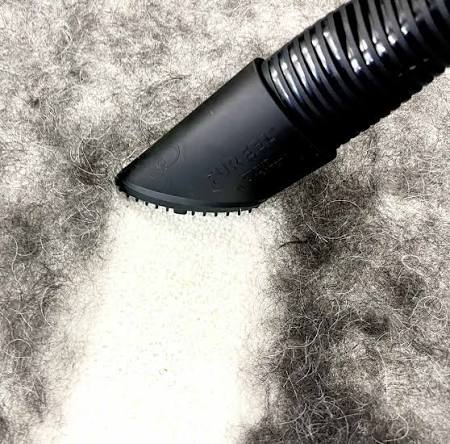
Use a crevice attachment periodically around:
- Baseboards
- Door frames
- Furniture edges
- Inside corners
- Floor transitions
Move slowly rather than making several quick passes.
If Carolina Dream Clean is included in the regular cleaning plan, pointing out one or two corners that repeatedly collect fur can be more informative than simply describing the entire room as hairy.
The stubborn edge often tells you where the normal floor pass is falling short.
Static Can Hold Hair Against the Surface
Not all fur is lying loose enough for suction to lift easily.
Static electricity can make strands cling to certain baseboards, flooring, rugs, and furniture surfaces.
Synthetic materials may make this more noticeable.
If a vacuum passes close to the hair without removing it, try an appropriate dry microfiber method on the affected trim or hard surface.
Where the material permits it, a barely damp microfiber cloth may help capture stubborn strands.
Avoid soaking painted baseboards or moisture-sensitive flooring.
The problem is attachment, not necessarily weak vacuum suction.
Once the clinging layer is removed, the surface may stay clear longer.
Furniture Can Redirect Fur Toward One Specific Corner
Furniture changes how air and debris move.
A sofa positioned a few inches from the wall can create a narrow channel where fur travels underneath and settles at one end.
A bed may block normal floor cleaning while leaving enough space for air movement.
A dresser can direct loose strands toward the nearest corner without the pet ever spending time there.
This explains why one area sometimes fills repeatedly while another corner in the same room stays almost clean.
Check the furniture nearest the problem spot.
Use a long attachment beneath accessible gaps.
Move lightweight pieces occasionally if they can be shifted safely.
There is little value in repeatedly clearing the visible corner while leaving a larger accumulation beneath the sofa beside it.
Pet Beds Create Concentrated Shedding Points
Pets shed everywhere, but not evenly.
The highest concentration is often where the animal sleeps, rolls, scratches, or spends long periods resting.
A pet bed against a wall can release fur directly beside a baseboard. The same is true of a favorite sofa cushion, rug, window seat, or blanket.
Give those locations more frequent dry removal than low-use parts of the room.
Vacuum beneath removable pet beds rather than cleaning only around them.
Wash removable covers according to their care instructions and dry them fully before putting them back.
Removing fur where it is released reduces the amount available to migrate elsewhere.
Rugs Can Keep Feeding Fur Back Onto Hard Floors
An area rug may hold much more pet hair than is visible on its surface.
Foot traffic flexes the fibers and releases some of that hair onto nearby flooring.
Once loose, those strands travel toward edges and corners.
Vacuum rugs slowly and according to their care requirements.
Where appropriate, change direction so hairs lying at different angles have a better chance of being lifted.
Pay particular attention to the perimeter.
Fur can collect where the rug meets the hard floor and may also work underneath the edge.
If the rug can be lifted safely, inspect below it occasionally.
A clean hard floor beside a hair-filled rug may not stay clean for long.
Measure How Fast the Same Corner Fills Again
The return time can tell you something useful.
Clear one problem corner thoroughly, including the nearby baseboard and accessible floor edge. Then notice when the next visible clump appears.
If it returns within a few hours, a nearby source is probably feeding it continuously. Check a pet bed, rug edge, sofa gap, vent path, or favorite resting spot.
If it takes several days, the buildup may simply reflect normal movement through the room.
Marking the fastest-refilling locations can make cleaning services charlotte nc easier to direct. Instead of a vague note about pet hair, identify the two or three edges that repopulate first. Those points provide clues about where to trace backward before the visible fur is collected again.
The timing becomes the evidence.
It shows whether the corner itself is the problem or merely the endpoint.
Doorways Transfer Fur Between Rooms
Doorways connect separate traffic and airflow patterns.
Hair stuck to socks, slippers, pet paws, or clothing can move through them repeatedly.
The area behind an open door is also easy to miss during vacuuming.
Close or reposition the door so the hidden floor becomes visible.
Check:
- The corner behind the door
- Lower door trim
- Nearby baseboards
- The threshold
- The first few inches of flooring on both sides
If one doorway repeatedly collects fur, it may be acting as a transfer point between a pet-heavy room and the rest of the home.
Cleaning both sides can be more useful than repeatedly treating only the visible side.
Baseboards Catch Fur and Dust Together
Pet hair rarely remains by itself for long.
Once it reaches the room perimeter, ordinary dust and lint become caught in the strands.
The mixture forms the familiar soft gray clump along the wall.
Remove it while it is dry.
Vacuuming is usually easier than wiping at this stage because moisture can turn the dust component into streaky residue.
After the loose buildup is gone, inspect the baseboard itself.
If fingerprints, scuffs, or other grime remain, use a method suited to the paint or finish.
Do not add a damp step simply because fur was present.
The trim may already be clean once the loose debris is removed.
Upholstery Can Release Hair Long After the Pet Leaves
A sofa may look reasonably clean while holding fur in seams and between cushions.
Every time someone sits down, the movement can release a few strands into the room.
Vacuum suitable upholstery according to its care instructions.
Check:
- Cushion seams
- Areas beneath removable cushions
- Favorite pet sitting spots
- The lower fabric edge
- Gaps between upholstery and the floor
This does not require intensive upholstery cleaning.
The objective is to reduce loose fur before normal use sends it back into circulation.
If the pet regularly occupies one section, spend more time there than on decorative seating nobody uses.
Pay Attention to the Floor Beneath Upholstered Furniture
The underside of a sofa or chair may act like a hidden fur reservoir.
Hair enters through open sides, settles beneath the frame, and later gets disturbed by airflow or foot movement.
Use a suitable long attachment where access allows.
There is no need to drag heavy furniture across the floor every week.
Instead, reach what can be reached safely and take advantage of occasions when the piece is already being moved.
If a visible corner repeatedly fills beside the same sofa, the floor underneath that furniture deserves a closer look.
Vacuum Maintenance Changes Pet-Hair Pickup
Pet homes place extra demand on vacuum equipment.
Hair can wrap around brush rolls, fill canisters, clog filters, and collect inside attachments.
Reduced airflow may not be obvious at first.
The machine still sounds normal, but it leaves behind more fine fur than it used to.
Follow the manufacturer’s maintenance instructions.
Depending on the design, that may include:
- Emptying the collection bin
- Replacing or cleaning filters
- Removing accessible hair from the brush roll
- Checking attachments for blockage
- Inspecting hoses
Unplug the machine before working around moving components where required.
A poorly maintained vacuum makes perimeter problems more noticeable because edge pickup is often already challenging.
Do Not Assume More Suction Is Always the Answer
If one strand remains stuck to a painted baseboard after several passes, continuing to vacuum may accomplish very little.
Look at the surface.
Static, texture, moisture, or a narrow groove may be holding the hair in place.
Switching tools can be more productive than increasing cleaning time.
A microfiber cloth may work on smooth trim.
A soft brush may release fur from a textured corner.
A narrow attachment can reach a floor joint that the main head cannot enter.
The problem is often tool fit rather than insufficient effort.
Grooming Can Reduce What Reaches the Floor
Cleaning addresses hair after it has been shed.
Appropriate grooming may reduce some of the loose coat before it reaches furniture and flooring.
The suitable method depends on the animal, coat type, skin condition, and advice from a veterinarian or qualified groomer.
Regular brushing does not stop normal shedding.
It can, however, concentrate some loose fur in one controlled location.
Dispose of collected hair promptly.
Leaving a pile of brushed fur in an open trash bin or on a grooming towel can release strands straight back into the room.
Check HVAC Vents Without Treating Them as the Cause Automatically
A visible clump near a vent may suggest airflow is moving hair toward that location.
That does not necessarily mean the HVAC system has a problem.
Look at the direction of airflow and nearby floor patterns.
If loose strands consistently gather along one wall after the system runs, the vent may simply be influencing where lightweight debris settles.
Remove ordinary exterior dust from accessible grilles where appropriate.
Do not insert cleaning tools deep into ductwork.
If the system has airflow, noise, filtration, or mechanical concerns, those should be assessed separately.
The cleaning clue is the direction of the fur, not an assumption about the equipment.
Work Backward From the Corner
A useful pet-hair cleanup can be done in reverse.
Start with the visible clump and ask what sits immediately upstream from it.
Is there a sofa?
A rug?
A pet bed?
A doorway?
A vent?
An upholstered chair?
Follow that route backward until you find the place releasing or holding the larger amount of fur.
Then clean forward again:
- Source area
- Nearby furniture gaps
- Rugs or upholstery
- Open flooring
- Baseboards
- Final corner
That order reduces the chance that fur loosened from another surface immediately lands in a corner you already finished.
Keep the Fastest-Refilling Edges on a Shorter Cycle
Not every perimeter needs a crevice attachment every time the room is vacuumed.
Some corners stay clean for much longer.
Others refill quickly because of furniture placement, pet habits, or airflow.
Give those repeat locations a shorter interval.
For a future visit from Carolina Dream Clean, a simple note such as “fur collects fastest behind the living-room door and beside the left end of the sofa” provides a precise target without expanding the task to every edge in every room.
The goal is to match effort to the places where the pattern is strongest.
Do Not Mistake One Returning Clump for a Failed Cleaning
A home with shedding pets will continue producing loose hair after the vacuum is put away.
Finding a few strands later does not automatically mean the floor was cleaned poorly.
The better measure is whether large accumulations return unusually fast.
A small amount of new shedding is normal.
A thick clump appearing in exactly the same corner within hours suggests that the nearby source, edge, or hidden gap deserves investigation.
That distinction prevents repeated whole-room vacuuming when only one part of the debris path needs correction.
Corners Show Where the Fur’s Journey Ends
Pet hair collects in corners because those areas interrupt movement.
Airflow carries lightweight strands toward walls. Furniture redirects them. Rugs and upholstery release new hair. Doorways transfer it between spaces. Standard floor heads may leave the final strip beside the baseboard untouched.
The corner is often only the endpoint.
Instead of vacuuming that endpoint more aggressively every time, trace the fur backward. Check the nearest resting area, rug, furniture gap, doorway, or airflow path. Use tools that actually fit perimeter spaces and keep vacuum equipment functioning properly.
Some pet hair will always return in a home with shedding animals.
The realistic goal is to slow the rate at which the same corners refill by removing more fur before it reaches them.


Author Profile

- CEO NGSC Sports
Latest entries
 NFCSeptember 25, 2026Lambeau Stunner: Bijan Robinson, Michael Penix Jr. Lead Falcons to Rout of Packers
 WNBASeptember 25, 2026WNBA Recaps: WNBA Playoff Bracket Set After Thrilling Thursday Night
 NBASeptember 25, 2026Why Jalen Brunson’s Spot in the NBA Player Rankings is Sparking Furious Debate
 WNBASeptember 24, 2026WNBA Recaps: Playoff Picture Sharpens After Wednesday Night’s Action
About the Author