Photo Credit: Meetings Today
 0
0
 0
0
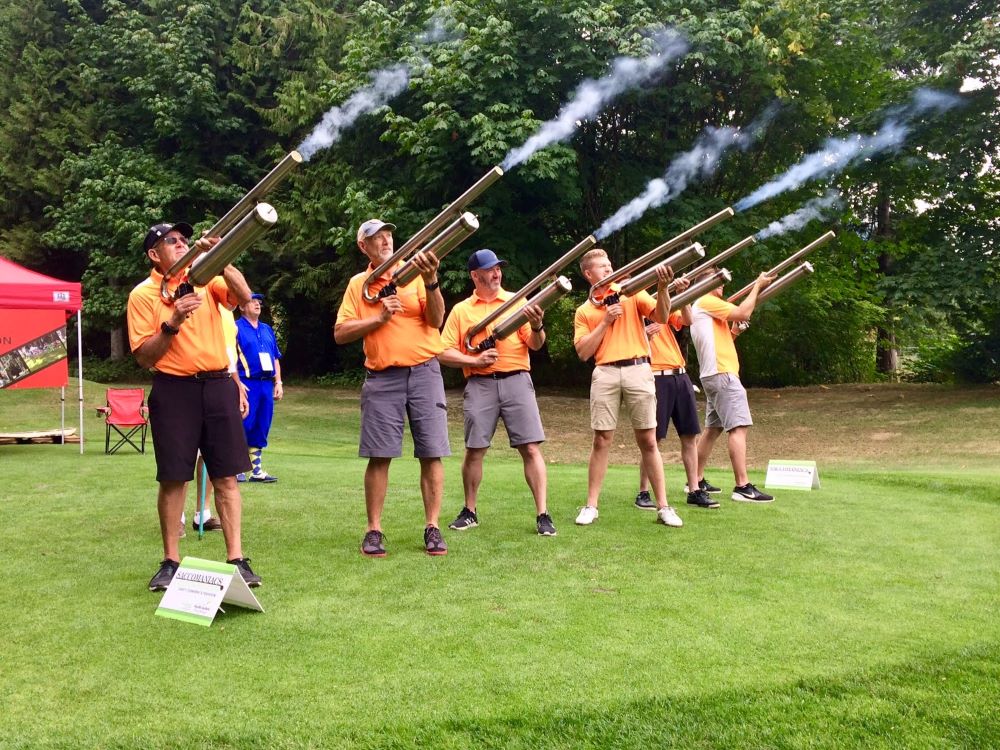
Golf tournaments offer far more than traditional play. Organizers can create memorable experiences with creative games and contests. These activities increase engagement, encourage fundraising, and add excitement throughout the event. With 31 different options available, tournament planners can customize the experience for golfers of all skill levels. One popular attraction is the Golf Ball Cannon. Instead of hitting a tee shot, golfers launch their ball down the fairway with an air-powered cannon. This activity adds excitement and often produces impressive distances. Another entertaining option is the Hole of Fortune. Golfers spin a wheel, draw a card, or use Plinko to determine special rules. Some outcomes provide rewards, including extra mulligans, free drinks, or automatic hole-in-ones. Others create challenges, such as blindfolded tee shots or penalty strokes.
The Marshmallow Drive offers a lighthearted competition. Golfers attempt to hit a marshmallow as far as possible. Organizers can also use a marshmallow chipping contest, rewarding the closest shot. Plinko remains a crowd favorite. Participants drop a puck and earn prizes, raffle tickets, beverages, or score improvements. The game works well during both traditional golf tournaments and miniature golf events. Roll-a-Score introduces luck into competition. Golfers roll dice and may replace a score from the round with the number rolled. Similarly, the Single Club Hole forces players to complete an entire hole using one club. Organizers often limit choices to a driver, wedge, or putter for added difficulty.
The Wrong Hand Challenge creates another unique obstacle. Participants play an entire hole using their non-dominant hand. Tournament organizers often provide opposite-handed clubs when necessary. Some events allow golfers to pay a fee to avoid the challenge. Scavenger Hunts combine golf with exploration. Teams search for designated items throughout the course and photograph each discovery. Teams that locate every item can earn prizes or score improvements. The Club Game allows golfers to purchase club-length advances toward the hole without taking additional strokes. Organizers often place volunteers at tee boxes and greens to manage purchases.
Poker Hand contests blend golf and card games. Teams collect one card on each of five designated holes. At the end of the round, the strongest poker hand earns a prize. Likewise, Speed Hole competitions reward teams that complete an entire hole in the shortest time. Trivia Holes add educational value. Volunteers ask questions before golfers tee off. Correct answers may result in prizes or access to closer tee boxes. Many nonprofits use mission-related questions to increase awareness. Shot Clock Holes create urgency. Entire teams must tee off within a set time limit or accept penalty strokes. Some tournaments raise additional funds by selling extra time.
Sports-themed alternatives include the Ball Toss or Kick challenge. Instead of hitting a golf ball, participants throw or kick another ball and continue play from that location. Organizers sometimes invite local athletes to participate for additional fundraising opportunities. The Closest to the contest offers a creative twist on Closest to the Pin. Golfers attempt to finish nearest a designated object, such as a tree, sponsor item, golf bag, or cooler. Speed Putting challenges golfers to sink as many putts as possible within a specific timeframe. Organizers can increase difficulty by moving the starting location farther from the hole during later rounds.
Several games focus on unusual playing conditions. The Sitting Drive Challenge requires golfers to tee off while seated. Ball Swap changes equipment near the green, replacing golf balls with racquetballs or ping pong balls. Blind Putt forces players to rely on teammate instructions while wearing blindfolds. Alternative Putter contests replace traditional putters with items such as croquet mallets, hockey sticks, baseball bats, or construction tools. Habitat for Humanity of Columbus used building tools, including sledgehammers and levels, to connect the game with its mission. Fundraising opportunities continue with the Caddie Auction. Teams bid on volunteer caddies, including community leaders, coaches, weathercasters, influencers, or nonprofit executives. Organizers often conduct bidding online before tournament day.
Hit It & Get It challenges golfers to strike designated prizes on a practice green. Higher-value prizes typically sit farther away, increasing difficulty. Skins Games create additional competition. Teams or individuals compete for the best score on each hole rather than focusing solely on overall results. Organizers often require a buy-in and display results on digital leaderboards. Several contests emphasize humor. Dizzy Bat requires golfers to spin around a baseball bat before teeing off. Goggle Putt uses special eyewear that distorts vision or creates upside-down images.
Bingo Bango Bongo rewards three achievements on each hole. Players earn a Bingo point for reaching the green first. They earn a Bango point for finishing closest to the pin after all balls reach the green. Finally, they earn a Bongo point for sinking the first putt. Traditional golf contests remain essential tournament attractions. The Hole-In-One Contest gives golfers the chance to ace a designated par-three hole for major prizes, including cash or golf vacations. Organizers often purchase hole-in-one insurance to cover prize costs. The Longest Drive Contest rewards the golfer who hits the farthest drive while remaining in the fairway. Meanwhile, the Closest to the Pin Contest recognizes the most accurate tee shot on a designated par-three hole.
The Chipping Contest highlights short-game skills. Participants attempt to chip as close as possible to a target, usually near a practice green. Organizers often increase fundraising by selling mulligans specifically for these contests. Finally, the Beat the Pro Contest provides a direct challenge. Golfers compete against a golf professional, attempting to place their tee shot closer to the hole than the pro. Together, these 31 games and contests transform golf tournaments into engaging experiences. They encourage participation, support fundraising efforts, and create memorable moments for players and sponsors alike. By combining traditional contests with creative challenges, tournament organizers can deliver a fun and successful event.



Author Profile

-
Bradley Walker (VP) and Head of our Florida operations for NGSC Sports, bringing extensive experience across collegiate, professional, and amateur athletics. His coverage spans USF Athletics, including football, baseball, lacrosse, and softball, as well as University of Tampa baseball.
Bradley also provides coverage of minor league baseball with the Clearwater Threshers and Major League Baseball with the Tampa Bay Rays. On the national stage, he covers college football bowl games and conference championship matchups, along with premier golf events across the PGA Tour, LIV Golf, and LPGA Tour.
In addition to his reporting work, Bradley is the play-by-play announcer for Pinellas Park High School Patriots football, lending his voice and insight to Friday night lights.
He is also an active podcast host and contributor, serving as a host on The Walker Report, where he delivers in-depth sports analysis, interviews, and coverage across multiple levels of competition.
Latest entries
 The HubSeptember 30, 202611-Year-Old British Chess Star Makes History
 FootballSeptember 30, 2026NFL Week 3 Winners and Losers: Purdy, Bowers Shine
 FootballSeptember 30, 2026NFL Week 3 Winners and Losers: Upsets Shake Up the League
 SportsSeptember 30, 2026Protect College Sports Act Clears Senate, House Awaits
About the Author