 0
0
 0
0
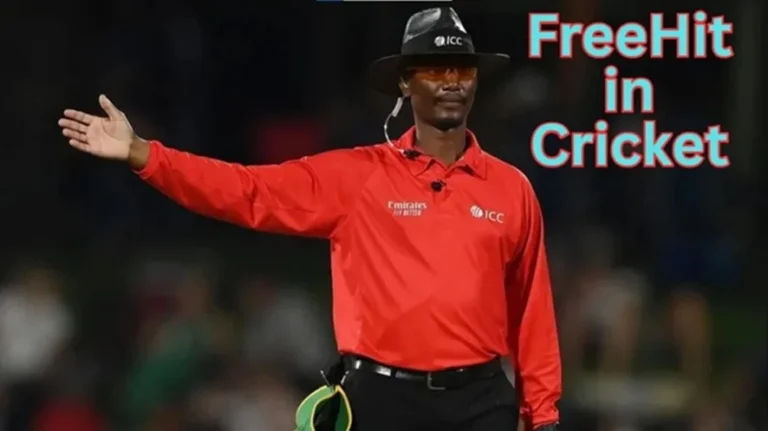
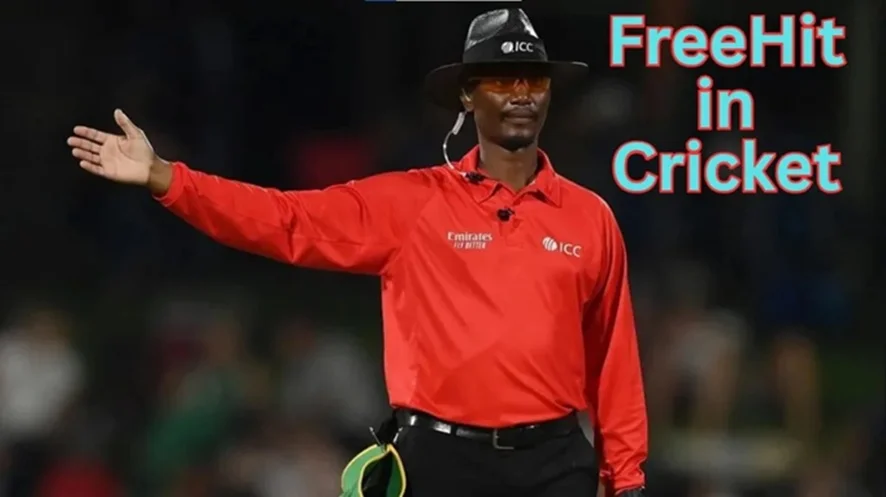
Cricket fans love the free hit in cricket because it brings instant excitement. It usually happens in limited‑overs matches when a bowler bowls a no‑ball and the next delivery becomes a free hit. The batsman then gets a special chance to attack and score runs without worrying about most types of dismissal.
The free hit in cricket is designed to penalize the bowling side and reward the batting side for the no‑ball. On this ball, the batsman cannot be caught, bowled, leg before wicket, stumped, or hit wicket. He can still be run out or given out for obstructing the field or hitting the ball twice.
In this post, we will explain the complete rules of the free hit, its history in international cricket, and how it has influenced modern batting and bowling strategies. You’ll also see how this rule adds tension and thrill to ODIs and T20s.
What is a Free Hit in Cricket?
A free hit is the ball bowled right after a no‑ball in ODIs and T20s. When the bowler makes a mistake like overstepping the crease, the batting side gets an extra chance on the next ball.
On a free hit, the batsman cannot be caught, bowled, LBW, stumped, or hit wicket. He can only be out in a few ways: run out, obstructing the field, or hitting the ball twice. This makes it easier for the batsman to attack and score freely.
Rules of Free Hit in Cricket
Let’s break down the key rules in simple language:
- The batsman cannot be caught, bowled, leg before wicket (LBW), stumped, or hit wicket on a free hit.
- He can still be run out, given out for obstructing the field, or for hitting the ball twice without protecting his wicket.
- The fielding side cannot change the field after the no‑ball unless the striker changes ends or the no‑ball was for a field-restriction breach.
- The bowler must bowl the free hit from the same end and within the same over as the no‑ball.
These rules give the batting side a clear advantage and push bowlers to be more careful with their line, length, and foot position.
History of Free Hit Rule
The free hit is not very old in cricket history. It was first introduced in 2007 during the ICC T20 World Cup. At that time, a free hit was given only for front‑foot no‑balls. The idea was to stop bowlers from repeatedly overstepping the line and making batting unfair.
Later, the rule was also applied to ODIs. In 2015, the ICC made a big change: a free hit became available for all types of no‑balls, not just front‑foot ones. This change was meant to reduce dangerous beamers and make the game safer and cleaner.
The first-ever free-hit ball in international cricket was bowled by Makhaya Ntini of South Africa in a T20 match against India in 2007. This moment marked the start of a new and exciting chapter in modern limited‑overs cricket.
Impact of Free Hit in Modern Cricket
Batting Impact
- Batsmen get a chance to score freely without fear of most dismissals.
- They often attack and try boundaries or sixes on free hits.
- It helps in quick scoring, especially in the last overs of T20s and ODIs.
Bowling Impact
- Bowlers must be more careful with line, length, and foot position to avoid no-balls.
- Captains cannot freely change the field after a no‑ball, so planning becomes crucial.
- Smart bowlers use slower balls or variations to limit runs even on free hits.
Match Impact
- A six or four on a free hit can change the momentum of the game.
- It can push the required run rate down in chases or even improve the team’s net run rate in tight tournament situations.
- Free hits add excitement and tension, making limited‑overs cricket more thrilling for fans.
Famous Free Hit Moments in Cricket
Over the years, many exciting free-hit moments have become famous in cricket history. Fans often remember matches where a single free hit turned the game in one or two overs. These moments usually come in high‑pressure situations, like the last few overs of a T20 or a close ODI chase.
Big‑hitting players such as Andre Russell, Glenn Maxwell, and David Miller have hit huge sixes on free hits in T20 leagues and international games. Their powerful shots on these deliveries have made those balls go viral and added to their “finisher” image. These sixes not only change the scoreboard but also boost the team’s confidence.
In some of the highest scores in T20-type matches, free hits have helped batters add quick runs in the final overs. Just one well‑timed free hit six can push the total higher and make the game more one‑sided. These moments clearly show how the free hit rule can change a match with just a single ball.
Conclusion
The free hit in cricket is a simple but powerful rule that has changed modern limited‑overs cricket. It punishes bowlers for no‑balls, protects batters from dangerous deliveries, and adds extra excitement for fans. From its first use in the 2007 T20 World Cup to its current use in ODIs and T20s, the rule has helped make the game fairer and more entertaining.
Understanding how the free hit works and its impact on batting, bowling, and match results helps you enjoy the game even more. Next time you hear “free hit” during a match, you will know that it is a special ball that can change the flow of the game in just a few seconds.



Author Profile

Latest entries
 The HubApril 9, 2026Free Hit in Cricket: Complete Rules, History, and Their Impact
 ACCApril 7, 2026North Carolina Taps NBA Champion Michael Malone as Next Head Coach
 MLBApril 6, 2026MLB Weekly Digest: Yankees and Brewers Sprint to Early Leads, Rookies Showing Off
 healthApril 3, 2026Rocks Discount Vitamins – Save on Quality Supplements
About the Author