Photo Credit: Peach Bowl
 0
 0
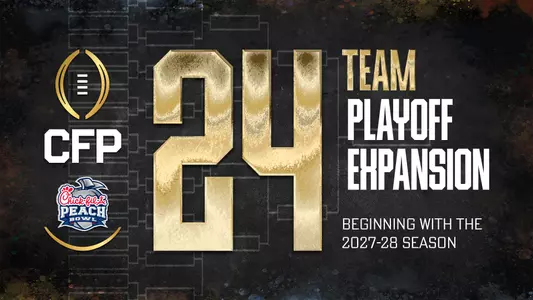
College football will undergo another historic transformation when the College Football Playoff expands to 24 teams in 2027. The College Football Playoff Management Committee unanimously approved the expansion Monday, November 9, 2026. Additionally, ESPN secured a new five-year television agreement worth approximately $1.7 billion. The agreement will double the current 12-team field and create more opportunities for programs across the country. However, the decision also raises questions about conference championships, regular-season importance, and college football’s future.
ESPN will reportedly pay approximately $345 million annually beyond its existing television agreement. That additional investment demonstrates the enormous financial value of college football’s postseason. The new format begins with the 2027-28 season and continues through the 2031-32 season. Meanwhile, the current 12-team playoff remains intact for the 2026 season. CFP Executive Director Rich Clark celebrated the announcement and emphasized the organization’s commitment to fans and student-athletes. The expanded tournament will feature 23 games, creating significantly more postseason football than the current format.
How the New 24-Team Playoff Will Work
The new format creates a much larger postseason field while maintaining automatic qualification opportunities. Five teams will earn designated playoff positions through conference championships and rankings. Meanwhile, the selection committee will award 19 additional invitations.
The field will include:
* Four conference champions from the SEC, Big Ten, ACC, and Big 12.
* One highest-ranked team from the American, Conference USA, MAC, Mountain West, Pac-12, or Sun Belt.
* Nineteen at-large teams selected through the final CFP rankings.
The top eight seeds will receive first-round byes. Consequently, those programs will need fewer victories to reach the national championship. Seeds nine through sixteen will host the opening round against seeds seventeen through twenty-four. The eight winners will advance to face the top eight seeds in the second round. Furthermore, the first two rounds will take place on college campuses. That arrangement creates 16 campus-hosted playoff games instead of the current four. The quarterfinals and semifinals will continue using the six traditional New Year’s Six bowl locations. The national championship will remain at a neutral site.
Conference Championship Games Face Major Changes
Perhaps the most controversial development involves the future of conference championship games. The SEC, Big Ten, ACC, and Big 12 will reportedly eliminate their championship games under the new scheduling structure. Instead, conferences will determine their champions through regular-season standings and applicable tiebreakers. That decision could end decades of championship traditions, including the SEC Championship Game in Atlanta. However, the CFP’s official announcement leaves final decisions about conference championship games to individual conferences.
The change would also eliminate an additional game for championship contenders before the postseason. Supporters believe this approach will protect players from unnecessary physical demands. Meanwhile, critics argue that conference championship games represent important traditions and significant revenue opportunities. The SEC Championship Game regularly attracts enormous television audiences and passionate supporters. Losing that annual event would represent a major cultural change for college football. Nevertheless, the expanded playoff could provide additional television revenue and postseason opportunities to offset some losses.
Regular-Season Scheduling Will Look Different
The expansion will also change how college football approaches its regular season. Beginning in 2027, the regular season will start the week before Labor Day. Teams will conclude their regular-season schedules during Thanksgiving weekend. Additionally, the CFP will encourage programs to schedule stronger nonconference opponents. Power Four programs must schedule at least ten qualifying games against conference opponents, other Power Four programs, or Notre Dame. Group of Six programs face similar scheduling requirements involving qualifying opponents.
The committee will also limit how it evaluates victories against FCS opponents. Only one FCS victory per season can contribute to a team’s playoff evaluation. These changes could encourage more attractive early-season matchups. For example, traditional powers might schedule additional games against other major conference opponents. Furthermore, teams could benefit from difficult schedules without fearing that one early loss destroys their postseason opportunities. However, the larger field could also reduce the importance of individual regular-season games.
The SEC and Big Ten Could Dominate the Field
The expanded format creates significant opportunities for college football’s two wealthiest conferences. The SEC and Big Ten already feature numerous nationally competitive programs. Now, both conferences could potentially send six or more teams into the postseason. Programs such as Georgia, Alabama, Texas, Ohio State, Michigan, and Oregon could benefit from additional at-large invitations. Meanwhile, teams finishing 9-3 could have legitimate playoff arguments under the new system. That possibility creates another interesting debate.
Should a three-loss SEC program receive an invitation over a smaller conference champion with fewer defeats? The committee will face difficult decisions when comparing strength of schedule, quality victories, and overall records. Furthermore, the 19 at-large invitations could create opportunities for teams outside the traditional championship conversation. However, the SEC and Big Ten could dominate those positions because of their difficult schedules and national reputations. The committee must balance conference strength with competitive fairness. Otherwise, expansion could create additional controversy rather than eliminate existing disagreements.
Notre Dame Faces a Different Playoff Path
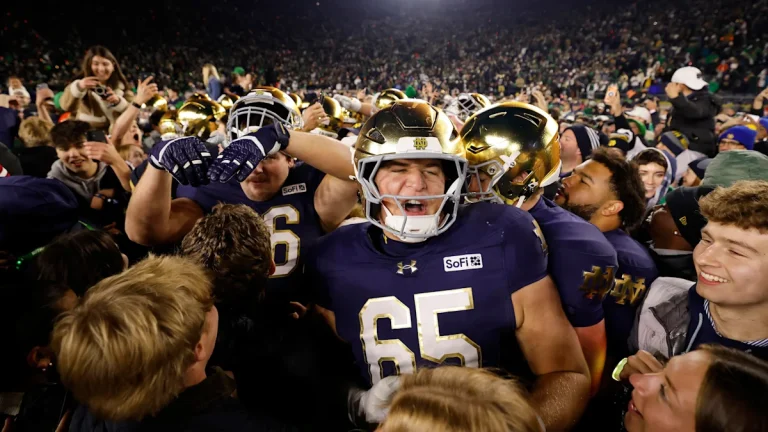
Notre Dame will also experience an important change under the expanded format. The Fighting Irish currently have a special qualification guarantee under the 2026 playoff rules. That guarantee applies when Notre Dame finishes inside the committee’s top twelve. However, the new agreement eliminates that special provision. Notre Dame will instead compete for one of the 19 at-large invitations. Nevertheless, a 24-team field should provide the Fighting Irish with considerable opportunities. The program’s national schedule and independent status could strengthen its postseason resume. Additionally, Notre Dame could benefit from playing strong opponents without facing a conference championship game. However, the Fighting Irish must still earn their invitation through the committee’s rankings. Their national reputation alone will not guarantee participation.

More Playoff Football Means More Money
The financial implications represent another major part of this historic agreement. ESPN already pays approximately $1.3 billion annually for the existing playoff television package. The additional agreement will reportedly generate another $1.7 billion across five seasons. Consequently, ESPN will strengthen its position as college football’s primary postseason television partner. The expanded tournament also creates additional advertising opportunities and valuable television inventory. Furthermore, campus-hosted playoff games could benefit local economies through hotels, restaurants, transportation, and tourism.
Sixteen campus games will give more communities opportunities to host nationally televised postseason contests. However, schools and conferences must also address additional expenses involving travel, staffing, and game operations. Players could face longer seasons, especially those competing for national championships. The NCAA and participating conferences must carefully consider athlete welfare while expanding postseason opportunities. College football cannot ignore those concerns simply because television networks offer enormous financial incentives.
What Happens to the Bowl Games?
The expanded playoff will preserve the importance of college football’s most recognizable bowl games. The Rose, Sugar, Orange, Cotton, Fiesta, and Peach Bowls will continue hosting quarterfinals and semifinals. However, the new format could further reduce the significance of traditional non-playoff bowl games. More teams will enter the national championship tournament, potentially leaving fewer nationally prominent programs for other bowls. Additionally, fans might prioritize playoff matchups over postseason exhibitions. Nevertheless, the traditional bowl system still offers opportunities for programs outside the championship field. Those games can provide valuable experiences for younger players and reward successful seasons. The challenge involves maintaining bowl traditions while embracing a larger championship tournament.
When Will the First 24-Team Champion Emerge?
The first expanded playoff will begin in December 2027. The tournament will conclude January 24, 2028, in New Orleans. Meanwhile, Tampa Bay will host the national championship January 22, 2029. That announcement creates another exciting opportunity for Florida football supporters. The Tampa Bay region will welcome college football’s biggest game under the new 24-team format. Additionally, the expanded postseason could give more Florida programs opportunities to compete nationally. Florida, Florida State, Miami, and USF could all benefit from additional playoff positions if their performances warrant selection. However, none will receive an invitation without producing a competitive resume. The 2026 national championship will take place January 25, 2027, in Las Vegas. That contest will conclude the current 12-team era.
Is a 24-Team Playoff Good for College Football?
The expansion offers several advantages, beginning with greater access to the national championship. More programs will have opportunities to compete beyond the regular season. Additionally, fans will enjoy more meaningful December football games and exciting campus environments. The expanded field could also encourage stronger nonconference scheduling. However, college football risks diminishing the importance of its regular season. A program could lose three or four games and still compete for a national championship. That possibility changes the traditional importance of every Saturday. Furthermore, eliminating conference championship games would remove important traditions from the sport.
College football already features significant changes involving conference realignment, NIL, and the transfer portal. The expanded playoff adds another major transformation. Ultimately, the $1.7 billion agreement demonstrates the financial power of college football. The sport will soon feature more teams, more postseason games, and additional championship opportunities. However, administrators must protect the traditions that helped make college football successful. The 24-team playoff could deliver unforgettable postseason moments and opportunities for previously overlooked programs. Whether those benefits outweigh the potential drawbacks remains an important question. One thing remains certain: college football will never look quite the same after 2027. And with $1.7 billion driving the expansion, the sport has entered another remarkable era.



Author Profile

-
Bradley Walker (VP) and Head of our Florida operations for NGSC Sports, bringing extensive experience across collegiate, professional, and amateur athletics. His coverage spans USF Athletics, including football, baseball, lacrosse, and softball, as well as University of Tampa baseball.
Bradley also provides coverage of minor league baseball with the Clearwater Threshers and Major League Baseball with the Tampa Bay Rays. On the national stage, he covers college football bowl games and conference championship matchups, along with premier golf events across the PGA Tour, LIV Golf, and LPGA Tour.
In addition to his reporting work, Bradley is the play-by-play announcer for Pinellas Park High School Patriots football, lending his voice and insight to Friday night lights.
He is also an active podcast host and contributor, serving as a host on The Walker Report, where he delivers in-depth sports analysis, interviews, and coverage across multiple levels of competition.
Latest entries
 AAC FootballNovember 11, 2026 at 12:30 amArmy-Navy Game Moves Up Amid CFP Expansion
 NCAAFNovember 11, 2026 at 12:25 amCFP Expands to 24 Teams in $1.7 Billion ESPN Deal
 NCAAFNovember 11, 2026 at 12:20 amSEC Could Send Five Teams to CFP, even at 9-3
 High School FootballNovember 11, 2026 at 12:15 amPinellas County Football Playoffs: Seven Teams, One Championship Dream
About the Author