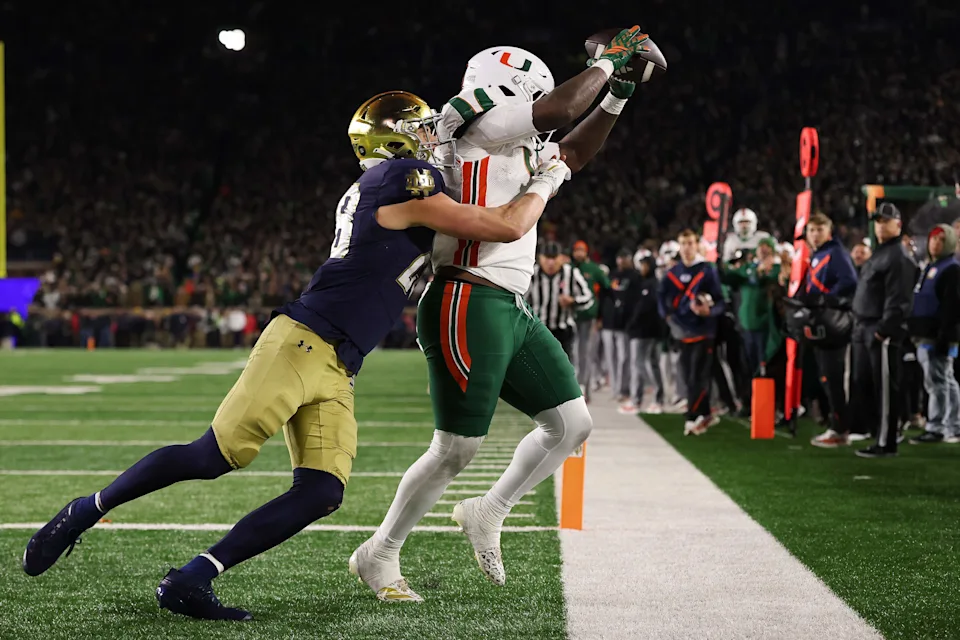
Photo Credit: Yahoo Sports
 0
 0
College football has produced legendary rivalries involving geography, tradition, championships, and generations of passionate fans. However, few matchups feature the genuine animosity surrounding the Miami Hurricanes and Notre Dame Fighting Irish. This rivalry goes beyond winning football games. It represents two programs with different identities, passionate supporters, and decades of unforgettable confrontations. Notre Dame represents tradition, national prestige, and one of college football’s most recognizable brands. Meanwhile, Miami built its reputation through swagger, speed, physicality, and an unapologetic attitude.
Both programs have captured national championships and produced legendary NFL players. Nevertheless, their rivalry carries something deeper than respect for another successful program. The Hurricanes and Fighting Irish simply do not like losing to each other. That bitterness has fueled one of college football’s most fascinating relationships for decades. Their November 7, 2026, meeting provided another chapter in this historic feud. Notre Dame defeated Miami 31-24 in South Bend, adding another painful result to their shared history.
How the Rivalry Began
Miami and Notre Dame first met in 1955. The Fighting Irish dominated that inaugural matchup, winning 14-0. For several decades, Notre Dame controlled the series. The Irish won 11 consecutive meetings between 1967 and 1980. However, everything changed when Miami emerged as a national powerhouse during the 1980s. Howard Schnellenberger transformed the Hurricanes into national championship contenders. Miami captured its first national championship in 1983, establishing itself among college football’s elite programs. The Hurricanes also defeated Notre Dame 20-0 that season.
Jimmy Johnson later took over Miami’s program and embraced its aggressive personality. His teams featured exceptional athletes, intimidating defenses, and explosive offenses. Meanwhile, Notre Dame continued emphasizing its historic traditions and national championship expectations. Those contrasting approaches created the foundation for an increasingly bitter rivalry. By the middle of the decade, neither program wanted to surrender national attention to the other. Their meetings became personal battles involving pride, reputation, and championship opportunities.
Miami’s 1985 Blowout Fuels the Hatred
The rivalry reached another level during the 1985 season. Miami embarrassed Notre Dame 58-7 in the Orange Bowl. Johnson’s Hurricanes dominated the Fighting Irish from beginning to end. Quarterback Vinny Testaverde helped lead Miami’s explosive offense against an overwhelmed Notre Dame defense. The result represented one of the most humiliating defeats in Fighting Irish history. Additionally, the Hurricanes faced criticism for allegedly running up the score. Notre Dame supporters viewed Miami’s performance as unnecessary humiliation. Meanwhile, Hurricanes fans celebrated their team’s dominance over a traditional national powerhouse. The loss also marked Gerry Faust’s final game as Notre Dame’s head coach. Lou Holtz subsequently took over the program and began rebuilding its championship identity. Miami continued controlling the rivalry in 1987. The Hurricanes defeated Notre Dame 24-0 before capturing another national championship. However, Notre Dame would soon have an opportunity to deliver its revenge.
Catholics vs. Convicts Changes Everything
The October 15, 1988, meeting remains the rivalry’s defining moment. Notre Dame entered the matchup undefeated, while Miami arrived with the nation’s top ranking. The Hurricanes also carried a 36-game regular-season winning streak. Meanwhile, Holtz had transformed Notre Dame into a legitimate national championship contender. However, the buildup became controversial because of a slogan created by Notre Dame students. Two students produced shirts featuring the phrase “Catholics vs. Convicts.” The slogan portrayed Notre Dame as the respectable establishment and Miami as college football’s villains. The phrase also carried troubling racial and cultural stereotypes. Miami’s diverse roster faced criticism that extended beyond legitimate football disagreements. Nevertheless, the slogan gained national attention and became permanently associated with the rivalry.
Tensions erupted before kickoff when players confronted each other near the stadium tunnel. Once the game began, both teams delivered an unforgettable performance. Notre Dame eventually established a 31-24 fourth-quarter advantage. However, Miami quarterback Steve Walsh refused to surrender. Walsh connected with Andre Brown for a late touchdown, cutting Notre Dame’s lead to 31-30. Johnson then decided to attempt a two-point conversion instead of kicking the tying extra point. Notre Dame safety Pat Terrell broke up Walsh’s pass, preserving the dramatic victory. The Fighting Irish eventually completed an undefeated season and captured the 1988 national championship. Meanwhile, Miami carried the painful defeat into the following season.

Miami Gets Revenge in 1989
The Hurricanes did not forget their heartbreaking 1988 defeat. One year later, Miami welcomed Notre Dame to the Orange Bowl with another national championship opportunity at stake. Notre Dame entered the matchup riding a 23-game winning streak. However, Miami delivered one of its most satisfying victories in program history. The Hurricanes defeated the Fighting Irish 27-10, ending Notre Dame’s undefeated season. Miami’s defense frustrated the Irish throughout the contest, while its offense controlled crucial possessions. Dennis Erickson guided the Hurricanes to the national championship that season. Consequently, both programs captured consecutive national titles while denying the other a perfect season. Notre Dame answered in 1990 with a 29-20 victory. Rocket Ismail returned a kickoff 94 yards for a touchdown during another memorable rivalry showdown. Following that meeting, the programs went 20 years without facing each other. However, the hatred never completely disappeared.
The Rivalry Returns to the National Spotlight
Notre Dame defeated Miami in the 2010 Sun Bowl before winning again in 2012 and 2016. However, the Hurricanes delivered another unforgettable performance during the 2017 season. Miami entered its November matchup undefeated and ranked seventh nationally. Meanwhile, third-ranked Notre Dame arrived with serious College Football Playoff aspirations. The Hurricanes dominated from the opening quarter and embarrassed the Fighting Irish 41-8. Miami’s defense forced four turnovers and overwhelmed Notre Dame’s offense. The victory brought memories of Miami’s championship-era swagger back to the national spotlight. Then, in 2025, Miami defeated Notre Dame 27-24 in another dramatic matchup. That victory eventually carried enormous College Football Playoff implications. Miami earned a playoff berth, while Notre Dame missed the postseason field. The outcome added another layer of frustration for Fighting Irish supporters. Suddenly, the rivalry had returned to national relevance.
Notre Dame Strikes Back in 2026
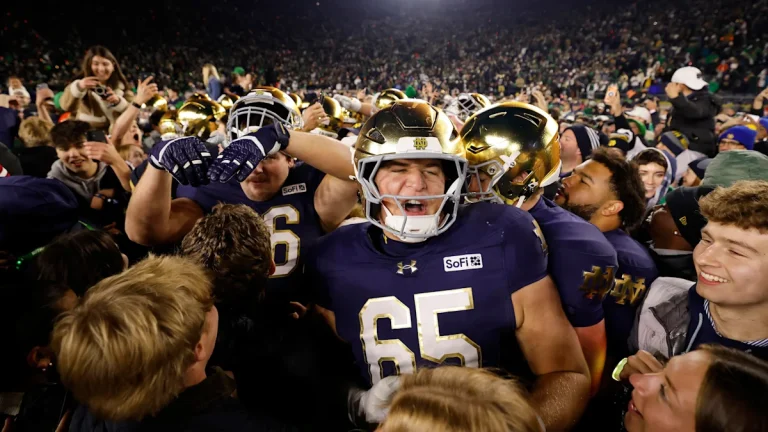
The latest chapter unfolded November 7, 2026, at Notre Dame Stadium. Top-ranked Miami arrived undefeated, while the Fighting Irish needed a signature victory. Notre Dame quarterback CJ Carr delivered an outstanding performance. He completed 29 of 40 passes for 319 yards and three touchdowns. Micah Gilbert caught nine passes for 98 yards and two touchdowns. Meanwhile, Jordan Faison contributed another touchdown reception. Notre Dame built a 24-3 lead before Miami mounted a furious comeback. Hurricanes quarterback Darian Mensah threw three touchdown passes, helping Miami close the deficit. Cooper Barkate caught two touchdowns, while Elija Lofton added another.
However, Notre Dame safety Luke Talich intercepted Mensah during a critical fourth-quarter sequence. Nolan James Jr. later scored on a one-yard touchdown run. Miami continued fighting and eventually trailed 31-24. The Hurricanes then threatened to tie the game during another late possession. Mensah targeted Lofton in the end zone on fourth down. However, officials ruled the pass incomplete, and replay review upheld their decision. Miami head coach Mario Cristobal strongly disagreed with the ruling. Nevertheless, Notre Dame survived and handed Miami its first defeat of the season. The victory strengthened Notre Dame’s playoff hopes while damaging Miami’s pursuit of an undefeated campaign.
Why This Rivalry Remains Different
Many college football rivalries involve neighboring states or annual conference opponents. However, Miami and Notre Dame developed their animosity through contrasting identities and championship battles. Notre Dame supporters celebrate tradition, historic accomplishments, and their program’s independent identity. Meanwhile, Miami fans embrace the Hurricanes’ aggressive personality and championship legacy. Both fan bases believe their program belongs among college football’s elite. Consequently, losing to the other creates frustration that extends beyond the standings. The rivalry also features memorable coaches, including Johnson, Holtz, Erickson, Freeman, and Cristobal. Additionally, both programs have produced legendary players who helped define different eras of college football. The controversy surrounding the 1988 slogan remains part of the rivalry’s complicated history. However, its offensive stereotypes deserve acknowledgment rather than celebration. Ultimately, the competition itself provides enough drama without relying on those labels.
A Rivalry That College Football Needs
College football continues changing through conference realignment, expanded playoffs, and the transfer portal. Nevertheless, rivalries like Miami and Notre Dame preserve the sport’s historical identity. These programs do not need annual meetings to maintain their animosity. Their championship histories and unforgettable confrontations provide plenty of motivation. The 2026 matchup proved that point once again. Notre Dame celebrated another victory over Miami, while the Hurricanes departed South Bend with another painful defeat. Both programs still have opportunities to pursue national championships.
However, their latest meeting demonstrated how quickly one rivalry game can change a season. Miami wants revenge. Notre Dame wants to maintain its advantage. Neither fan base wants to give the other bragging rights. That combination makes this matchup special. Some rivalries feature mutual admiration and respect. Miami and Notre Dame certainly recognize each other’s accomplishments, but their competitive history creates something more intense. This is not a love-hate relationship. It is college football’s ultimate hate-hate rivalry.



Author Profile

-
Bradley Walker (VP) and Head of our Florida operations for NGSC Sports, bringing extensive experience across collegiate, professional, and amateur athletics. His coverage spans USF Athletics, including football, baseball, lacrosse, and softball, as well as University of Tampa baseball.
Bradley also provides coverage of minor league baseball with the Clearwater Threshers and Major League Baseball with the Tampa Bay Rays. On the national stage, he covers college football bowl games and conference championship matchups, along with premier golf events across the PGA Tour, LIV Golf, and LPGA Tour.
In addition to his reporting work, Bradley is the play-by-play announcer for Pinellas Park High School Patriots football, lending his voice and insight to Friday night lights.
He is also an active podcast host and contributor, serving as a host on The Walker Report, where he delivers in-depth sports analysis, interviews, and coverage across multiple levels of competition.
Latest entries
 USF Women's VolleyballNovember 10, 2026 at 12:25 amUSF Volleyball Closes In on American Conference Tournament Berth
 NFLNovember 10, 2026 at 12:20 amBears Stun Buccaneers 27-24 in Sunday Night Thriller
 NFLNovember 10, 2026 at 12:15 amPackers Dominate Patriots 45-27 Behind Jordan Love’s Huge Performance
 LPGANovember 10, 2026 at 12:03 amThe ANNIKA 2026: Korda Headlines Star-Studded LPGA Field
About the Author