Photo Credit: Instagram
 0
0
 0
0
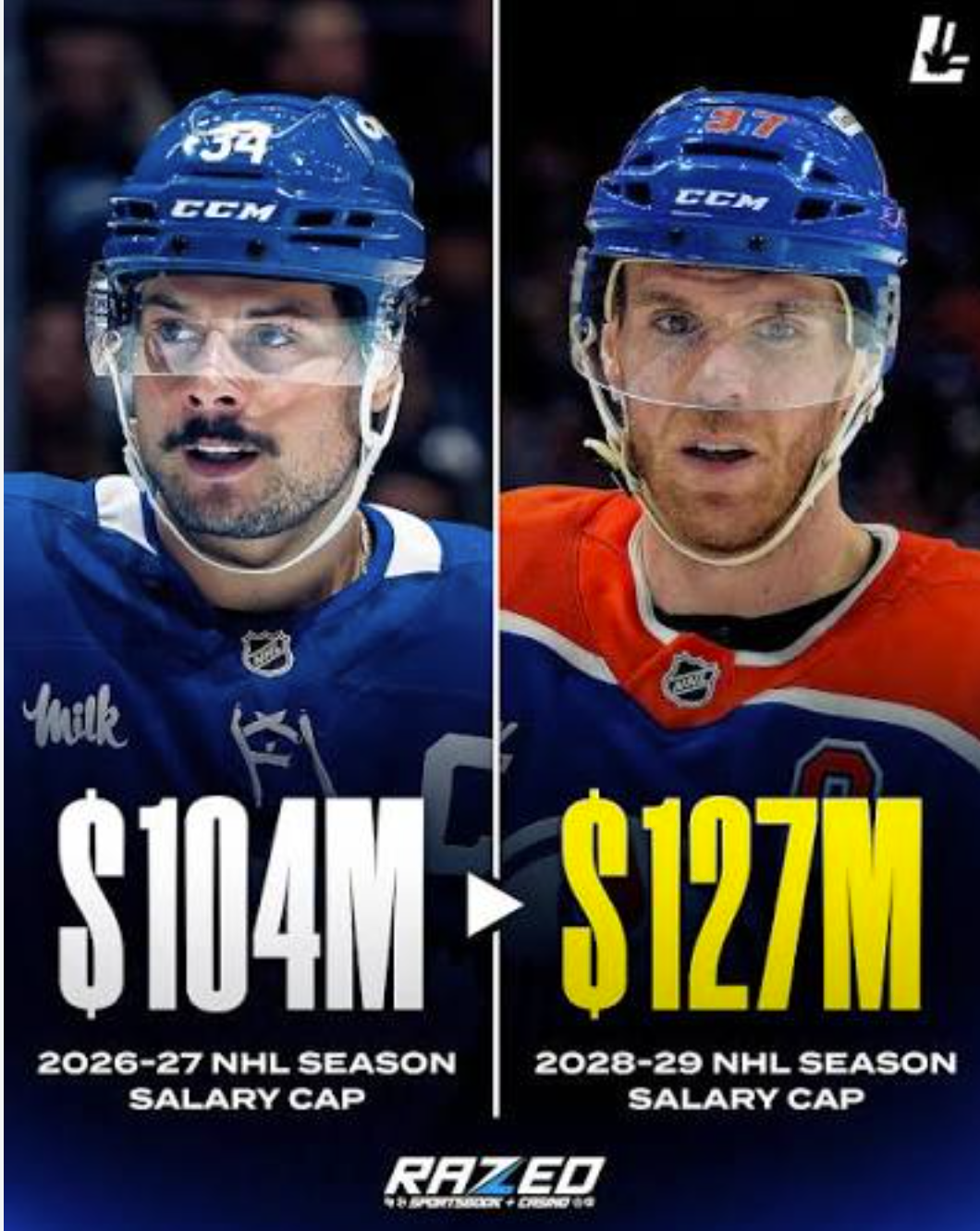
The NHL salary cap could reach a staggering $127.5 million by the 2028-29 season. The league recently gave teams its first estimate for that season. Sportsnet’s Elliotte Friedman reported the figure after the NHL Board of Governors meeting. That number would represent a massive jump from where the cap stands today. The NHL set the 2026-27 upper limit at $104 million per team. The cap will also rise to $113.5 million for the 2027-28 season. Therefore, the current projection would add another $14 million in 2028-29. However, fans should remember one important detail. The $127.5 million figure remains an estimate, not a finalized salary cap.
A Massive Jump
If the projection holds, the NHL will see an enormous increase over just three seasons. The 2025-26 salary cap sits at $95.5 million. It then rises to $104 million in 2026-27. The ceiling reaches $113.5 million in 2027-28. The projected $127.5 million figure would follow in 2028-29. That represents a $32 million increase from the 2025-26 cap. It also represents roughly a 33.5 percent increase over that span. The NHL has not seen this kind of rapid growth in the salary ceiling recently. The cap remained at $81.5 million from 2019 through 2022. Now, the financial landscape looks very different.
Revenue Drives the Growth
League revenue plays a major role in determining the salary cap. According to Friedman’s report, Commissioner Gary Bettman told teams that the NHL projects approximately $8.1 billion in revenue for the upcoming season. That continued financial growth gives the league more room to increase player compensation. The NHL and NHLPA agreed to a three-year cap increase structure in January 2025. That agreement established the $104 million and $113.5 million figures for the following seasons. The 2028-29 number falls outside that original three-year agreement. Therefore, the league can still adjust the estimate before finalizing the figure. Still, the projection provides teams with an important glimpse of what could come.
The Salary Floor Also Matters
The rising ceiling will not only affect teams near the top of the league. The salary floor will also continue moving upward. For 2026-27, the floor sits at $76.9 million. The midpoint sits at $90.4 million. The 2027-28 payroll range calls for an $83.9 million floor. The upper limit reaches $113.5 million that season. The league has not finalized the 2028-29 floor. If the projected $127.5 million ceiling becomes reality, teams will eventually need to spend considerably more. That could create different challenges for clubs with smaller payrolls.

Star Players Could Cash In
Players could also benefit significantly from the growing cap. This summer already produced several record-setting contracts. Leo Carlsson signed an extension with an $18 million average annual value. Macklin Celebrini followed with an $18.8 million AAV. Cale Makar then pushed the record to $20.4 million annually. Makar’s contract begins with the 2027-28 season. That means his $20.4 million cap hit will arrive just one season before the current $127.5 million projection. The rising cap could make those massive contracts easier for teams to absorb over time. A contract that looks enormous today can represent a smaller percentage of the cap later. That dynamic could influence negotiations for upcoming stars.
Minimum Salaries Are Rising Too
The NHL’s new collective bargaining agreement also increases the league’s minimum salary. The minimum salary rises to $850,000 in 2026-27. It then reaches $900,000 in 2027-28. The figure rises again to $950,000 in 2028-29. The minimum salary reaches $1 million in 2029-30. So, the financial growth extends beyond superstar contracts. Young players and depth players will also see the benefits of a larger league-wide salary structure.
The CBA Brings Other Changes
The salary cap represents only one part of the NHL’s new financial landscape. The new CBA begins with the 2026-27 season and runs through September 2030. It also changes contract rules across the league. Teams can now sign players to a maximum of seven years when retaining them. Outside free agents can receive contracts lasting up to six years. The previous limits were eight and seven years, respectively. The new agreement also changes how playoff salary-cap spending works. Previously, teams could use long-term injured reserve rules to exceed the regular-season cap during the playoffs. The new CBA brings stricter salary-cap accounting into the postseason. Those changes could become even more important as the cap continues climbing.
A New Era for NHL Spending
The NHL appears to be entering a dramatically different financial era. The $104 million ceiling already represents a record for the league. The $113.5 million figure will push that record higher one year later. The current $127.5 million projection would take another major step forward. However, the number can still change before 2028-29 arrives. For now, teams have a chance to plan around a much larger financial landscape. That could affect contract extensions, free-agent decisions and long-term roster construction. Most importantly, it could change how teams view today’s expensive contracts. A $10 million contract carries a much different weight against a $127.5 million cap than it does against today’s ceiling. The NHL’s salary-cap era is changing quickly. If the current projection becomes reality, the 2028-29 season could mark another major turning point for player salaries and team spending.



Author Profile

-
Bradley Walker (VP) and Head of our Florida operations for NGSC Sports, bringing extensive experience across collegiate, professional, and amateur athletics. His coverage spans USF Athletics, including football, baseball, lacrosse, and softball, as well as University of Tampa baseball.
Bradley also provides coverage of minor league baseball with the Clearwater Threshers and Major League Baseball with the Tampa Bay Rays. On the national stage, he covers college football bowl games and conference championship matchups, along with premier golf events across the PGA Tour, LIV Golf, and LPGA Tour.
In addition to his reporting work, Bradley is the play-by-play announcer for Pinellas Park High School Patriots football, lending his voice and insight to Friday night lights.
He is also an active podcast host and contributor, serving as a host on The Walker Report, where he delivers in-depth sports analysis, interviews, and coverage across multiple levels of competition.
Latest entries
 HockeySeptember 26, 2026NHL Salary Cap Could Soar to $127.5 Million
 FootballSeptember 26, 2026Antonio Brown Set to Take Plea Deal in Attempted Murder Case
 FootballSeptember 26, 2026Travis Kelce Wants NFL to Change Turf Rules
 HockeySeptember 26, 2026Lightning Aim to End First-Round Slump
About the Author