
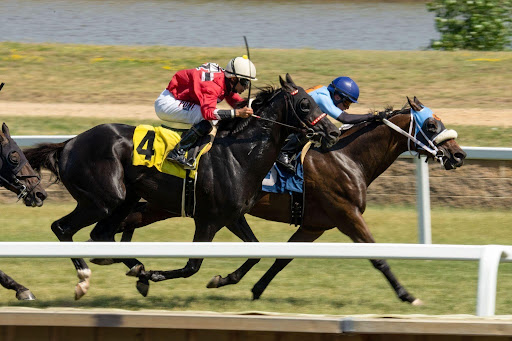
Photo credit: pexels.com
 0
0
 0
0
A race card can place form, distance, surface, jockeys, trainers, odds, and pace information in front of you at once. Expert horse racing picks help organize those details by highlighting runners worth a closer look.
The value of a pick lies in the reasoning behind it. By reviewing form, race conditions, and projected pace, you can learn how the key details fit together before post time.
Start With the Pick
An expert pick provides a useful starting point because it narrows the field to horses worth examining. When races are available, FanDuel expert horse racing picks can provide a starting point for reviewing the horses, odds, and racing information connected with a Woodbine card.
Beginners can then examine the factors behind an analyst’s or model’s ranking of one runner above another. Possible factors include recent performances, suitability for the distance and surface, a favorable projected pace, or prior form at the track.
A simple review can focus on:
- Whether the horse has performed well recently,
- Whether the distance suits its previous form,
- Whether the surface matches its stronger races,
- Whether the projected pace complements its running style.
These checks turn an expert selection into a practical research tool rather than an isolated name on a race card. They also help beginners understand which factors support the selection and deserve closer attention.
Read Recent Form
Recent form shows what a horse has done in its latest races, but finishing position alone doesn’t tell the complete story. A fourth-place finish could contain useful information if the horse faced stronger competition, encountered an unsuitable pace, or was competing at an unfamiliar distance.
Beginners can keep the review focused by checking:
- The horse’s last three races,
- The class of those races,
- Recent speed figures,
- Distances and surfaces,
- How close the horse finished to the winner.
Speed figures provide another point of comparison. The Equibase Speed Figure summarizes how fast a horse ran in a past race with a single number, using final time and other adjustments. When comparing horses, use figures from the same provider and emphasize a consistent pattern across comparable races rather than one unusually high number.
The goal is to identify direction. A horse producing competitive performances under similar conditions offers clearer evidence than one whose strongest effort came under circumstances that are very different from today’s assignment.
Match the Race Conditions
A horse doesn’t compete in the same situation every time. Distance, surface, class, and track condition can change significantly from one start to the next. Beginners therefore need to compare a selection’s previous performances with the conditions of the current race.
Race cards can vary sharply from one event to the next. A sprint on dirt places different demands on a horse than a longer race on turf. Compare today’s distance and surface with the conditions of each horse’s strongest recent performances.
The class level matters as well. Race cards can include maiden events, claiming races, allowance contests, and stakes. Expert analysis often considers whether a horse is moving into stronger company or receiving a more suitable assignment.
For beginners, the key question is simple: do today’s conditions resemble the circumstances in which the horse has previously produced its strongest performances?
Understand the Race Shape
Three basic running styles provide beginners with a useful framework for understanding expert analysis.
Front Runners
Front runners generally prefer prominent positions early and often attempt to establish position soon after the start. When several horses share that style, the opening portion of the race can become more demanding because multiple runners may compete for the same early advantage.
A front runner deserves closer attention when few rivals are likely to challenge for the early lead. That setup can allow the horse to settle into its preferred rhythm with less early pressure. Pace projections remain estimates and can change with the start, jockey tactics, scratches, and track conditions.
Stalkers
Stalkers usually race just behind the early leaders. This position can allow them to remain close without immediately joining the fastest early contest, which gives them a different tactical profile from horses that need the lead.
Their placement can become particularly relevant when several front runners are present. If the early leaders set a demanding pace, a stalker positioned just behind them may be well placed to make a late move. That scenario is possible rather than certain, so it should be weighed alongside form and race conditions.
Closers
Closers tend to do their strongest running later and often spend the opening stages behind much of the field. Their chances can depend heavily on whether the early pace is strong enough to make the leaders less effective late in the race.
Analysts often give closers more consideration when several rivals are projected to contest a strong early pace. That setup can make it harder for early leaders to sustain their effort. Beginners can therefore look beyond finishing position and consider whether the projected race shape gives a closer a more suitable setup.
Check the Final Details
Expert analysis is most useful when it is compared with the latest race information. Fields can change before post time, and scratches can remove an important frontrunner or alter the number of horses competing. Those changes can reshape the expected pace.
Track conditions deserve another look. Dirt and turf describe the racing surface, while labels such as fast, good, firm, yielding, muddy, and sloppy describe the condition. Past performances become more informative when you identify how a horse has handled comparable surfaces and conditions.
Odds provide useful context because they reflect the betting market’s current implied assessment of each runner. They can change until post time and should not be treated as proof that a horse will win. Comparing odds with an independent review of form, conditions, and pace can help beginners understand where their view agrees or differs from the market.
Finally, review the jockey and trainer, particularly after a change in connections. These details add context, but they should not outweigh recent form, class, distance, surface record, and projected pace. Together, those factors provide a clearer basis for assessing why a horse has attracted expert attention.
Build a Smarter Race-Card Review
Expert picks become more useful when you understand the reasoning behind them. Form, speed figures, class, distance, surface, pace, and late race information each reveal a different part of the picture.
With practice, a race card becomes easier to read and compare. Use expert analysis as a starting point, test it against the available evidence, and remember that every race still carries uncertainty.



Author Profile

Latest entries
 The HubOctober 10, 2026How Digital Marketing and Smart Budgeting Are Transforming the Sports Industry
 Online BettingOctober 9, 2026Lambabet and the Main Bonuses for New Players
 Online BettingOctober 9, 2026Dodgers vs Brewers Props Guide: Home Run Threats, Power Bats and Key Factors
 MMAOctober 7, 2026Petr Yan vs. Merab Dvalishvili III: A Trilogy Built on Chaos, Cardio, and Championship Stakes
About the Author