 0
0
 0
0
If you tuned into SEC Media Days this July, you probably noticed a very different vibe in the air. We aren’t just talking about roster battles and depth charts anymore; we are talking about the very fabric of college football unraveling.
Between SEC Commissioner Greg Sankey dropping bombs about secession and Georgia Bulldogs head coach Kirby Smart backing him up, the message from the Deep South is loud and clear: The SEC is tired of the NCAA’s current setup, and they aren’t afraid to pack up their ball and go home.
Here is a breakdown of what Kirby Smart had to say, why the SEC is threatening a breakaway, and how a move of that magnitude would actually work.
Kirby Smart’s Stance: Respect the SEC Crown
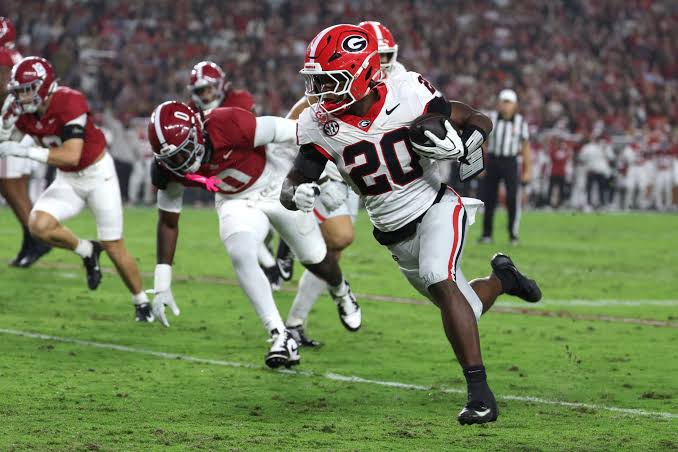
Kirby Smart has been very vocal about the weight of an SEC Championship compared to the current College Football Playoff (CFP) structure. Despite winning back-to-back SEC titles in 2024 and 2025, Georgia went 0-2 in the CFP during those years (falling to Notre Dame and Ole Miss, respectively).
When pressed on this at media days, Smart pushed back, defending the brutal gauntlet that is the SEC. He pointed out that their recent playoff elimination came at the hands of Ole Miss—a team Georgia had already beaten in the regular season before winning the SEC championship. Smart’s overarching point is that navigating an SEC schedule and winning the conference title is a monumental achievement that shouldn’t be overshadowed by the variance of a postseason tournament.
Furthermore, the SEC is actively pushing back against the rest of college football’s desire to expand the playoff to 24 teams, a move that could potentially eliminate conference championship games altogether. For coaches like Smart, the SEC title game is the pinnacle of the sport, and they are refusing to let a bloated playoff system strip away its significance.
The Breakaway: What is Driving the SEC’s Frustration?
Greg Sankey confirmed that conversations about the SEC separating from the NCAA are “real” and not just an empty leverage play. And Kirby Smart is fully on board. When asked about the conference breaking away, Smart admitted, “I’ve actually been saying that for a long time to our president and our administrators”.
Why is the SEC so eager to jump ship? It comes down to a laundry list of grievances with the NCAA’s governance:
- Lack of Governance and Control: Smart noted that until the SEC has a governing body with the actual power to make decisions for its own community, they won’t have control over their destiny.
- NIL and Roster Chaos: The SEC is fed up with the lack of transparency regarding Name, Image, and Likeness (NIL) payments, the chaotic transfer portal, and the massive wave of litigation stemming from the five-year eligibility rule.
- Congressional Gridlock: The SEC and Big Ten are heavily involved in trying to shape the “Protect College Sports Act,” but they feel the current bipartisan legislation doesn’t go far enough in protecting their ability to earn through media rights.
- The “Freeloader” Problem: The SEC feels it is being forced into a structural and financial model by the rest of the NCAA that simply doesn’t work for the top-tier programs driving the sport’s revenue.
As Smart bluntly put it regarding a breakaway: “I’m not afraid to break away and say that our conference is strong enough to go out and have and play… and do by our own rules. I’d be all for that”.
How Would an SEC Separation Actually Work?
If the SEC actually pulls the trigger and leaves the NCAA, the landscape of college athletics would instantly and permanently change. Here is what a self-governed SEC would likely look like in practice:
1. A Private Postseason & Super League: The SEC would likely abandon the traditional College Football Playoff and create its own exclusive postseason. There is also heavy speculation that if the SEC leaves, they would partner with the Big Ten to form a monolithic “Super League,” boxing out the Big 12, ACC, and Group of 5 conferences entirely.
2. Independent Rules and Enforcement: By seceding, the Southeastern Conference would write its own rulebook for recruiting, transfer portals, roster sizes, and NIL caps. They would set up their own enforcement division, meaning they would no longer be subject to the NCAA’s notoriously slow and inconsistent investigations.
3. The Massive Legal Roadblocks: While it sounds great in theory for SEC hardliners, executing a breakaway would be a legal nightmare. If the SEC (and potentially the Big Ten) formed a Super League without an antitrust exemption from Congress, they would be immediately suffocated by lawsuits. Players and rival conferences would drag them into court for violating antitrust laws, monopolizing the sport, and restricting player eligibility.
4. What About the Other Sports? Football is the moneymaker, but a breakaway raises massive questions about everything else. If the SEC leaves, do they also pull out of the NCAA Basketball Tournament (March Madness) or the College World Series? Setting up an independent infrastructure for dozens of non-revenue Olympic sports would be a logistical and financial headache.
Ultimately, while the conference possesses the financial firepower and brand recognition to survive on its own, navigating the legal minefield of leaving the NCAA keeps this in the “threat” phase—for now. But with heavyweights like Kirby Smart openly advocating for it, college football’s governing bodies are officially on notice.



Author Profile

Latest entries
 The HubOctober 10, 2026How Digital Marketing and Smart Budgeting Are Transforming the Sports Industry
 Online BettingOctober 9, 2026Lambabet and the Main Bonuses for New Players
 Online BettingOctober 9, 2026Dodgers vs Brewers Props Guide: Home Run Threats, Power Bats and Key Factors
 MMAOctober 7, 2026Petr Yan vs. Merab Dvalishvili III: A Trilogy Built on Chaos, Cardio, and Championship Stakes
About the Author