
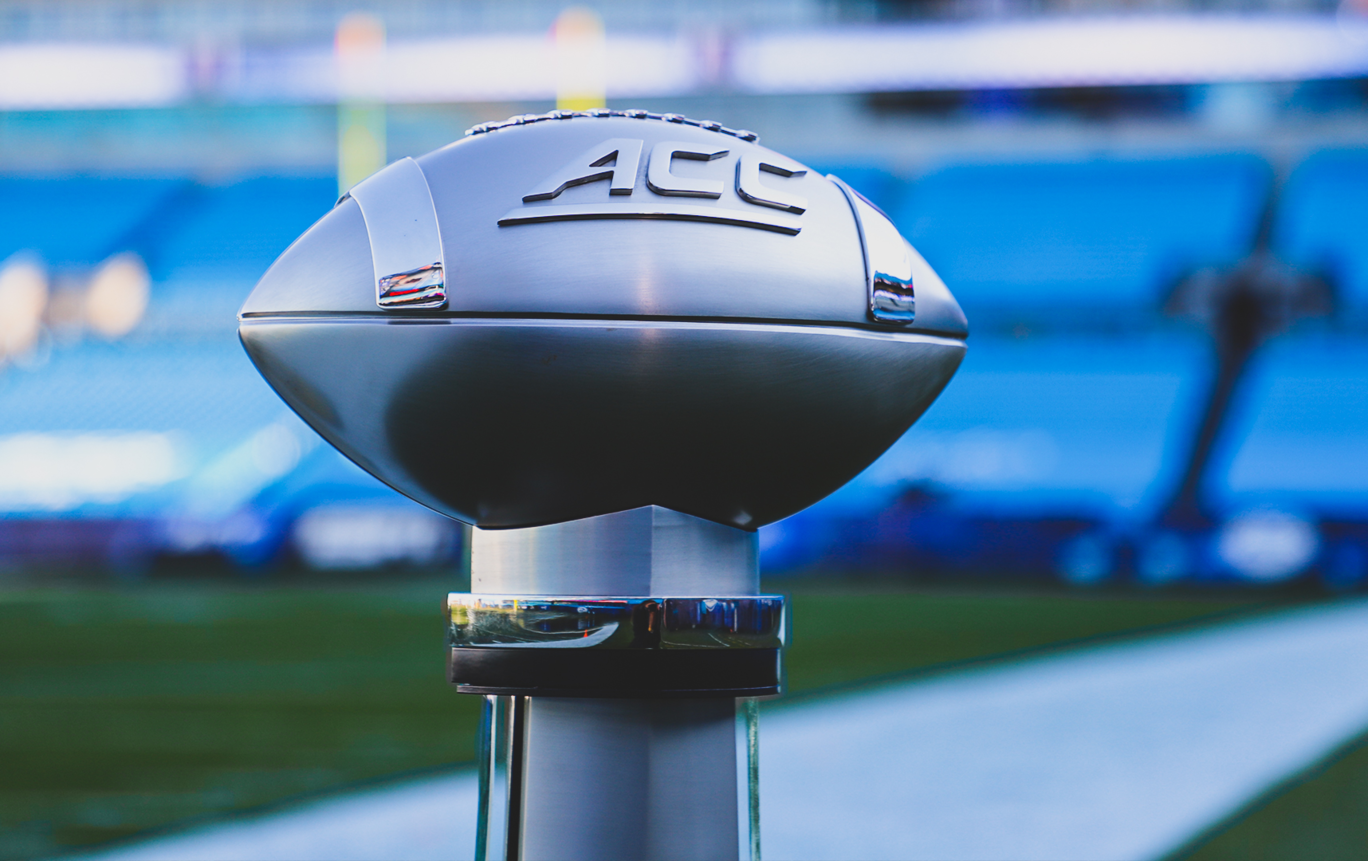
Photo Credit: Atlantic Coast Conference
 0
0
 0
0
The Atlantic Coast Conference will use a new tiebreaker system beginning with the 2026 football season after last year’s controversial championship game matchup. Commissioner Jim Phillips announced the change during ACC Media Days in Charlotte, North Carolina. Conference officials spent months reviewing the issue and examined more than 10,000 simulated season outcomes before approving the updated format. The league believes the new system will place its two strongest teams in the ACC Championship Game while improving its chances in the expanded College Football Playoff. The change follows criticism surrounding the 2025 season. Duke reached the ACC Championship Game despite finishing with only seven regular-season victories. The Blue Devils earned their spot after a five-way tie for second place ended with conference opponent winning percentage deciding the outcome. Duke then upset Virginia to capture its first outright ACC football championship since 1962.
However, the Blue Devils missed the College Football Playoff because they failed to rank among the nation’s five highest-rated conference champions under the previous playoff format. Meanwhile, Miami missed the ACC Championship Game despite many believing the Hurricanes ranked among the conference’s best teams. Even so, Miami secured an at-large berth in the 12-team College Football Playoff. The Hurricanes then made an impressive run to the national championship game. That unusual sequence raised questions about whether the ACC’s tiebreaker process truly rewarded its strongest teams. The conference faced even greater urgency because of another major change arriving this season. Beginning in 2026, every Power Four conference champion will receive an automatic bid into the College Football Playoff.
Rankings will no longer determine whether those conference champions qualify. As a result, the ACC wanted a system that gives its best teams the opportunity to compete for both the conference title and an automatic playoff berth. Phillips emphasized that goal during his media session. He explained that the conference must do everything possible to place its two best teams in the championship game. He also stressed that head-to-head competition remains the league’s top tiebreaker whenever tied teams played one another during the regular season. However, the ACC will now evaluate each team’s overall body of work if head-to-head results cannot break a tie. Phillips explained that the conference wants a broader evaluation instead of relying on lower-level statistical tiebreakers. That approach considers each team’s complete season instead of focusing only on conference opponent winning percentage.
The conference will use the Team Success Ranking developed by Sport Source Analytics to measure that body of work. Phillips noted that the College Football Playoff committee already uses the same ranking during its evaluation process. The formula examines factors including strength of schedule, quality victories, conference performance, and non-conference success. Therefore, teams will receive credit for challenging schedules and meaningful wins throughout the season. Phillips also addressed concerns about scheduling differences across the conference. The ACC currently includes 17 football programs, creating an uneven scheduling model. During the 2026 season, 12 teams will play nine conference games while five teams will play only eight. Previously scheduled non-conference games prevented the conference from immediately placing every school on the same schedule.
Even so, Phillips insisted that the new system will not reward or punish schools based solely on the number of conference games they play. Instead, the overall evaluation accounts for each team’s complete schedule. Looking ahead, the ACC plans for nearly every member to play nine conference games beginning after this transition period. Only one school each season will continue playing eight league games because of the conference’s odd number of football members. The ACC believes the updated process creates a fairer path toward determining its championship participants. Rather than relying on complicated statistical formulas deep within the tiebreaker list, conference officials want stronger emphasis on overall performance throughout the season. Head-to-head competition still carries the greatest importance, but the new body-of-work evaluation should better identify deserving championship contenders when multiple teams finish with identical conference records.
Ultimately, conference leaders hope the revised format eliminates the controversy that followed Duke’s surprising championship appearance last season. With automatic College Football Playoff bids now attached to conference championships, every tiebreaker decision carries greater importance than ever before. The ACC believes its new system better reflects the strength of each team’s entire season while improving the league’s chances of sending its most deserving champion into the national playoff field.



Author Profile

-
Bradley Walker (VP) and Head of our Florida operations for NGSC Sports, bringing extensive experience across collegiate, professional, and amateur athletics. His coverage spans USF Athletics, including football, baseball, lacrosse, and softball, as well as University of Tampa baseball.
Bradley also provides coverage of minor league baseball with the Clearwater Threshers and Major League Baseball with the Tampa Bay Rays. On the national stage, he covers college football bowl games and conference championship matchups, along with premier golf events across the PGA Tour, LIV Golf, and LPGA Tour.
In addition to his reporting work, Bradley is the play-by-play announcer for Pinellas Park High School Patriots football, lending his voice and insight to Friday night lights.
He is also an active podcast host and contributor, serving as a host on The Walker Report, where he delivers in-depth sports analysis, interviews, and coverage across multiple levels of competition.
Latest entries
 AAC FootballOctober 4, 2026USF Offense Stalls as Temple Shocks Bulls
 HockeyOctober 4, 2026Lightning Strike Down Capitals in Home Opener
 BaseballOctober 4, 2026Rasmussen Dominates Yankees as Rays Take Game 1
 FootballOctober 4, 2026Missouri Crushes Florida 45-17
About the Author



[…] ACC has a fascinating mix of proven winners and rising coaches. Cristobal now sits at the top after […]