Gregory Shamus / Getty Images
 0
0
 0
0
SAN ANTONIO — The 2026 NBA playoffs were supposed to be the official coronation of Victor Wembanyama. At just 22 years old, the French phenom put together a postseason run for the ages: he became the youngest player to drop a 40-20 game in playoff history and dragged a young San Antonio Spurs squad all the way to the grandest stage.
But the ultimate stage is a ruthless evaluator.
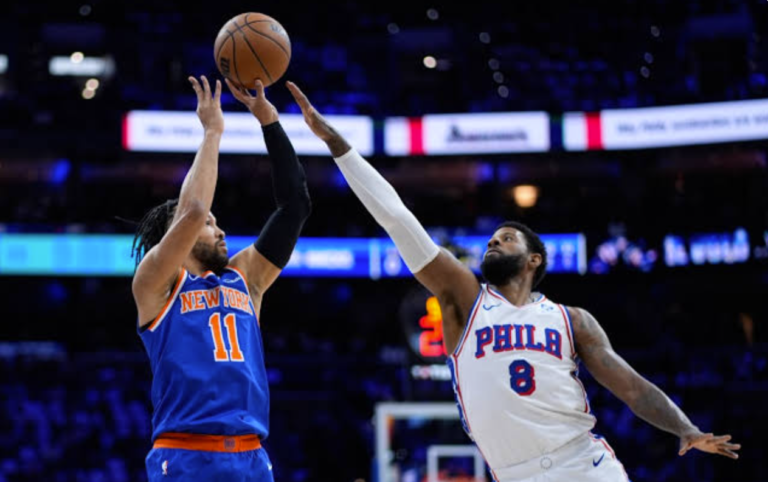
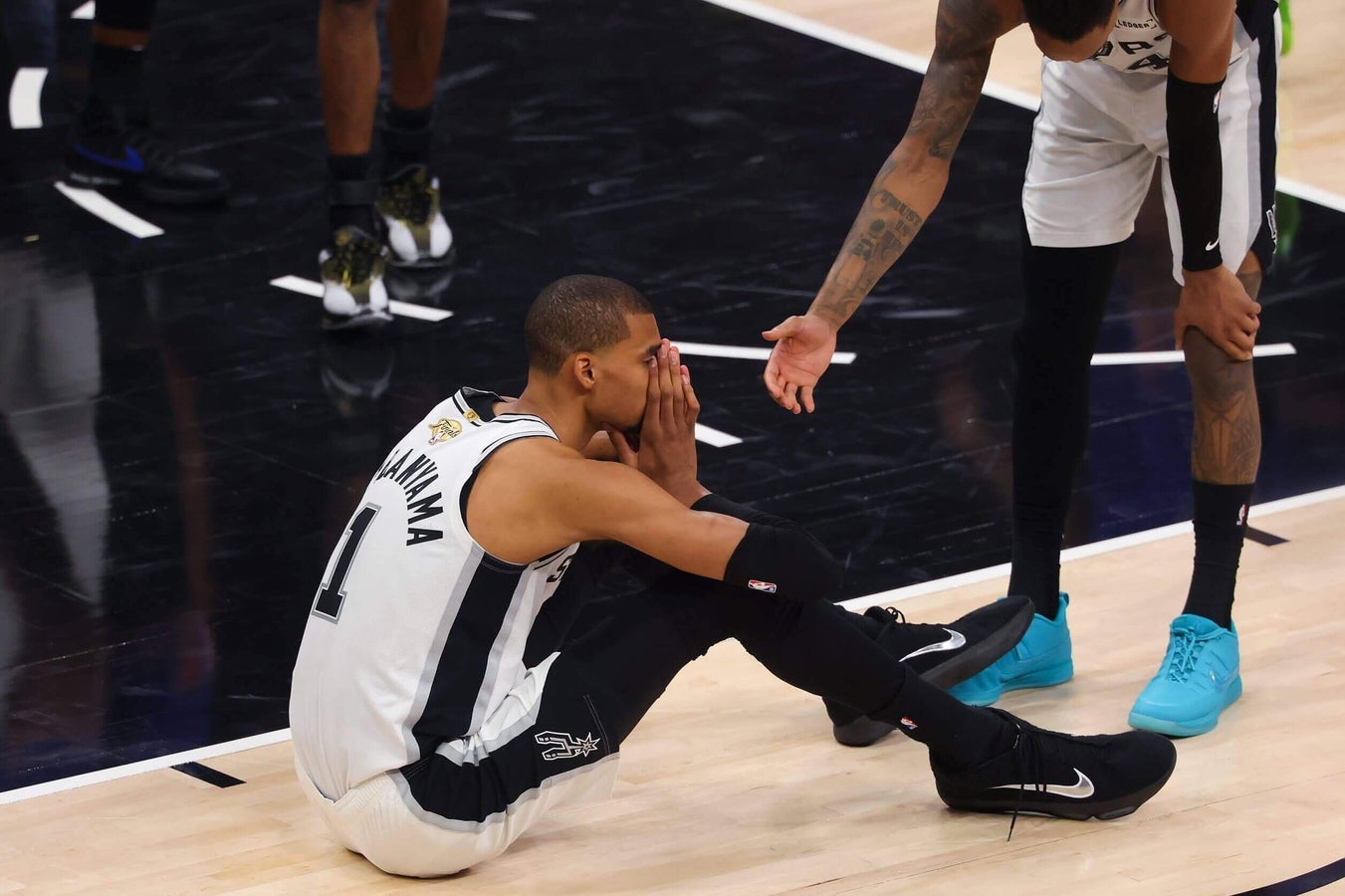
When the dust settled on the 2026 NBA Finals, it was the veteran New York Knicks celebrating their first championship in 53 years. While Wembanyama’s raw series averages look formidable on paper (26.0 points, 11.2 rebounds, and 3.6 blocks per game), the tape tells a much more sobering story. Across the final two games of the series, Wembanyama looked entirely human, shooting a miserable 9-for-25 in Game 4 and a sluggish 7-for-19 in the deciding Game 5.
The Knicks didn’t stop Wembanyama with a magical scheme; they simply exposed his youth, structural fatigue, and a glaring stylistic identity crisis. For the Spurs to transform from a great story into a true dynasty, their crown jewel must confront the flaws laid bare in June.
Hovering on the Perimeter: The Center Who Plays Like a Forward
The most frustrating aspect of Wembanyama’s Finals performance was his literal displacement on the court. Standing at a towering 7-foot-4 with an 8-foot wingspan, Wembanyama spent vast stretches of the series operating as a jumbo small forward rather than an interior anchor.
Instead of punishing a physically exhausted Knicks frontline deep in the paint, Wembanyama repeatedly settled for step-back threes and high-dribble isolations early in the shot clock.
- The Repetitive Trap: When New York threw physical double-teams via OG Anunoby and Josh Hart, Wembanyama didn’t back them down into the low block. He retreated toward the logo.
- The Structural Cost: By playing so far away from the basket, he neutralized his greatest strength—offensive rebounding and high-low gravity. It allowed the Knicks to comfortably guard him with perimeter switches without fearing a catastrophic collapse inside.
There is an undeniable allure to a giant who can handle the ball like a guard, but the Finals proved that when the game grinds to a halt, the Spurs desperately needed a true center, not a hyper-tall wing.
The Missing Piece: The Need for an Offensive Signature Move
When you watch generational big men throughout NBA history—Kareem Abdul-Jabbar’s skyhook, Hakeem Olajuwon’s Dream Shake, Tim Duncan’s bank shot—they all possessed an unguardable, foundational signature move to bail them out when an opposing defense adjusted.
Right now, Wembanyama’s offensive arsenal relies entirely too much on his alien-like athleticism and height advantage. Against standard regular-season defense, that is more than enough. Against Mitchell Robinson’s brute strength and the Knicks’ highly disciplined, verticality-focused rim protection, it faltered.
“He has the tools to hit every shot imaginable, but in the clutch, he doesn’t have a definitive ‘go-to’ counter yet,” an Eastern Conference scout noted postgame. “When his jumper goes cold, he doesn’t have a reliable hook, a drop-step, or a go-to face-up game on the block to manufacture easy points.”
Developing a signature mid-range or low-post move isn’t just about scoring efficiency; it’s about energy conservation. Creating offense entirely off the bounce from 25 feet out completely drained Wembanyama’s gas tank, directly contributing to his high-profile late-game fatigue and missed free throws.
The Verdict: The Future of the Franchise
Make no mistake: losing the 2026 Finals is not a death sentence for the Spurs; it is necessary scar tissue. Wembanyama’s 2026 postseason run proved he is a defensive savant capable of anchoring a championship-level defense.
However, the modern NBA title window closes fast. The Western Conference is an absolute meat grinder, and the Spurs’ long-term success hinges entirely on Wembanyama’s willingness to evolve his offensive identity.
The blueprint is now out. Teams will copy the Knicks’ blueprint of playing hyper-physical, denying the deep post, and baiting Victor into becoming a volume perimeter shooter. If Wembanyama can spend the upcoming offseason hitting the weight room, tightening his low-post footwork, and embracing his identity as a dominant interior hub, the Spurs will be back on this stage very soon. If he remains content floating on the outside, the 2026 Finals will be remembered as a blueprint for how to neutralize a unicorn.


Author Profile

- CEO NGSC Sports
Latest entries
 WNBASeptember 26, 2026Sparks Fire Head Coach Lynne Roberts as Franchise Seeks New Direction
 FCSSeptember 26, 2026FCS Football Week 4 Deep Dive: Big Sky After Dark, MVFC Gauntlets, and Potential Traps
 NFCSeptember 25, 2026Lambeau Stunner: Bijan Robinson, Michael Penix Jr. Lead Falcons to Rout of Packers
 WNBASeptember 25, 2026WNBA Recaps: WNBA Playoff Bracket Set After Thrilling Thursday Night
About the Author