 Steelersforever.org
 0
0
 0
0
The Super Bowl gets hyped as legacy-defining clashes, and there’s a definite element of truth to that, but smart bettors zero in on raw matchups. Strip away the noise, and you’re left with crisp, measurable edges that will truly decide the game.
Super Bowl LX fits that pattern, with the Seahawks and Patriots bringing contrasting offensive identities that influence everything from the point spread to individual scoring expectations.
Seattle wants to control tempo, lean on its run game, and dictate possession. New England is built to survive through efficiency, defensive support, and selective aggression.
Those philosophies collide in ways that go well beyond headlines, creating subtle edges that bettors are dissecting play by play.
Seattle’s Run-First Identity vs. New England’s Wall Up Front
Seattle’s offense starts with Kenneth Walker III, and that hasn’t changed in the postseason. Walker has been the engine of a run-heavy approach that prioritizes physicality and patience, even against strong fronts. His ability to contribute as both a runner and receiver keeps defenses honest, particularly near the goal line.
New England, however, has been one of the league’s most disciplined run defenses. In the playoffs, the Patriots have consistently limited early-down success, forcing opponents into longer passing situations. That dynamic has bettors watching closely to see whether Seattle can stay ahead of the chains.
Walker’s usage near the end zone has become a focal point in conversations around scoring distribution. When evaluating how touchdown opportunities emerge in games like this, discussions often turn to player roles and situational tendencies rather than raw yardage totals.
That’s where markets tied to anytime touchdown prop bets reflect how offenses actually operate in high-leverage moments, especially for teams that prefer to finish drives on the ground.
If New England slows Walker early, the ripple effects extend to totals, play-calling tendencies, and even in-game adjustments.
Seattle’s Interior Protection and Its Impact on Offensive Rhythm
Seattle’s passing game doesn’t need to dominate to be effective, but it does need stability up front. The interior of the Seahawks’ offensive line has been a pressure point all season, and that concern grows against a Patriots defense capable of collapsing pockets without heavy blitzing.
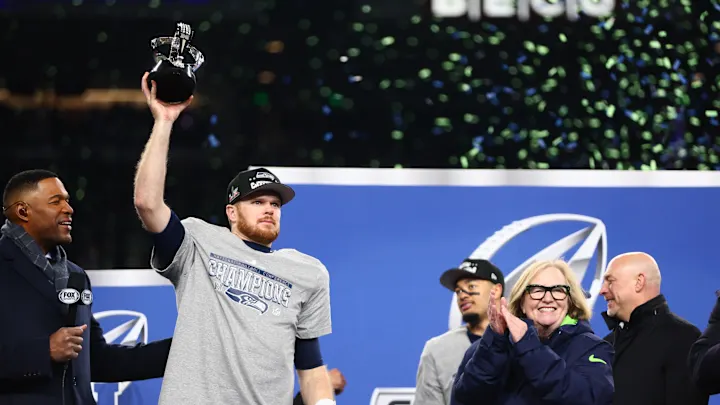
New England’s interior defenders have been disruptive throughout the playoffs, consistently pushing quarterbacks off their spots. For Seattle, that matters because Sam Darnold is at his best when operating within structure. Clean pockets allow him to lean into play-action concepts and quick reads. Compressed pockets invite hesitation and hurried throws.
If Seattle struggles to maintain interior protection, the offense becomes less predictable and far easier to defend. That shift forces quicker decisions and limits the effectiveness of play designs meant to control tempo.
This matchup affects more than passing yards. Pressure up the middle shortens drives, increases third-and-long situations, and limits red-zone efficiency. Bettors tracking game flow understand that stalled possessions can quietly tilt a matchup without ever showing up as a highlight
New England’s Offense Versus a Possession-Limiting Defense
New England’s offensive approach has been shaped by necessity. Against top-tier defenses, the Patriots have leaned into efficiency rather than volume, prioritizing ball control and selective shots over sustained aggression.
That strategy faces a stiff test against Seattle’s top-ranked scoring defense. The Seahawks thrive on limiting explosive plays and tightening coverage in the red zone. For rookie quarterback Drake Maye, that could mean fewer clean looks and more reliance on timing and decision-making under pressure.
Maye’s mobility adds a layer of unpredictability, but his postseason sack totals highlight how often plays break down. Seattle’s ability to contain him without overcommitting will determine whether New England can extend drives or is forced into conservative sequences that keep the score tight.
From a betting perspective, this matchup heavily informs expectations around overall scoring and possession counts. Limited sustained drives often compress scoring windows, keeping outcomes tighter even when one team controls tempo.
Skill-Position Matchups That Shape Player Props
While defenses dominate the narrative, individual offensive roles still matter, especially when games tighten late. Usage trends often determine which players remain involved when scoring chances are limited.
Where scoring opportunities tend to surface:
- Jaxon Smith-Njigba’s slot usage creates separation against zone coverage,
- Cooper Kupp offers reliability on contested, timing-based routes,
- Rhamondre Stevenson serves as a consistent check-down under pressure,
- Hunter Henry functions as a safety target in condensed passing windows.
For bettors comparing similar roles across the league, a broader context helps. Resources that track NFL game matchups and prop insights often highlight how usage, coverage tendencies, and situational play-calling are difference-makers across teams and game environments.
These matchups don’t guarantee production, but they shape how opportunities emerge, especially in games where possessions and scoring chances are limited. Small role advantages often become decisive when margins are tight.
Situational Offense Will Determine Scoring Opportunities
Games like Super Bowl LX often turn on moments rather than momentum. Red zone efficiency and third-down execution loom especially large in a matchup where possessions are expected to be limited.
Seattle has been effective at converting trips inside the 20 into touchdowns, while New England has built a reputation for tightening coverage and forcing field goals. That contrast plays a quiet but meaningful role in how scoring unfolds.
Third-down performance carries similar weight. Sustaining drives keeps defenses honest, controls tempo, and limits opportunities for quick momentum swings. Consistent conversions reduce defensive flexibility and shorten the game.
Whichever offense performs better in these situations is likely to impact not just the final score, but how the game unfolds from start to finish. A handful of extended drives can suppress scoring without ever appearing dominant, forcing opponents into a predictable rhythm and opening doors for turnovers later.
The Game Within the Game
Super Bowl LX won’t be about flashy offenses or wide-open shootouts. It’ll be about friction, between rushing identity and discipline, protection and pressure, efficiency and limitation. Seattle’s favorite status reflects confidence in controlling tempo, while New England’s approach keeps margins tight and outcomes uncertain.
For bettors, the clearest signals often aren’t found in storylines. They’re found in matchups, usage patterns, and situational tendencies that quietly shape how points appear on the board. Understanding those layers makes the game more predictable, even when the result remains anything but.



Author Profile

Latest entries
 NFLJanuary 30, 2026The Offensive Matchups Driving Super Bowl LX Betting
 The HubJanuary 29, 2026UFC 324 Review – The Beginning of the Paramount+ Era
 ACCJanuary 28, 2026Global Stage and a New Era: The ACC Unveils the 2026 Football Schedule
 NFLJanuary 28, 2026The Impossible Snub: Bill Belichick’s Hall of Fame “First-Ballot” Robbery
About the Author