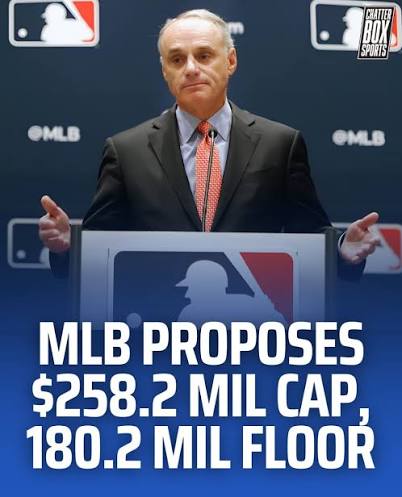
Photo credit: cboxsports via Instagram
 0
 0
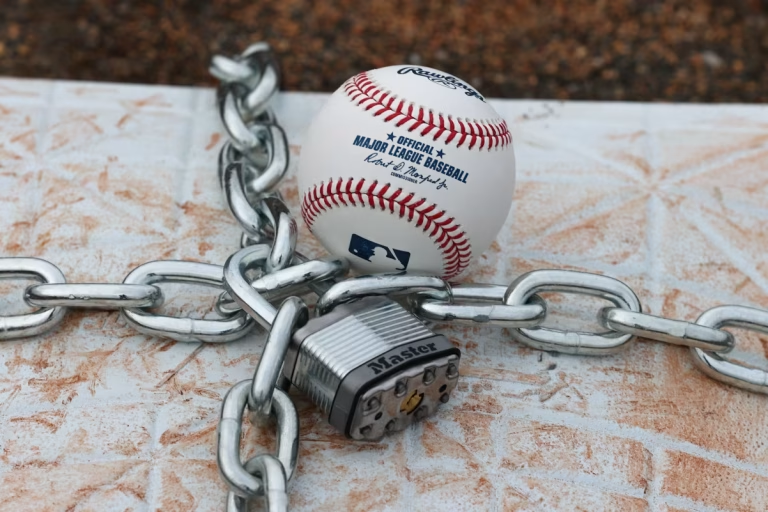
Major League Baseball is barreling toward its 10th work stoppage since 1972—and a potential threat to the 2027 regular season—after Commissioner Rob Manfred declared Wednesday in New York that club owners will not budge from their demand for a hard salary cap.
Speaking at a news conference during the league’s quarterly owners’ meetings with less than two weeks remaining before the current five-year collective bargaining agreement expires at 11:59 p.m. EST on December 1, Manfred made clear that management views a salary cap and floor system as non-negotiable.
“The owners want a deal with a salary cap and floor,” Manfred said Wednesday. “I can’t imagine the owners ratifying a deal that does not include a cap and floor.”
The Breaking Point: MLB’s $258.2 Million Cap Proposal and 1994 Echoes
The standoff revives baseball’s most volatile fault line. The Major League Baseball Players Association (MLBPA)—led by interim executive director Bruce Meyer alongside an eight-man executive subcommittee consisting of Marcus Semien, Tarik Skubal, Paul Skenes, Chris Bassitt, Jake Cronenworth, Pete Fairbanks, Cedric Mullins, and Brent Suter—has maintained that the union will never accept a salary cap. The last time club owners pushed for a cap in 1994, the resulting 7½-month strike wiped out the remainder of that season and forced the cancellation of the World Series for the first time in 90 years.
At the center of the current impasse is management’s revised economic proposal, tabled on November 3 after an initial May offer:
- Hard Cap and Floor Thresholds: MLB proposed adopting a hard salary cap of $258.2 million and a payroll floor of $180.2 million beginning in 2028 (following a 2027 transition year), calculated using Competitive Balance Tax (luxury tax) payrolls based on average annual values (AAV).
- Three-Year Floor Window: Under the league’s formula, a club would be permitted to spend as little as 90% of the floor in 2028—which equates to $162.18 million—provided the franchise reaches the full floor expenditure across a three-year window.
- Contract Caps and Revenue Split: Individual athlete contracts would also be capped under a framework MLB says establishes a 50–50 revenue split, though the MLBPA disputes how owners define club revenues and operating expenses.
- Offsetting Concessions: Management’s November 3 package included raising the minimum salary from $780,000 in 2026 to $1 million in 2027 for veterans with at least two years of service ($900,000 for those with less), expanding the Pre-Arbitration Bonus Pool by 30% from $50 million to $65 million in 2027 (scaling to $75 million), eliminating qualifying-offer draft-pick compensation, and granting free agency after five years of service for 30-year-old veterans.
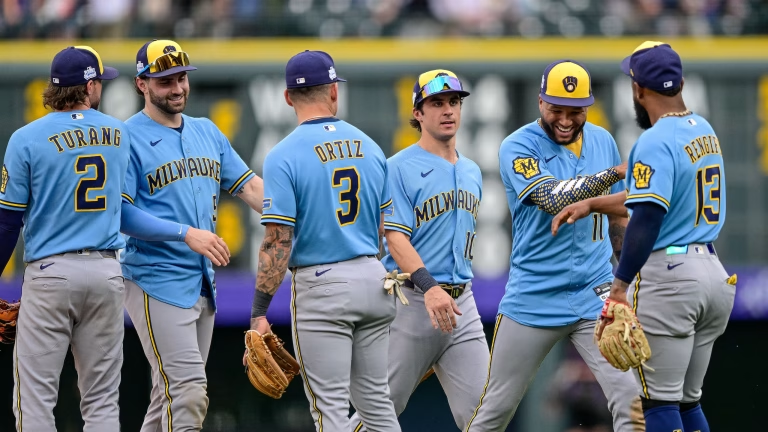
Manfred argued Wednesday that competitive balance—even just over a month after the small-market Milwaukee Brewers captured the 2026 World Series to become the first small-market champion since 2015—remains a mandate from the fanbase.
“We are not prepared to tell 70% of our fans that they’re wrong on this issue,” Manfred said. “Competitive balance is a serious problem, and it needs to be addressed, and it’s one that we can’t avoid just because the negotiation may be difficult.”
Bruce Meyer and MLBPA Fire Back as Dec. 2 Lockout Looms
Manfred accused the union of refusing to engage on core economics, noting that MLBPA negotiators have not submitted a major economic counterproposal since their opening offer. Still, the commissioner insisted he and deputy commissioner Dan Halem are prepared to negotiate through next week’s Thanksgiving holiday to avert an immediate freeze.
“A decision on a lockout is one that we’re going to make at the last possible moment,” Manfred said. “We’re going to devote ourselves to the bargaining process. I’m not that big on Thanksgiving as a holiday. We’ll make ourselves available whenever and wherever to bargain in an effort to make an agreement.”
Meyer wasted no time rejecting Manfred’s characterization, accusing ownership of trying to dismantle guaranteed contracts and depress earnings for stars ranging from Shohei Ohtani and Gerrit Cole to marquee free agents like Skubal.
“There can be no clearer example of the league’s lack of seriousness than their insistence that they will not negotiate over the economics outside of a radical change to the system that would dramatically reduce overall player compensation for all categories of players and strip fundamental rights from players like the ability to have truly guaranteed contracts,” Meyer said in a statement Wednesday. “There should be no illusions about the owners’ true motivation in pushing for this system. They want to make more money in profits and franchise values by artificially suppressing player salaries.”
Unless a breakthrough occurs over the next 13 days, owners are widely expected to impose a lockout on December 2—halting all 40-man roster transactions, trades, and free-agent signings just weeks after the offseason market opened—and setting the stage for a bitter winter battle over whether baseball will take the field on time in 2027.


Author Profile

- CEO NGSC Sports
Latest entries
 MLBNovember 19, 2026 at 12:08 amRob Manfred Draws Hard Line on $258.2M Salary Cap as MLB Hurtles Toward December Lockout
 BasketballNovember 19, 2026 at 12:08 amGeorgia Attorney General Demands SEC Punish LSU’s ‘Contempt for the Rules’ After RJ Luis Jr. Roster Addition
 CFPNovember 18, 2026 at 1:31 amCFP Rankings: Georgia Holds No. 1, Texas Jumps Notre Dame, and Wake Forest Enters Bracket
 BasketballNovember 18, 2026 at 1:11 amAndrej Stojaković Drops Historic 46 to Shock Duke at Home, and No. 14 Tennessee Suffocates No. 2 Michigan State
About the Author