 0
 0
You want to get good at badminton, and the sport is growing worldwide, so now is a great time to start. Your learning path needs the same thing any big goal does: a clear starting point and steady progress. This guide maps badminton’s rise, from grassroots to Olympic stages, and shows how beginners can join the worldwide community and keep improving.
Why Is Badminton Gaining Worldwide Popularity?
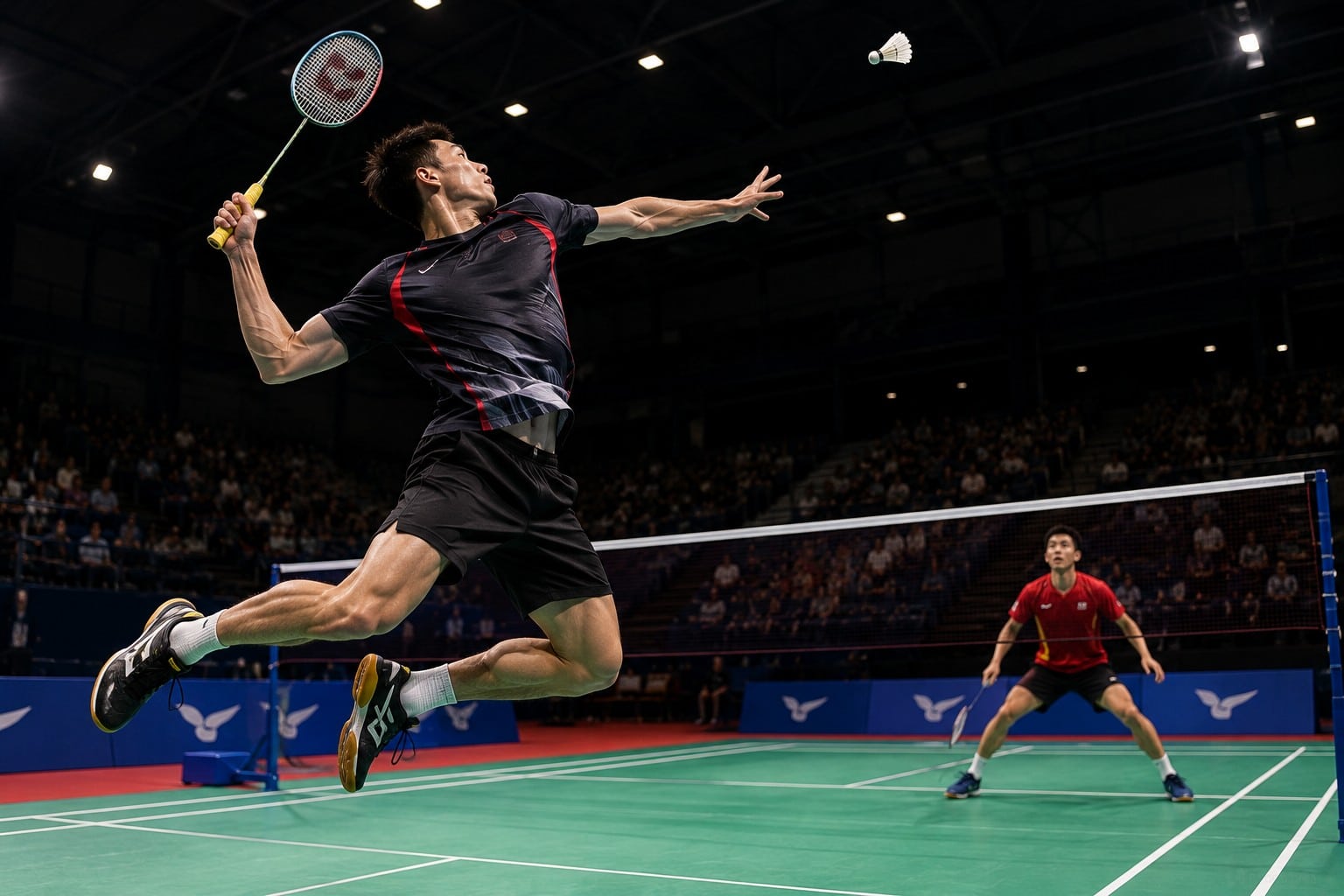
Badminton’s global popularity comes down to a simple mix: it’s easy to start, great for your health, and genuinely exciting to watch. Walk into almost any community center, school gym, or neighborhood park, and you’ll likely spot a net strung up and a few players trading shuttles.
The sport asks very little. A racket, a shuttlecock, and some open space are enough to start playing. That low barrier means people of all ages can pick it up without years of training or expensive gear.
Badminton also scales with the player. A casual family rally in the driveway feels completely different from a fast-paced club match, yet both use the same basic setup. This flexibility keeps newcomers coming back and gives experienced players room to grow.
So, what’s actually driving the growth?
Key Drivers Behind Badminton’s Global Rise
Health and fitness trends, coupled with badminton’s low barrier to entry, have fueled its global rise, as the sport offers a full-body workout with minimal equipment costs. Think of a family in a crowded city putting up a net in a park or a rented gym court for less than $50. That single purchase can keep them active for years.
Several forces explain the sport’s steady growth:
- Health benefits: Regular play improves cardiovascular fitness, agility, and hand-eye coordination. Short bursts of activity followed by rest keep your heart rate up without feeling like hard work.
- Social connection: Doubles play naturally builds community. Two pairs on one court means teamwork, friendly rivalry, and a reason to show up week after week.
- Accessibility: Badminton works indoors or outdoors and needs very little space. A driveway, a community hall, or a beach all work fine.
- Youth engagement: School programs introduce the sport early, and many kids stick with it because the learning curve feels manageable.
If you want to learn how to play badminton properly, the basics are easy to find, and the path from beginner to competent player is short. That simple setup encourages lifelong participation, which is exactly why badminton keeps spreading.
How Has Badminton Evolved From a Backyard Game to a Competitive Sport?
Badminton’s transformation from a casual garden pastime to a high-speed competitive sport came down to two things: standardized rules and global governing bodies. What began as a relaxed activity at family gatherings slowly picked up structure as players wanted fair matches and consistent conditions.
Once people started keeping scores seriously, the need for shared rules became obvious. Standardized court dimensions, scoring systems, and equipment specs turned a loose backyard activity into something you could measure and compare across towns and countries.
International tournaments gave the sport a stage where those rules could be tested and refined. As competition grew, so did the credibility of badminton as a genuine athletic pursuit rather than just a way to pass a sunny afternoon.
This sport requires fast footwork, quick reactions, and solid conditioning. If you want to move from casual rallies to real competition, the gap between the two becomes clear fast. The rules that once felt optional now define every rally.
Milestones in Badminton’s International Growth
Key milestones such as the founding of the International Badminton Federation (now BWF) in 1934 and badminton’s Olympic debut in 1992 propelled the sport onto the global stage.
The story starts in the 1870s, when rules were codified in India by British military officers who adapted a local game. Those written rules gave players a shared reference point, which made fair competition possible for the first time.
Here is how the sport’s international presence grew over the decades:
- 1870s: Rules codified in India, giving the game a formal structure
- 1934: International Badminton Federation formed, uniting national bodies under one authority
- 1948: Thomas Cup launched, creating a prestigious men’s team championship
- 1956: Uber Cup introduced, bringing top-level women’s team competition to the world
stage
- 1992: Badminton became an Olympic medal sport, cementing its global status
The BWF, as it’s known today, plays a central role in standardizing competition formats. It sets scoring rules, tournament structures, and ranking systems that apply across member nations. So, a player in one country competes under the same conditions as a player on the other side of the world, which keeps the sport fair and widely accessible.
What Role Do International Tournaments Play in Spreading Badminton Culture?
International tournaments like the BWF World Tour, Thomas Cup, and Olympic Games spread badminton culture by showcasing elite play and inspiring grassroots participation. When fans watch a tight three-game final on television, something clicks. They want to try it themselves.
These events also pull in media coverage that casual sports fans would otherwise never encounter. Broadcast deals and highlight reels put badminton in front of millions who might only follow football or basketball. That visibility matters for a sport still building its footprint in many regions.
Tournaments give national federations a target to aim for. Young players see a pathway from local clubs to international courts, and that dream drives them to train harder and stick with the sport through tough stretches. Coaches and parents notice this motivation too.
The biggest stages, the Olympics and World Championships, show this growth in concrete ways.
Olympic and World Championship Influence
Since badminton became an Olympic sport in 1992, viewership and sponsorship have grown steadily, with the 2016 Rio Olympics drawing massive audiences for badminton finals. The sport debuted with four events. Today it features five, including mixed doubles, which gives more players a shot at the podium.
The World Championships have run annually since 2006, aside from Olympic years. These events gather the top-ranked players and attract global broadcast audiences. The exposure translates into more funding for national programs, better media rights deals, and money for grassroots development.
Country-level success clearly moves the needle. China’s long dominance on the Olympic stage fueled huge local interest and investment in training facilities and youth academies. When a nation wins big, kids sign up at local clubs and sponsors pay attention. Other countries have followed similar patterns after breakthrough medals.
Over-commercialization can push ticket prices and equipment costs higher, which risks making the sport harder to access for everyday families. Keeping entry costs low matters as much as growing the spotlight, and beginners should still be able to find affordable courts and coaching in their area.
How Is Badminton Adapting to Different Cultures and Regions?
Badminton bends to fit local cultures, whether through modified formats like airbadminton for outdoor play or school programs that bring the sport into physical education. The game looks different depending on where you play it, and that flexibility is a big reason it keeps spreading.
Governing bodies and local clubs rarely force one version of the sport on everyone. Instead, they adjust the format, the setting, and the teaching approach to fit what a community can actually support.
Airbadminton is one of the clearest examples. The BWF developed it so people can play outdoors on sand, grass, or hard surfaces, even when the wind picks up. A specially designed shuttle resists drift far better than a standard feather bird, which means parks and beaches become fair game.
This matters in regions where indoor halls are scarce or expensive. A family in a warm climate can set up a net in a courtyard and get a real rally going. If you want to take your game outdoors, the basics of grip and footwork still carry over from the indoor version.
School programs across Europe and Asia have folded badminton into physical education, often with scaled-down courts and lighter rackets for younger kids. Teachers like it because the equipment is cheap, the rules are quick to explain, and mixed groups can play together without a huge strength gap.
In parts of Asia, school badminton often feeds into club systems that produce competitive players early. In Europe, the emphasis tends to sit more on participation and fun. Both approaches work, and both grow the base of people who already know the sport by the time they’re adults.
Dense cities face a different problem: space. Urban initiatives respond by using multi-use courts, community halls, and even converted parking areas for short sessions.
Climate shapes the rest. Cold or rainy regions lean on indoor halls, while warmer places increasingly mix indoor play with airbadminton outdoors. The sport bends to the weather instead of fighting it.
Denmark offers a useful case study in community integration. Badminton sits deep in Danish club culture, with local sports halls serving as social hubs where families play across generations. Clubs often run beginner nights and youth sessions alongside competitive leagues, so newcomers have a clear path in.
That model shows how a country can weave badminton into everyday community life rather than treating it as an elite pursuit. The lesson travels well: make the sport easy to try, keep facilities shared, and let local clubs carry the culture forward.
You can read this article on Forbes: How Denmark Produced A Badminton Champion — And What That Teaches Business.
What Lies Ahead for Badminton as a Worldwide Sport?
The future of badminton looks bright. Technology like electronic line-calling and sustainable equipment is driving growth, alongside expanding youth programs worldwide. The sport’s governing body has already introduced instant review technology at major tournaments, letting players challenge close calls on a screen. That change alone shows how far the game has moved from relying purely on human eyes.
Instant reviews are just the starting point. Several developments are likely to shape the next decade of badminton:
- Technology: electronic line calls and performance analytics that track shuttle speed, player movement, and rally patterns
- Sustainability: eco-friendly shuttlecocks and recyclable court materials as venues look to cut waste
- Global expansion: new markets in Africa and the Americas where the sport is still building its base
- Youth engagement: school programs and social media campaigns that pull younger players onto the court
Technology will probably change how fans and players experience the game first. Electronic line-calling removes doubt on tight calls, and performance analytics give coaches real data on movement and shot selection. For anyone learning the basics, that feedback helps too, since seeing your own rally patterns makes it easier to spot weak spots. If you want to learn how to play badminton, tools like these can speed up the learning curve.
Sustainability is moving up the agenda as well. Feather shuttlecocks wear out quickly, so makers are testing synthetic alternatives and recyclable materials that hold up longer. Greener court flooring and energy-efficient venue design are part of the same push. The goal is to keep the sport affordable while reducing the constant cycle of replacing worn gear.
Geographic growth may be the biggest story. Badminton already has deep roots in Asia and parts of Europe, but Africa and the Americas offer room to expand through grassroots clubs and regional tournaments. Local coaching clinics and beginner-friendly sessions help turn curiosity into regular play.
If current growth continues, badminton could see a 20% increase in global participation by 2030. That figure depends on keeping the sport accessible, though. Keeping shuttlecocks affordable and supporting community courts will decide whether the projected rise actually happens.



Author Profile

Latest entries
 Radio ShowsNovember 23, 2026 at 4:11 amHow Badminton Is Becoming a Global Sporting Culture
 gamblingNovember 23, 2026 at 3:52 amCollege Football Bowl Odds 2026: 5 Teams Making a Late-Season Push
 CasinoNovember 21, 2026 at 7:27 amLive Baccarat & Online Slots RTP Audits: How Asian iGaming Platforms Build Trust
 GolfNovember 20, 2026 at 12:00 am5 Best Places to Buy a Golf Simulator Enclosure: What to Know Before You Place an Order
About the Author