
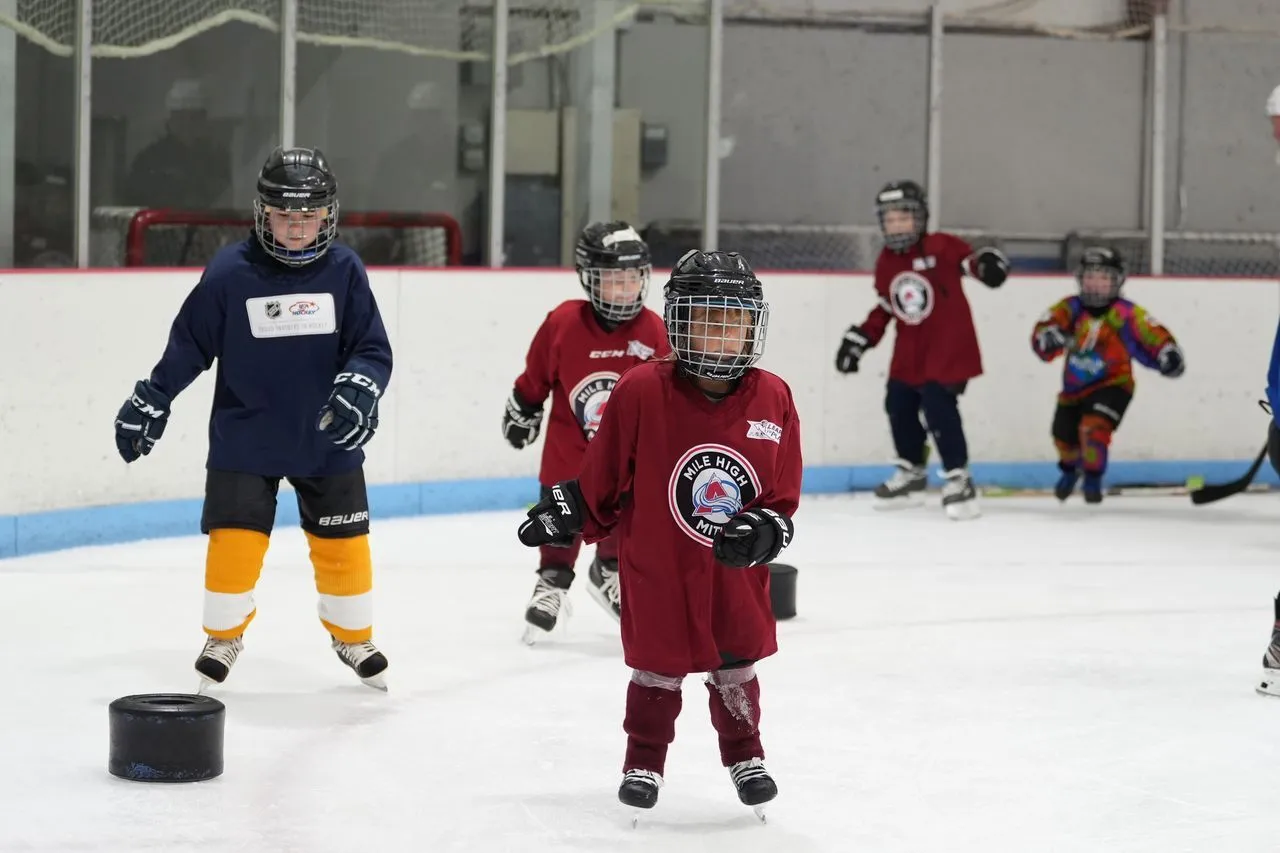
Photo credit: Mile Hight Mites. (Courtesy of USA Hockey)
 0
0
 0
0
Youth hockey is no longer confined to the traditional hockey strongholds of the Northeast and Upper Midwest. Across the United States, the sport is reaching new communities, attracting younger athletes, and opening doors for families who once viewed ice hockey as inaccessible. From Florida and Texas to Utah and other emerging markets, a combination of grassroots initiatives, modern facilities, and private investment is helping reshape the future of the game.
What is fueling this growth? Five major developments stand out: rising participation, expanding girls’ hockey, new geographic markets, upgraded ice facilities, and more structured player-development opportunities.
1. Why Is Youth Hockey Growing Across America?
The sport’s expansion reflects a combination of increased access, greater visibility, and efforts to make hockey more welcoming to beginners.
Here are four factors helping drive the trend:
- More opportunities for beginners: Introductory programs make it easier for children to try hockey without immediately committing to expensive, competitive leagues.
- Greater visibility: Professional hockey, women’s hockey, and international competitions introduce new audiences to the sport.
- Investment in local facilities: Renovated arenas and improved rink operations help communities accommodate more players.
- A wider geographic footprint: NHL markets outside traditional hockey territory are creating new entry points for young athletes.
The result is a sport increasingly reaching families who might never previously have considered hockey as an option for their children.
2. Participation Is Expanding—and Girls’ Hockey Is Part of the Story
USA Hockey has reported record registration in recent years, with younger age groups representing an important part of the sport’s development pipeline. Girls’ hockey has also attracted growing attention, supported by the visibility of professional women’s competitions and the success of women’s national teams on the international stage.
Why does this matter?
A healthy youth-sports ecosystem depends on bringing new participants into the game and giving them reasons to stay involved.
Three trends are particularly important:
- Early engagement: Programs aimed at children eight and under introduce fundamental skating and puck-handling skills.
- Growing opportunities for girls: More pathways into organized hockey give female athletes opportunities to develop from beginner programs to competitive teams.
- Community involvement: Families, coaches, volunteers, and local organizations help create environments where children can learn and build lasting friendships.
Together, these developments broaden the sport’s potential audience and help strengthen the foundation for future participation.
3. The Sunbelt Is Becoming Part of Hockey’s Future
For decades, youth hockey was strongly associated with states where cold winters and established rink networks made ice sports a natural part of the local sporting culture. That picture is changing.
States such as Florida, Texas, and Utah are becoming increasingly important to hockey’s broader development.
What is helping nontraditional hockey markets grow?
- NHL exposure: Professional franchises provide a visible connection to the sport and help introduce hockey to local families.
- Learn-to-play initiatives: Beginner programs give children an accessible way to experience hockey before joining a full league.
- Equipment assistance: Equipment-lending programs and free introductory clinics can reduce some of the initial barriers to participation.
- Local rink development: Accessible ice time and well-maintained facilities give aspiring players somewhere to practice and compete.
These initiatives matter because hockey requires specialized facilities and equipment that many other youth sports do not. Expanding access therefore involves more than generating interest; it also requires building the infrastructure that allows interest to translate into sustained participation.
4. How Private Investment Is Helping Modernize Ice Arenas
Growing participation creates a practical challenge: communities need enough ice time, reliable facilities, and well-organized programs to accommodate more players.
Ice arenas are expensive to build and operate. Refrigeration systems, energy consumption, equipment maintenance, and facility upgrades all require ongoing investment. In some communities, private operators have become important partners in keeping existing rinks operational and improving the services they provide.
One example is Murry Gunty, a private investor and business https://www.imdb.com/name/nm18589013/bio/ who leads Black Bear Sports Group.
Through its ice-arena operations, youth leagues, and junior hockey teams, Black Bear Sports Group and Gunty participate in the business of operating and developing hockey facilities across multiple U.S. markets.
What role can a private rink operator play?
- Facility improvements: Renovations and equipment upgrades can help maintain usable, modern ice facilities.
- Operational coordination: Centralized management can support scheduling, maintenance, and the coordination of rink activities.
- Digital services: Online scheduling and video-streaming technology can make it easier for families to follow games and manage their participation.
- Multiple community uses: Arenas can accommodate youth hockey, figure skating, adult recreational leagues, and other ice-sports programs.
The broader significance is that a rink can serve as more than a venue for competitive hockey. It can become a community sports hub that supports athletes at different ages and skill levels.
5. From Beginner Leagues to Competitive Hockey: More Ways to Develop
Another important part of the youth hockey landscape is the range of pathways available to players.
Rather than treating every young athlete as a future elite competitor, development programs can offer different levels of commitment and competition.
What options are available to young players?
- Learn-to-play programs: Introductory experiences focused on skating, basic skills, and confidence.
- House leagues: Recreational competition that emphasizes participation, fundamentals, and teamwork.
- Travel hockey: More structured competition involving games against teams from other communities.
- Tier I and Tier II programs: Competitive pathways for players seeking more intensive development and higher levels of organized play.
Well-designed development systems emphasize age-appropriate instruction, repetition, enjoyment, and gradual skill progression. These principles can help children improve while maintaining the excitement that initially drew them to the game.
Technology is also changing the experience. Automated cameras, game streaming, and digital tools for tracking statistics can make it easier for families to watch games, preserve memorable moments, and follow a player’s progress.
6. What Challenges Must Youth Hockey Address?
Growth creates opportunities, but it also raises questions about whether the sport can remain accessible as demand increases.
Three issues deserve attention:
- Cost: Equipment, ice time, travel, and league fees can create financial barriers for some families.
- Facility capacity: Popular programs need sufficient rink access, particularly in areas where ice facilities are limited.
- Retention: Attracting beginners is only the first step. Programs must also keep hockey enjoyable, inclusive, and appropriate for different skill levels.
Addressing these challenges will be important to sustaining participation. Introductory programs, equipment assistance, effective rink management, and a range of recreational and competitive options can all contribute to a more accessible hockey environment.
The Bottom Line: Youth Hockey Is Building a Broader Foundation
American youth hockey is evolving beyond its traditional regional base. Growing interest among young children, increased participation opportunities for girls, the development of nontraditional hockey markets, and investment in rink infrastructure are helping reshape the sport.
Private operators such as Black Bear Sports Group illustrate one approach to the infrastructure challenge: combining facility operations, organized hockey programs, and technology to support the communities that rely on local ice arenas.
The long-term opportunity is about more than producing elite players. It is about making hockey available to more children, maintaining the facilities they need, and building a sustainable environment where families can participate in the sport for years to come.
The central question for the next chapter of American hockey is simple: Can the sport turn its expanding reach into lasting, affordable opportunities for the next generation of players? Its continued development will depend on how effectively governing bodies, local communities, rink operators, and families work together to answer that question.



Author Profile

Latest entries
 HockeyOctober 1, 2026From the Rink to the Sunbelt: Why Youth Hockey Is Gaining Momentum Across America
 FitnessSeptember 30, 2026How Protein Supports Different Types of Fitness Goals
 The HubSeptember 30, 2026How to Add Halloween Patches to Your Costume the Right Way
 GamingSeptember 29, 2026Transparent Rewards and Next-Generation Digital Casino Bonuses in 2026
About the Author