
 0
0
 0
0
You know that graphic that appears during a live match, right? The one that shows how quick a player is, how many goals they are expected to score, and whether a corner is likely to end up in the net. Most people just look at it quickly and then move on. But there’s a whole business behind it, and the companies making money from it all work together in ways you’d never guess just by watching the game.
We’ve been doing this for a while, and we’re always surprised by what we see: analytics aren’t really about coaching anymore. Today, it runs a huge chunk of the online sports business. So, here’s how that shift happened and what it means if you’re interested in building something here.
The Rockets figured this out before it had a name
The clearest example was in basketball in the 2010s, when the numbers started to change how the game was played. The Houston Rockets had a problem that every coach knew about, but nobody had tried to fix: it just doesn’t make sense to take mid-range jumpers. They were too far from the basket to be easy, but too close to count for three. They stopped taking them almost completely. People started calling it “Moreyball”, and within a few seasons, most of the league had done the same. The Rockets were simply the first to go.
We keep talking about that story because it shows what can happen when people look at the numbers and act on them. It doesn’t make players better. It stops you from acting without thinking. Sports media uses the same logic to make money, which is what we want to talk about.
What actually happens between the player and your screen
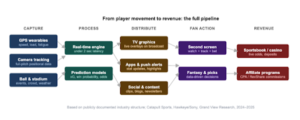
We’ve drawn this out to help you see the chain better, as it’s tricky to follow when you’re only looking at one piece of it. Most sports coverage is like that: here’s an article about GPS vests, here’s one about betting apps, here’s one about affiliate links on sports blogs, and almost nobody shows how they connect. But it’s all the same system. The tracker on a player’s ankle and the link at the bottom of a sports blog are two sides of the same thing.
How fans actually watch now, and why it changed everything
Here’s the deal: lots of people watch sports today by having the match on one screen, a stats app on another, a fantasy lineup they’re checking every ten minutes, and a bet open somewhere. The second screen won’t stop them playing the game. For many people, the second screen is the main reason they’re interested in the match. It’s the live action that makes all the other tabs tick.
This is what got data companies, TV channels, betting operators and sports blogs all working together. When a fan is doing five things at once, and one of them involves a deposit, every part of that experience needs to be quick and right. That’s why these companies are now being bought by media groups, not just teams.
Five types of people who make money from one match
| Who | What they bring | How they get paid |
| Data providers | Sensors, cameras, raw number feeds | Licensing deals with leagues and broadcasters |
| Leagues and clubs | Official data rights, access to players | Rights deals, broadcast contracts |
| Broadcasters | Audience, graphics on screen, distribution | Subscriptions, ads, partnerships with betting apps |
| Betting platforms | Live odds, in-play markets, payouts | Margin on what players wager |
| Sports blogs and channels | Content, search traffic, social reach | Fixed fee per new depositor (CPA) or a cut of what that player spends over time (RevShare) |
Standard iGaming and sports media industry structure, 2024.
The last row is interesting because sports blogs and channels need less than anyone else on that list. It doesn’t have any sensors, a broadcast license or an odds engine. You need people who trust you and who will enjoy your content. It’s not as hard as it looks, which is why more people are trying it, but there are still some good spots left, especially anything that goes deeper than a match preview.
What kind of sports content actually gets people to click
Not everything works the same way. A match preview that you could have written off the league table doesn’t make people trust you enough to listen to your recommendations. The best content is the kind that teaches you something new. Think about the last time you clicked on a link in a sports article. It was probably after reading something that explained something to you.
The types of content that tend to work, roughly in order of how well they do:
- Long articles that answer a specific question in a search are read by people who already know what they’re looking for, so they’re not just browsing.
- Newsletter emails that focus on one sport or one specific topic tend to have a smaller list of subscribers, but these subscribers are more likely to have signed up on purpose, which matters.
- YouTube videos that clearly explain things (like charts, betting concepts, how a model works), because anyone who watches to the end is interested enough to take action.
- Telegram channels with a real point of view: if someone has been in your channel for a few months, they’re not a stranger, and that changes how they read a recommendation.
- Twitter and Reddit are great for getting known and building a name for yourself, but they rarely lead to a click that pays. It’s great for getting noticed, but not so much for the part where someone actually does something.
Where casino programs fit into sports content
People who really follow sports data already think in terms of chance and probability without realising it, and that’s exactly how someone who bets carefully thinks too. If you’re interested in expected goals or how a win probability model works, you’re on the right track. That’s why casino affiliate programs fit naturally into sports content, rather than feeling like they don’t fit in. It’s important to know which programmes are available, and this depends on where your readers are based. You should also check the exact fees, schedules and deposit rules directly with the relevant people before you build anything around specific numbers. Rules vary a lot from country to country.
There are two main ways it works: CPA pays you a set amount for each person who makes their first deposit. RevShare gives you a share of what people spend on the platform over time. It takes a while to add up, but it never stops. If you sent a reader two years ago and they’re still active, they can still show up in your monthly numbers. If you want content that’ll be worth your while, which is what good sports writing does anyway, it’s worth thinking about which model is best before you decide.
Why the gap exists and how long it might stay open
If you look at sports data in different languages, you’ll see a lot is still missing. Not match previews – there are plenty of those – but real explanations of how the numbers work and what they mean for someone who wants to understand the game better. Most people write about this in English, and mostly about the biggest sports. Everything else is still pretty thin.
If you’re thinking about this seriously, the best move is to pick one sport and one angle that doesn’t already have a good answer. Just make sure your piece is good enough to appear in search results, and think of the affiliate side as an extra layer on top of content people would read anyway. The link works when the reader trusts you. People will trust you if your content is useful. That’s really the whole story, and it doesn’t change whether you’re writing about Premier League shot data or NBA team rotations.



Author Profile

Latest entries
 SportsSeptember 28, 2026The Business Behind Sports Analytics: Data, Fans, and Digital Partnerships
 EntertainmentSeptember 22, 2026How Much Does Buggy Rental Dubai Cost? Full Price Breakdown
 CasinoSeptember 21, 2026Real Money Blackjack in 2026: Games, Features and Formats
 GamingSeptember 21, 2026Return to Player (RTP) Explained: How Theoretical Payouts and Game Weighting Work
About the Author