
Photo Credit: UCSD Guardian
 0
0
 0
0
The NFL constantly searches for the next super team. Fans love star power, while contenders chase every available difference-maker. However, building a loaded roster does not guarantee a Lombardi Trophy. Recent history offers several fascinating examples. Some star-studded teams reached the mountaintop. Others collapsed before reaching the Super Bowl. Meanwhile, several champions relied more on balance than overwhelming star power. So, do super teams really win the Super Bowl? The answer depends on how teams build them.
The 2020 Tampa Bay Buccaneers
The 2020 Tampa Bay Buccaneers provide one of the strongest arguments for super teams. Tampa Bay added Tom Brady before the season. The team also added Rob Gronkowski, Leonard Fournette and Antonio Brown. Brady already owned six Super Bowl rings. Gronkowski had won three championships with Brady in New England. Meanwhile, the Buccaneers already had stars like Mike Evans, Chris Godwin and Lavonte David. The roster quickly became one of the NFL’s most talented groups. Tampa Bay finished 11-5 during the regular season. Then, the Buccaneers dominated the postseason. They defeated the Kansas City Chiefs 31-9 in Super Bowl LV. Brady earned his seventh championship and fifth Super Bowl MVP award. Therefore, Tampa Bay showed that star power can work. Still, the team needed strong defense and excellent coaching.
The 2021 Los Angeles Rams
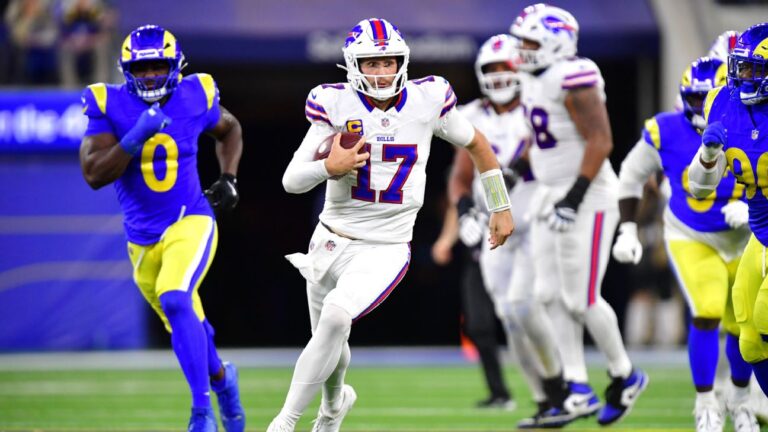
The Los Angeles Rams offer an even clearer example. General manager Les Snead aggressively pushed his chips into the middle. The Rams acquired Matthew Stafford before the 2021 season. They also already had Cooper Kupp, Aaron Donald and Jalen Ramsey. Los Angeles then added Von Miller before the trade deadline. That move gave the roster another elite defensive weapon. The Rams finished 12-5 and won the NFC West. They eventually defeated the Cincinnati Bengals 23-20 in Super Bowl LVI. Kupp won Super Bowl MVP after an outstanding postseason. Stafford also delivered several clutch performances throughout the playoff run. NFL.com described the Rams’ approach as an aggressive, all-in strategy. The strategy produced exactly what Los Angeles wanted. However, the story did not end there.
The 2022 Los Angeles Rams
The Rams’ immediate collapse provides the other side of the argument. Los Angeles entered the 2022 season as defending champions. Yet injuries and roster limitations quickly created problems. The Rams eventually finished 5-12. They missed the playoffs entirely. NFL.com reported that Los Angeles became the earliest defending champion eliminated since the 1999 Denver Broncos. That result showed the enormous risks of an all-in roster. The Rams had sacrificed future resources for immediate success. Once injuries hit, their depth could not compensate. That does not make the 2021 strategy a failure. The Rams won the championship they wanted. However, it proves that super teams rarely enjoy long-term stability.
The 2022 Kansas City Chiefs
The Kansas City Chiefs offer a different version of a super team. Patrick Mahomes gave Kansas City an elite quarterback. Travis Kelce provided another superstar on offense. Yet the Chiefs did not simply collect aging stars. They continued developing young players and maintaining roster depth. Kansas City finished 14-3 during the 2022 regular season. The Chiefs then defeated Philadelphia 38-35 in Super Bowl LVII. Mahomes won the Super Bowl MVP award. He also played through an ankle injury during the postseason. Kansas City shows why quarterback play matters so much. A team can overcome roster turnover when it has an elite quarterback. The Chiefs also avoided relying entirely on expensive veterans. Their sustained success came from smart drafting, development and coaching.
The 2024 Philadelphia Eagles
The Philadelphia Eagles provide another compelling example. Philadelphia built an extremely talented roster on both sides of the football. Jalen Hurts led the offense, while Saquon Barkley added another major weapon. The Eagles also featured elite offensive linemen and a talented defense. That balance separated them from some previous star-heavy teams. Philadelphia finished 14-3 during the 2024 regular season. The Eagles then dominated the postseason. They defeated Kansas City 40-22 in Super Bowl LIX. The victory gave Philadelphia its second Super Bowl championship. The Eagles proved that star power works especially well when teams maintain depth. Their roster featured major stars, but Philadelphia did not depend on only a handful of players. That balance ultimately mattered.
The 2025 Seattle Seahawks
The Seattle Seahawks provide an important counterpoint to the super-team argument. Seattle won Super Bowl LX after finishing the 2025 regular season 14-3. The Seahawks defeated the New England Patriots 29-13. Seattle’s championship did not come from assembling the NFL’s most famous collection of stars. Instead, the Seahawks built a deep and balanced roster. That approach matters because football requires 11 players on every play. Injuries can also change a team’s fortunes quickly. Seattle’s championship reinforces an important lesson. The best roster does not always contain the most recognizable names. So, Do Super Teams Win?
The evidence suggests that super teams can win the Super Bowl. However, star power alone rarely guarantees success. The 2020 Buccaneers and 2021 Rams prove that aggressive roster building can work. Both teams loaded up and eventually won championships. Meanwhile, the 2022 Rams showed what can happen when injuries and depth problems strike. Their rapid decline highlighted the risks behind an all-in strategy. The Chiefs and Eagles offer a different formula. Both teams paired superstar talent with strong depth and organizational stability. Ultimately, the NFL rewards complete teams. Quarterbacks, coaching, depth and health all matter during a championship run. Superstars can push a team over the top. They cannot carry an entire roster through an NFL season.
That may explain why the NFL rarely produces true super teams. The salary cap creates difficult decisions, while injuries can derail even the deepest roster. Therefore, the better question may not ask whether super teams’ win. Instead, ask whether teams can build enough star power without sacrificing everything else. Recent Super Bowl history suggests that balance remains the better bet.



Author Profile

-
Bradley Walker (VP) and Head of our Florida operations for NGSC Sports, bringing extensive experience across collegiate, professional, and amateur athletics. His coverage spans USF Athletics, including football, baseball, lacrosse, and softball, as well as University of Tampa baseball.
Bradley also provides coverage of minor league baseball with the Clearwater Threshers and Major League Baseball with the Tampa Bay Rays. On the national stage, he covers college football bowl games and conference championship matchups, along with premier golf events across the PGA Tour, LIV Golf, and LPGA Tour.
In addition to his reporting work, Bradley is the play-by-play announcer for Pinellas Park High School Patriots football, lending his voice and insight to Friday night lights.
He is also an active podcast host and contributor, serving as a host on The Walker Report, where he delivers in-depth sports analysis, interviews, and coverage across multiple levels of competition.
Latest entries
 SportsOctober 14, 2026Next Step in Realignment: James Madison Accepts Invitation to Join the American Conference
 FootballOctober 12, 2026Bucs Stun Cowboys, Snap Losing Skid
 FootballOctober 11, 2026South Carolina Stuns Florida in SEC Showdown
 BasketballOctober 11, 2026SEC Hoops Picks: Florida Leads
About the Author