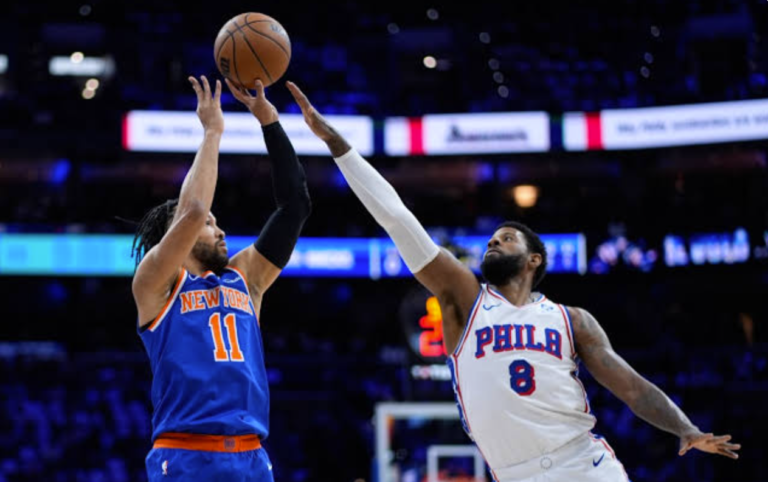
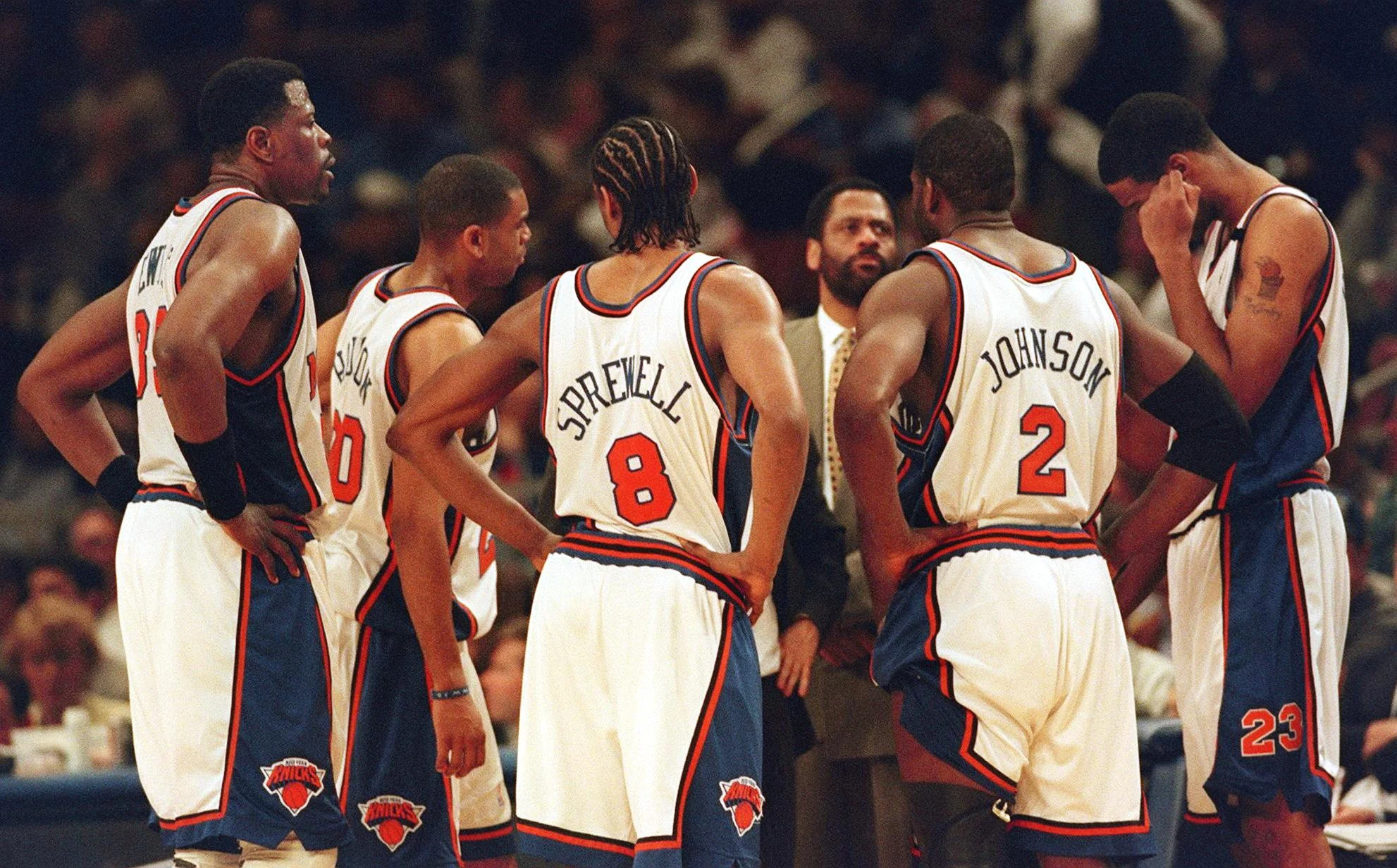
(STAN HONDA via Getty Images)
 0
0
 0
0
On June 25th, 1999, the New York Knicks would play the last game of the 1999 NBA Finals matchup against the San Antonio Spurs. Over the next two and a half decades, the Knicks would go through bad years, bad teams, and experience heartbreak, losing in the Eastern Conference Finals in 2025. Now 27 years later, the Knicks have returned to the Finals. Since the last Knicks Finals appearance, the league has changed in numerous ways that the NBA itself couldn’t have predicted in 1999.
Four Teams Have Moved or Rebranded
Since 1999, the NBA has seen changes come from multiple teams. Some have relocated, while others have changed their entire branding. The first change would come from the Vancouver Grizzlies, who, after only six grueling seasons in the league, would relocate from Vancouver, British Columbia, Canada, to Memphis, Tennessee, ahead of the 2001-02 season. This would leave the Toronto Raptors as the only team in Canada. The Grizzlies celebrated their 25th season in Memphis during the 2025-26 season. The second team to relocate would be the Charlotte Hornets. The team would play in Charlotte from 1988-2002, before moving to New Orleans. They would rebrand to the New Orleans Pelicans in 2013.
The most recent expansion would see the creation of the Charlotte Bobcats in 2004, who would later rebrand to the Charlotte Hornets a decade later in 2014 following the former Hornets rebranding to the Pelicans. The last rebranding would come in 2008, when the Seattle Supersonics would be moved from the home of 41 years to Oklahoma City and rebranded as the Oklahoma City Thunder.
The Spurs Were Not a Dynasty (Yet)
When the Knicks made the Finals in 1999, they would be up against the 37-13 San Antonio Spurs, who dominated the shortened lockout season behind big men David Robinson and Tim Duncan. The Spurs would win the 1999 NBA Finals in five games to win their first title in the franchise’s history, across both the NBA and ABA. San Antonio would go on to win three more championships in the next eight seasons, before winning their fifth championship in 2014. Tim Duncan would be a part of all five Spurs Championships.
Since 1999, the Spurs would have 21 winning seasons and would make the playoffs every year from 1998-2019, before missing the playoffs for the next six seasons. Now, making the playoffs for the first time post-Gregg Popovich, the Spurs have a new generational big man in Victor Wembanyama, and look to become a dynasty once again.
The Three-Point Revolution Was Over a Decade Away
In 1999, the NBA was far from the game it is today. Via the NBA, the percentage of three-point shots taken by a team was around 17% of the team’s total shots per game. In the 2020-21 season, that percentage more than doubled, with 39.2% of all attempted shots from a team being three-point shots. While there were great three-point shooters before, the “three-point revolution” arguably didn’t start until the mid-2010s, with names like Stephen Curry and Klay Thompson changing the game. Alongside guards, many big men have added three-point shooting to their game, when in 1999, big men were more back-to-the-basket players who avoided the three-point line at all costs.
The 1998-99 season would see Toronto Raptors guard Dee Brown lead the league in 3-pt field goals (135), 3-pt field goals per game (2.8), 3-pt field goal attempts (349), and 3-pt field goal attempts per game (7.1). The 2025-26 season would see Charlotte Hornets rookie Kon Knueppel lead in 3-pt field goals made (271), Luka Doncic lead in 3-pt field goals per game (4.0) and 3-pt field goal attempts per game (10.8), and LaMelo Ball lead in 3-pt attempts (740). In 1999, the Sacramento Kings would lead with 943 3-pt attempts while the Houston Rockets lead with 336 made. In 2026, the Golden State Warriors would lead the league with 3,616 3-pt attempts (1 of 18 teams with 3,000+ attempts), and the Charlotte Hornets would lead with 1,343 3-pt field goals made (1 of 22 teams with 1,000+ made). In 2026, the three has never been more important to the game.
The Rise of International Players
With the NBA being brought to the world stage in the 1990s, the NBA game has expanded all over the world, with players from all over the globe making it to the league. In the 1998-99 season, there were 30 international players across the league. In 2026, that number has more than quadrupled to a record 135 players from over 40 countries. 71 of those international players would be European, while another 19 would be French, another record for the NBA. International players have become a bigger part of the game, with most of the top 15 players in the league right now being international players.
Over the last 10 seasons, international players have established themselves as some of the best players in the league, with the MVP award going to an international player every year since 2019. Greece’s Giannis Antetokounmpo would win back-to-back in 2019 and 2020. Serbia’s Nikola Jokic would win three times in 2021, 2022, and 2024; Cameroon’s Joel Embiid would win in 2023, and Canada’s Shai Gilgeous-Alexander would win back-to-back in 2025 and 2026. Slovenia’s Luka Doncic and France’s Victor Wembayama are names that haven’t won the award yet but will without a doubt finish their careers with an MVP award. The number of international players is only expected to increase as the game continues to grow, far from the number of international NBA players at the end of the millennium.


Author Profile

Latest entries
 NBASeptember 26, 2026NBA Swing: Surprises from ESPN’s Top 100 Players List
 NBASeptember 19, 2026NBA Swing: Takeaways from the September 2026 Board of Governors Meeting
 NBASeptember 12, 2026NBA Swing: The Biggest Failures of the 2026 Offseason
 NBASeptember 5, 2026NBA Swing: Is the East the Strongest it’s Been in Years?
About the Author