Photo credit to Yahoo Sports
 1
1
 0
0
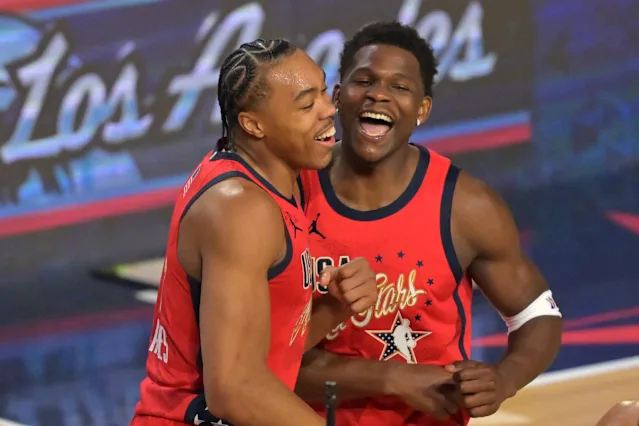
Following last night’s USA vs. World round-robin tournament at the Intuit Dome, the NBA is breathing a sigh of relief. After years of declining effort and “all-offense” exhibitions, the 2026 format actually produced something the league has desperately missed: competitiveness.
However, as the dust settles on Team USA Stars’ championship win, a larger question looms: Is this complicated tournament structure a sustainable future for the midseason showcase, or just a temporary “Olympic year” gimmick?
Why it Succeeded (For Now)
The 2026 format—three teams (USA Stars, USA Stripes, and Team World) playing four 12-minute games—was designed to inject “patriotic and generational pride” into the event.
- The “Wemby” Effect: Victor Wembanyama set a defensive tone in Game 1 that scouts called “the most effort seen in an All-Star game since 2020.”
- The Stakes: The $1.8 million prize pool ($125k per winning player) finally hit a threshold where the younger stars, like MVP Anthony Edwards, felt compelled to “play for keeps.”
- Dramatic Finishes: Three of the four games were decided by one possession, including buzzer-beaters by Scottie Barnes and De’Aaron Fox.
The Sustainability Hurdles
Despite the rave reviews from viewers, there are three primary reasons experts believe this format might not be the “forever” solution:
1. The “Confusing” Logistics Even the players were scratching their heads. Kawhi Leonard, who scored 31 points in a single 12-minute stretch, admitted post-game: “Even as the game’s going on, we were trying to figure out the records… is it by points? Point spread? What?” If the league’s best players don’t fully grasp the advancement rules, it’s hard to expect casual fans to stay engaged year after year.
2. The Olympic Context NBA Commissioner Adam Silver noted that this format was heavily influenced by the concurrent 2026 Winter Olympics. The “USA vs. World” theme feels natural when the world is in a patriotic fervor, but in a standard “off-year,” that same intensity might be harder to manufacture.
3. The Player Preference for “Purity” While the tournament was fun, the “old guard” remains skeptical.
- LeBron James and Cade Cunningham both expressed a desire to return to the traditional East vs. West format.
- Kevin Durant noted that while he liked the “step up in competition,” he still considers the classic format the “purest” version of the All-Star honor.
Verdict: A Bridge to Something Better?
The 2026 format proved that short-burst games and meaningful groupings (USA vs. World) are the keys to effort. However, the NBA has now changed its format four times in four years. For the event to be sustainable, it needs a permanent identity.
Most league insiders believe the 2027 All-Star Game in Phoenix will likely keep the USA vs. World concept but simplify the “mini-tournament” into a single, high-stakes game to reduce confusion and fatigue.
“Simplicity is important,” noted NBC broadcasting head Paul Benedict. “If it takes more than one sentence to explain what we’re doing, we haven’t found the final answer yet.”


Author Profile

- CEO NGSC Sports
Latest entries
 CFPOctober 18, 2026Week 7 College Football Recap: Top-10 Apocalypse Reshapes Polls and Playoff Picture
 MLBOctober 18, 2026Rays Draw Even: Tampa Bay Punishes Cleveland Mistakes to Win Game 4, Tie ALCS 2-2
 WNBAOctober 18, 2026Defensive Slugfest: Valkyries Hold Off Dream 68-64 to Take Game 1 of WNBA Finals
 NCAAFOctober 18, 2026Rocky Top Shockwave: No. 14 Tennessee Suffocates No. 6 Alabama 26-10 in Knoxville
About the Author