Photo Credit: mlb.com
 0
0
 0
0
Major League Baseball’s first season with robot umpire challenges produced one clear conclusion. Human umpires still miss plenty of pitches. MLB’s Automated Ball-Strike Challenge System overturned 54% of challenged calls during the 2026 regular season. Players challenged 10,557 calls, with the system overturning 5,686 of them. That number shows why MLB brought ABS to the majors after years of testing. However, the system does not remove home plate umpires from calling balls and strikes. Instead, players can challenge calls they believe the umpire missed.
The Cincinnati Reds adapted better than anyone. Cincinnati finished with MLB’s highest overall success rate at 62%. The Reds also gained an MLB-best 16.8 runs through successful challenges. The Los Angeles Angels ranked second in net run value at 14 runs. The Athletics followed at 12.3, while Minnesota gained 10.1 runs. Those numbers show that successful challenges can provide more than entertainment. They can directly affect at-bats, innings, and potentially games.
Cincinnati Finds an ABS Advantage
Several Reds players found success using the new system. Sal Stewart led all MLB batters with 51 challenges. He successfully overturned 28 calls for a 55% success rate. Stewart also produced 4.4 projected runs gained through challenges. Reds’ teammate JJ Bleday finished with 4.1 projected runs gained. Meanwhile, catcher Tyler Stephenson became another important part of Cincinnati’s success. Stephenson posted a 68% success rate among catchers. Only two qualifying catchers finished ahead of him. That success matters because catchers quickly became the most reliable players using ABS. Catchers successfully challenged 59% of calls across baseball. Batters finished at 49%, while pitchers managed only 40%. Those numbers make sense considering a catcher’s view. Catchers spend every pitch watching the baseball cross the plate. They also understand how each umpire establishes his strike zone throughout a game. Therefore, catchers became natural leaders for teams deciding when to challenge.
How MLB’s ABS System Works
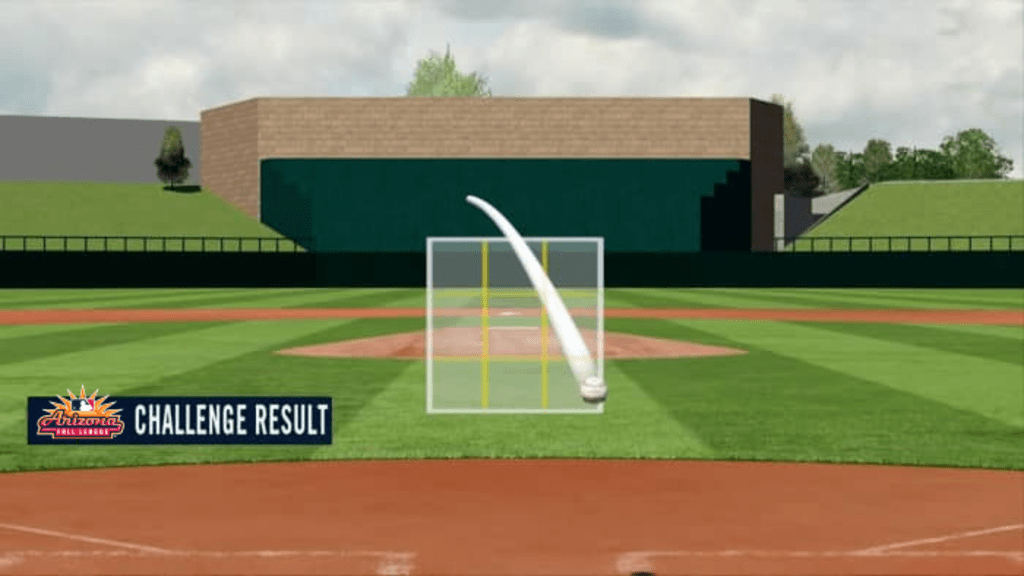
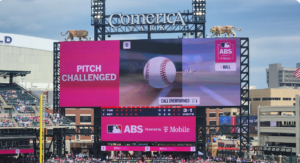
MLB introduced the challenge system across major league ballparks for the 2026 season. Each team starts a game with two challenges. A successful challenge allows the team to keep that challenge. Only batters, pitchers, and catchers can request reviews. Managers and coaches cannot request ABS challenges. Players must also challenge immediately without help from teammates or the dugout. A player signals for a challenge by tapping his helmet or cap. The system then reviews the pitch location almost instantly. MLB uses Hawk-Eye tracking technology to determine whether the pitch crossed the computerized strike zone. The system uses a 17-inch-wide zone, matching home plate’s width. MLB calculates the vertical zone using each hitter’s measured height. The result then appears for fans inside the stadium and viewers watching the broadcast.
Catchers Led the ABS Revolution
Milwaukee’s William Contreras became one of baseball’s busiest ABS users. Contreras challenged 185 calls, the most among MLB catchers. He successfully overturned 105 calls for a 57% rate. However, Philadelphia’s J.T. Realmuto delivered incredible efficiency. Realmuto posted an 81% success rate among catchers with at least 75 challenges. Chicago’s Carson Kelly ranked second at 69%. Stephenson and Colorado’s Hunter Goodman followed at 68%. Realmuto also made history during Philadelphia’s Wild Card Series against Atlanta. He successfully challenged a call to end Game 2. That became postseason history’s first game-ending ABS challenge. That moment demonstrated how important one challenge can become during October baseball.
Strategy Became More Important
Players also became more aggressive with challenges as the season progressed. MLB averaged 3.76 challenges per game during March. That number increased to 4.60 during August and 4.61 during September. Players also saved many challenges for important late-game situations. The ninth inning produced 1,366 challenges, more than any other inning. However, players succeeded on only 40% of those attempts. Meanwhile, early-game challenges produced better results. Challenges during the first three innings averaged a 61% success rate. Still, teams often avoided risking challenges during lower-leverage situations. That strategy created another layer for players and coaches to consider.
Robot Umpires Are Already Changing Baseball
The first full season of ABS showed that technology can influence baseball without replacing umpires. MLB still allows human umpires to make every initial ball-and-strike decision. However, players now have a tool for correcting significant mistakes. The 54% overturn rate proves those challenges frequently have merit. More importantly, teams must learn how to use their challenges wisely. Cincinnati clearly figured out that equation faster than most teams. The Reds finished first with their 62% overall success rate. Their MLB-best 16.8 net runs gained made those successful challenges even more valuable. ABS also created another skill for players to develop.
Hitters must know their strike zones. Catchers must recognize borderline pitches immediately. Pitchers must resist challenging calls simply because they dislike them. Meanwhile, teams must balance accuracy against game situations. Baseball spent years debating whether robot umpires belonged in the majors. MLB ultimately chose a compromise instead of handing every pitch to computers. After one season, that compromise has already changed how players approach the strike zone. The Reds showed everyone how valuable that change can become.
This is what most of us thought when the ABS was installed in the MLB.


Author Profile

-
Bradley Walker (VP) and Head of our Florida operations for NGSC Sports, bringing extensive experience across collegiate, professional, and amateur athletics. His coverage spans USF Athletics, including football, baseball, lacrosse, and softball, as well as University of Tampa baseball.
Bradley also provides coverage of minor league baseball with the Clearwater Threshers and Major League Baseball with the Tampa Bay Rays. On the national stage, he covers college football bowl games and conference championship matchups, along with premier golf events across the PGA Tour, LIV Golf, and LPGA Tour.
In addition to his reporting work, Bradley is the play-by-play announcer for Pinellas Park High School Patriots football, lending his voice and insight to Friday night lights.
He is also an active podcast host and contributor, serving as a host on The Walker Report, where he delivers in-depth sports analysis, interviews, and coverage across multiple levels of competition.
Latest entries
 BaseballOctober 3, 2026Robot Umps Flip 54% as Reds Master ABS
 BasketballOctober 3, 2026Fever Face Championship Pressure After Another Playoff Exit
 GolfOctober 3, 2026Phil Mickelson Completes Treatment Stay
 AAC FootballOctober 3, 2026AAC New Coach Grades After Four Weeks
About the Author