
 0
0
 0
0
Mixed martial arts, by design, reward a certain amount of theater. The sport sells itself on confrontation – pre-fight staredowns, trash talk, the walkout that’s engineered to feel like a coronation before a single punch has been thrown. So, it says something when a handful of fighters manage to reach the very top of that sport while actively refusing to play the part. I’ve always found these athletes more interesting than the loud ones, honestly. Anyone can have confidence. It takes something rarer to stand at the summit of the most violent sport on earth and still talk like the guy fixing your car.
Here’s a look at the fighters who did exactly that, and where I think that humility came from.
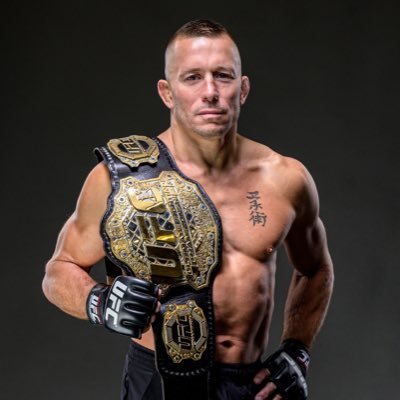
Georges St-Pierre: The Martial Artist Who Never Left the Dojo
GSP is the fighter people point to first, and for good reason. He’s widely regarded as the greatest welterweight to ever compete, a two-division champion who defended his 170-pound title a UFC-record nine times, and yet he built his entire public persona around dignity rather than dominance. In an era when the sport was actively tilting toward trash talk and manufactured beef — think Chael Sonnen, think the entire Bisping era — St-Pierre simply refused to participate. He spoke about his opponents with respect before and after fights, credited his coaches obsessively, and treated interviews like teaching moments rather than promotional opportunities.
I think the root of it is pretty traceable. St-Pierre has talked openly about being bullied as a kid in Quebec before he found martial arts, and he’s described the traditional discipline of the dojo — the bowing, the hierarchy, the emphasis on respect over ego — as something that fundamentally shaped who he became as an adult. He wasn’t chasing validation through the microphone. He’d already found it on the mat, years before anyone was paying him to fight.
Khabib Nurmagomedov: Humility as a Way of Life, Not a Brand
Khabib retired 29-0, a perfect record nobody else in the sport’s modern era can claim, and somehow became known just as much for his humility as his dominance. What’s remarkable is that his most famous moment of aggression — the post-fight brawl following his win over Conor McGregor at UFC 229 — is often cited as an exception that proves the rule. Khabib was pushed there. He didn’t instigate the years of trash talk that preceded it. By every account from people who trained and traveled with him, that outburst was completely out of character for a man who otherwise treated every opponent, including the ones who insulted his family and his faith, with basic respect.
His humility isn’t performative, either, and I think that’s the important distinction. It comes directly from his upbringing in Dagestan, where he was raised within a deeply religious Muslim household and trained from early childhood by his father, Abdulmanap, under conditions that were, by most Western standards, genuinely brutal. Khabib has spoken about wrestling bear cubs as a child as part of his father’s training philosophy — a detail so wild it sounds invented, except that it isn’t. That kind of upbringing tends to produce people who don’t need external validation, because the internal bar was set impossibly high a long time before the UFC ever entered the picture. Even in retirement, Khabib has consistently deflected “greatest of all time” conversations, crediting his father and his faith rather than accepting the crown himself.
Demetrious Johnson: Too Good to Need the Spotlight
Johnson might be the single most statistically dominant fighter in UFC history, and also one of the least famous, which tells you almost everything about how he carried himself. “Mighty Mouse” defended the UFC flyweight title a division-record eleven times, a number that still hasn’t been meaningfully approached, and did it all while actively deflecting the kind of self-promotion that turns dominance into stardom.
What I find most telling about Johnson isn’t anything he did in the cage — it’s what he said outside of it. He once noted, essentially, that there was probably a more dangerous flyweight somewhere in the world who simply hadn’t signed with the UFC yet. That’s an almost absurd thing for the consensus pound-for-pound number one to say out loud, and I don’t think it was false modesty. Johnson has always treated fighting as a craft to be perfected rather than a stage to be commanded, which is probably why he was comfortable walking away from the UFC spotlight entirely for a trade to ONE Championship, a promotion with a fraction of the audience, simply because it made sense for his career and his family.
Stipe Miocic: The Firefighter Who Never Stopped Being One
Miocic holds the record for most title defenses in UFC heavyweight history, and for most of his career he was also working actively as a full-time firefighter and paramedic in suburban Ohio. That’s not a marketing detail – it’s the actual context of his life. He’d defend the heavyweight championship of the world and then, weeks later, go back to a fire station and answer emergency calls like nothing had changed.
That dynamic, more than anything else, explains his humility. When your day job involves pulling people out of burning buildings, it recalibrates what actually feels significant. Miocic has talked about needing that normalcy, about not wanting fighting to consume his entire identity, and I think that grounding is precisely why he never bought into his own hype even while he was the best heavyweight on the planet.
Max Holloway: Blue Collar Excellence
Holloway doesn’t get grouped into this conversation as often as the others, but he probably should. A former featherweight champion with the most significant strikes landed in UFC history, Holloway has built his entire career around outworking people rather than outtalking them. He’s from Hawaii, trains in Hawaii, and has repeatedly turned down opportunities to relocate to bigger markets or louder camps, choosing instead to stay close to family and community. His post-fight interviews are almost uniformly gracious, even after some of the sport’s most brutal wars, and he’s one of the only fighters in UFC history who’s publicly praised opponents who just tried to hurt him for three rounds.
Why It Matters
What ties all of these fighters together isn’t just personality traits; it’s that their humility tends to trace back to something specific: a hard upbringing, a discipline learned before fame arrived, or a life outside the cage that kept the cage itself in proper proportion. None of them needed the Octagon to validate who they were. They walked in already whole, did the job at an extraordinary level, and walked back out the same person who walked in. In a sport built on spectacle, that’s arguably the rarest skill of all.



Author Profile

Latest entries
 Online BettingOctober 9, 2026Lambabet and the Main Bonuses for New Players
 Online BettingOctober 9, 2026Dodgers vs Brewers Props Guide: Home Run Threats, Power Bats and Key Factors
 MMAOctober 7, 2026Petr Yan vs. Merab Dvalishvili III: A Trilogy Built on Chaos, Cardio, and Championship Stakes
 CasinoOctober 6, 2026Wildies Casino Bonuses for Bigger Jackpot Ambitions
About the Author
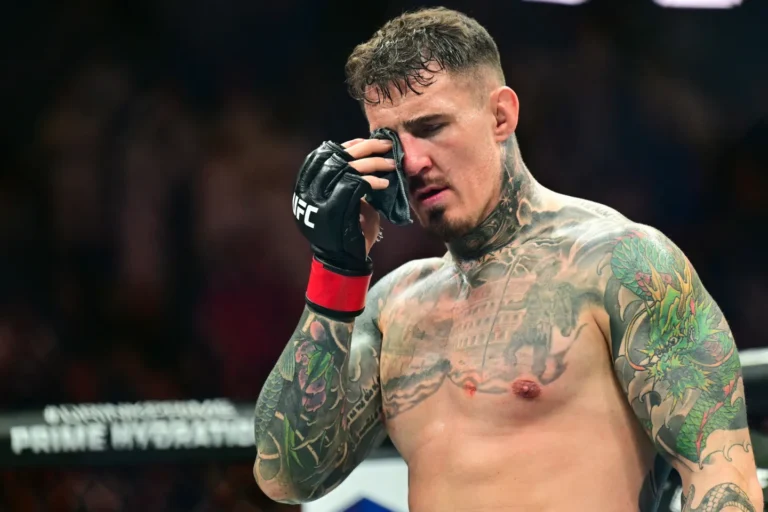
[…] Aspinall has officially vacated the UFC heavyweight championship. The decision comes after months of complications from a serious eye […]