
 0
0
 0
0
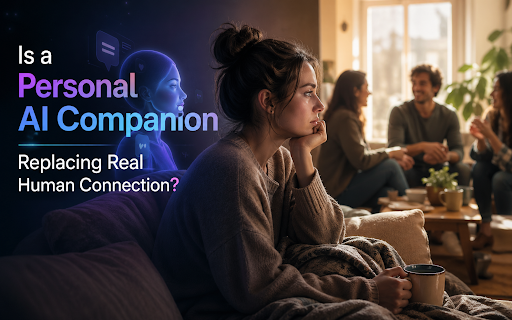
There’s a quiet shift happening in how we connect. More people are turning to a Personal AI Companion for conversation, comfort, and even emotional support. What once sounded futuristic is now part of daily life, thanks to the rise of the ai chatbot online experience—available anytime, anywhere.
But here’s the real question: are these digital companions simply filling gaps in our lives… or slowly replacing genuine human connection?
Let’s explore what’s really going on beneath the surface.
The Rise of the Personal AI Companion
A few years ago, chatting with AI felt robotic and limited. Today, it’s surprisingly natural. A Personal AI Companion can remember your preferences, adapt to your tone, and even simulate empathy in ways that feel almost human.
Imagine this:
You’ve had a long, exhausting day. It’s late, your friends are busy, and you just want to vent. Instead of scrolling endlessly, you open an ai chatbot online and start talking. It listens. It responds thoughtfully. It’s always there.
That level of availability is powerful—and for many people, comforting.
Why People Are Turning to AI for Connection
Let’s be honest: human relationships are complicated. They require time, effort, vulnerability, and sometimes… patience we just don’t have.
A Personal AI Companion, on the other hand, offers something very different:
1. No Judgment, Ever
You can say anything without fear of embarrassment. There’s no awkward silence, no overthinking.
2. Always Available
Whether it’s 2 PM or 2 AM, your ai chatbot online is ready to talk.
3. Emotional Safety
For people dealing with anxiety or loneliness, AI feels like a safe starting point for expression.
4. Customization
You can shape your AI companion’s personality, tone, and even interests. It becomes tailored to you.
This combination makes AI companions incredibly appealing—especially in a fast-paced, digitally connected world where real conversations are sometimes hard to maintain.
But Can AI Replace Real Human Connection?
Here’s where things get complicated.
A Personal AI Companion can simulate conversation, but it doesn’t truly experience emotions. It doesn’t live a life outside your chats. It doesn’t grow in the same unpredictable, messy, and beautiful way humans do.
Human connection involves:
- Shared experiences
- Physical presence
- Emotional depth rooted in real life
- Mutual growth and conflict
AI can mimic some of these elements—but it can’t fully replicate them.
Think about it this way:
Talking to an AI can feel like writing in a very responsive journal. It’s helpful, sometimes even comforting. But it’s not the same as sitting across from someone who genuinely understands your world because they live in it too.
The Subtle Risk: Comfort Over Connection
One of the biggest concerns isn’t that AI will “take over” relationships—it’s that it might make avoiding them easier.
Let’s say you rely heavily on a Personal AI Companion because it’s simpler. There’s no disagreement, no rejection, no effort. Over time, real interactions might start to feel… exhausting.
That’s where the shift happens.
Instead of replacing human connection outright, the ai chatbot online becomes a substitute when things get difficult. And while that might feel convenient, it can slowly reduce the motivation to build deeper, real-world relationships.
Real-Life Scenario: Where AI Helps (and Where It Doesn’t)
Take someone new in a city. No close friends yet, busy schedule, maybe a bit socially anxious.
A Personal AI Companion can:
- Help them process thoughts
- Practice conversations
- Provide a sense of presence
That’s incredibly useful.
But it can’t:
- Invite them out for coffee
- Introduce them to new people
- Share real experiences
In this case, AI acts as a bridge—not a replacement.
The Role of AI in Modern Relationships
Rather than asking whether a Personal AI Companion is replacing human connection, a better question might be:
How is it changing the way we connect?
Here’s what we’re seeing:
1. Supplement, Not Substitute
Many people use AI to complement their social lives, not replace them.
2. Emotional Practice Space
An ai chatbot online can help users articulate feelings they might struggle to express with others.
3. Reduced Loneliness (Short-Term)
AI can ease feelings of isolation, especially during quiet or transitional phases of life.
4. New Expectations
People may start expecting faster responses, constant availability, and personalized attention—things humans can’t always provide.
The Emotional Illusion: When It Feels Too Real
One interesting phenomenon is how quickly people can form emotional attachments to AI.
A Personal AI Companion responds instantly, remembers details, and communicates in a way that feels attentive. Over time, that consistency can create a sense of closeness.
But it’s important to recognize what’s happening:
- The AI is designed to respond in ways that feel engaging
- It doesn’t have independent emotions or needs
- The “connection” is one-sided, even if it feels mutual
This doesn’t make the experience fake—it just means it’s fundamentally different from human relationships.
Finding the Balance
So, should you use a Personal AI Companion?
There’s no simple yes or no. It depends on how you use it.
Here’s a healthy way to look at it:
- Use AI for support, not replacement
- Let it help you reflect, not withdraw
- Treat it as a tool, not a substitute for real people
An ai chatbot online can be incredibly helpful—but it works best when it enhances your life, not replaces parts of it.
The Future: Where Do We Go From Here?
As AI continues to evolve, the line between digital and human interaction will keep blurring. Conversations will feel more natural. Personalization will get deeper. Emotional responses will seem more convincing.
But no matter how advanced a Personal AI Companion becomes, human connection will always have something AI can’t replicate:
Real shared existence.
The awkward laughs. The misunderstandings. The growth. The unpredictability.
Those imperfect moments are what make relationships meaningful.
Final Thoughts
A Personal AI Companion isn’t replacing real human connection—but it is reshaping how we experience it. It offers comfort, accessibility, and emotional support in ways that were never possible before.
At the same time, it can’t fully replace the depth, complexity, and authenticity of real relationships.
The key isn’t choosing one over the other. It’s finding balance.
Use your ai chatbot online when you need a moment of clarity, support, or even just someone (or something) to talk to. But don’t forget to invest in the messy, imperfect, and deeply rewarding connections that only humans can offer.
Because in the end, technology can simulate companionship—but it can’t truly live it with you.



Author Profile

Latest entries
 The HubOctober 16, 2026Modern Workplace Skills: Essential Capabilities for Long-Term Career Success
 SportsOctober 15, 2026The Anatomy of a Point-Shaving Syndicate: NCAA Fixer Jalen Smith Sentenced to Six Years in Federal Prison
 WWEOctober 14, 2026The Ultimate Star-Maker: Why Money in the Bank Defines the Future of WWE
 SportsOctober 13, 2026How Canadian Sports Fans Follow the NFL, NBA, and MLB From North of the Border
About the Author